Mugwort in Skincare: What Is It, Benefits & Skin Type Suitability
Key takeaways:
- Mugwort is a botanical skincare ingredient from the Artemisia genus, commonly used for soothing, antioxidant, and skin-barrier support.
- Mugwort helps calm temporary redness, irritation, and environmentally stressed skin, but it is not a treatment for inflammatory skin conditions.
- Sensitive, oily, blemish-prone, dry, combination, and normal skin may all use mugwort, depending on the formulation and product texture.
- Mugwort can support acne-prone skin by calming irritation, but it does not replace established acne ingredients such as retinoids, benzoyl peroxide, or salicylic acid.
- Mugwort can generally be used alongside ingredients such as hyaluronic acid, niacinamide, vitamin C, and retinol.
- Because Artemisia species and formulations vary, product quality, patch testing, and overall routine compatibility matter more than choosing mugwort simply because it is trending.
Introduction
Mugwort has gone from being a traditional botanical ingredient to a familiar name in modern skincare, especially in Korean beauty routines. You will now find it in toners, essences, serums, masks, and moisturisers, usually in products designed to calm, hydrate, or support stressed skin.
But “mugwort” is not one single ingredient. Different skincare formulas may use different species from the Artemisia genus, and those species can vary in their plant compounds and activity.
What they tend to have in common is a focus on soothing, antioxidant support, and skin-barrier care, rather than aggressive exfoliation or correction.
So what does mugwort actually do for the skin, and which skin types may benefit most?
What Is Mugwort?
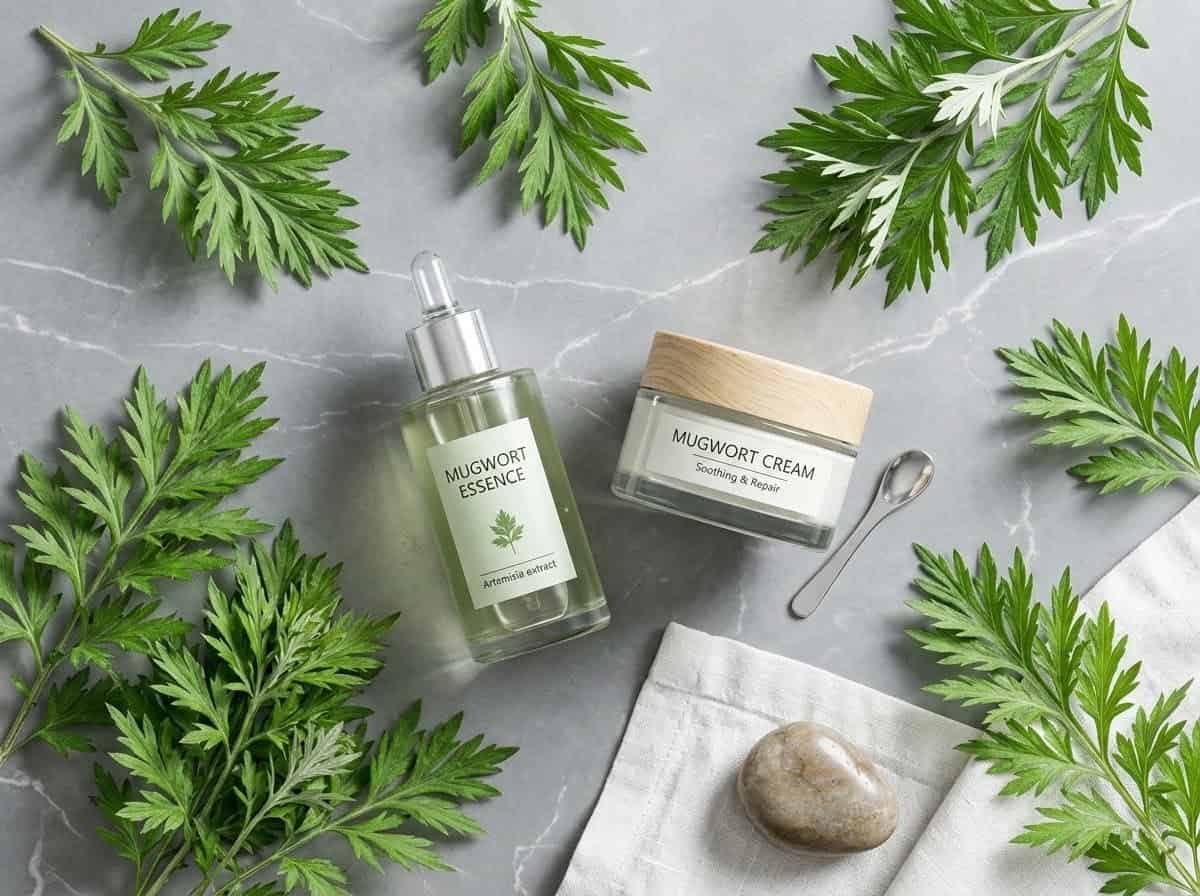
Mugwort is a common name given to several plants belonging to the Artemisia genus.
Species used in traditional medicine or cosmetics can include Artemisia vulgaris, Artemisia princeps, Artemisia argyi, and Artemisia annua. Mugwort belongs to the Asteraceae, or Compositae, plant family.
Different species contain varying combinations and concentrations of naturally occurring compounds such as flavonoids, terpenes, and polyphenols. As a result, research on one species should not automatically apply to every product that simply says “mugwort” on the front of the bottle.
When possible, check the ingredient list for the botanical name to understand which form is actually being used.
Why Is Mugwort Used in Skincare?
Mugwort is mainly used for its soothing, antioxidant, and barrier-supporting potential.
Its plant compounds have shown antioxidant and anti-inflammatory activity, which helps explain why mugwort often appears in formulas aimed at dry, sensitive-looking, or irritated skin.
A 2024 study on Artemisia vulgaris identified flavonoids including luteolin, apigenin, myricetin, and quercetin, alongside antioxidant and anti-inflammatory activity.
That said, the complete formula matters more than mugwort alone. A mugwort cream, for example, may behave very differently from a mugwort toner depending on the other ingredients included.
What Are the Benefits of Mugwort for Skin?
The main mugwort benefits centre on soothing and supporting the skin rather than aggressively correcting concerns such as acne or pigmentation.
Helps Soothe Redness and Irritation
One reason mugwort has earned a place in calming skincare is its potential to help stressed skin feel more settled.
Plant compounds found in Artemisia species have shown anti-inflammatory activity in experimental research, which may help explain why mugwort is often used in formulas for skin that looks red, feels dry, or becomes easily reactive.
It may be especially useful when your skin:
- Feels irritated after overusing active ingredients
- Looks temporarily red or stressed
- Reacts easily to heat, pollution, or other environmental triggers
- Needs a gentler, more soothing step in the routine
That said, mugwort is best viewed as supportive skincare rather than a treatment for inflammatory skin conditions.
Provides Antioxidant Support
Everyday exposure to UV radiation, pollution, and normal metabolic processes can produce oxidative stress within the skin.
Antioxidants help neutralise some of these reactive molecules.
Mugwort contains flavonoids and other plant compounds with demonstrated antioxidant activity, which is one reason it may be useful as part of a broader skin-supportive routine.
That does not make mugwort an alternative to sunscreen. Think of antioxidants as additional support. Daily sun protection remains the more important step for reducing UV-related skin damage.
May Support the Skin Barrier
A healthy skin barrier helps retain moisture while keeping irritants out.
Some Artemisia extracts have shown effects on skin-barrier proteins such as filaggrin and loricrin. Research on Artemisia princeps, for example, found increased expression of these proteins in human keratinocytes.
This may be useful when skin feels dry, tight, stressed, or sensitised.
The actual benefit still depends on the entire formulation, especially whether the product also contains moisturising and barrier-supportive ingredients.
May Help Calm Blemish-Prone Skin
Breakouts do not always come alone. Redness, sensitivity, and irritation often show up at the same time, especially when the skin is already using stronger acne actives.
This is where mugwort may be useful. Its soothing and antioxidant properties can help support a calmer skin environment without adding another aggressive step to the routine.
Mugwort does not unclog pores like salicylic acid or regulate acne in the same way as a retinoid. Its role is different: helping stressed, blemish-prone skin feel more balanced while targeted acne treatments do the heavier lifting.
For that reason, mugwort is best viewed as a supportive ingredient for acne-prone skin rather than a standalone acne treatment.
Which Skin Types May Benefit From Mugwort?
Mugwort is relatively versatile because it’s usually supportive rather than highly corrective. However, whether it suits your skin still depends heavily on the product it comes in.
Sensitive or Easily Irritated Skin
Sensitive skin is where mugwort often makes the most sense. If your skin tends to flush easily, feels uncomfortable after new products, or becomes irritated when you use stronger actives, a simple mugwort formula may add a gentler layer of support.
Its main appeal is not that it “treats” sensitivity, but that it may help the skin feel calmer while supporting the barrier.
The important catch: botanical does not automatically mean non-irritating. If your skin is highly reactive or you have a history of plant allergies, patch test first before using mugwort more widely.
Oily and Blemish-Prone Skin
Oily skin does not always need more stripping or exfoliation. If breakouts come with redness, sensitivity, or irritation, mugwort can be useful as a calming step in the routine.
A lightweight toner, essence, or serum may provide soothing support without making the skin feel heavy or greasy. The format matters. A light mugwort essence may work well for oily skin, while a rich cream could feel too occlusive depending on the rest of the formulation.
So the question is less “Is mugwort good for oily skin?” and more “Is this mugwort product light enough for my skin?”
Dry or Dehydrated Skin
For dry skin, mugwort works best as a soothing ingredient within a more moisturising formula.
For dehydrated or tight-feeling skin, look for formulas that pair mugwort with ingredients that actually attract and retain moisture, such as glycerin, hyaluronic acid, ceramides, or squalane.
That combination makes more sense than relying on mugwort alone.
In practice, a mugwort cream may suit very dry skin better than a watery toner because the richer formula can provide both soothing support and moisture retention.
Combination and Normal Skin
Combination and normal skin have the most flexibility.
Mugwort can simply act as a supportive ingredient for soothing, hydration, and antioxidant care without dramatically changing the rest of the routine.
You can choose the format based on what your skin needs that day or season:
- An essence for lighter hydration
- A serum for everyday support
- A cream when the skin feels drier
- A mask when it needs a temporary calming boost
That makes mugwort easy to fit into a routine without making it the centre of your skincare plan.
Is Mugwort Good for Acne?
Mugwort may support acne-prone skin, but it should not be treated as a primary acne treatment.
Its soothing and antioxidant effects may help reduce the appearance of redness and make a routine feel more comfortable, especially if other acne products are drying or irritating.
However, there is no strong evidence that topical mugwort alone clears comedonal, inflammatory, or hormonal acne.
Ingredients such as retinoids, benzoyl peroxide, and salicylic acid, or prescription treatment when appropriate, have a more established role in acne management.
Mugwort fits better as a supportive ingredient around those treatments.
How Do You Use Mugwort in a Skincare Routine?
How you use mugwort depends mainly on the product type.
You don’t need to use multiple mugwort products at once. Introducing one new product at a time also makes it easier to identify the cause if irritation develops.
- Mugwort toner or essence: Apply after cleansing and before serum or moisturiser. This format works well when you want lightweight hydration and soothing support.
- Mugwort serum: Apply after toner and before moisturiser. Check the full ingredient list because other active ingredients may affect how often you should use it.
- Mugwort moisturiser or cream: Apply after lighter serums. This format may suit dry or barrier-stressed skin, especially when combined with ingredients that help retain moisture.
- Mugwort mask: Use occasionally rather than as an everyday essential. Clay-based masks may absorb oil, while hydrating sheet masks focus more on soothing and moisture.
Also read: Guide to Building a Skincare Routine That Works for You.
Can You Use Mugwort With Other Skincare Ingredients?
Generally, yes.
Mugwort is a supportive ingredient, so it can usually sit comfortably alongside:
- Hyaluronic acid
- Niacinamide
- Retinol
- Vitamin C
- Exfoliating acids
It can be a useful calming step in routines that already contain stronger actives.
Just keep one thing in mind: mugwort cannot fix irritation caused by overusing retinol or acids. If your skin is burning, peeling, or persistently inflamed, reduce the irritating products first.
Introduce new products gradually, and keep the basics consistent: cleanse, moisturise, and wear sunscreen.
Also read: Active Ingredients in Skincare: All You Need to Know.
Can Mugwort Irritate Your Skin?
Yes. “Natural” or botanical does not automatically mean hypoallergenic.
Mugwort belongs to the Asteraceae or Compositae family, and Artemisia species can cause allergic reactions in susceptible individuals. Be especially cautious if you already know you react to mugwort or related plants.
Patch testing a new product is sensible, particularly if your skin is highly reactive. Stop using it if you develop persistent itching, swelling, burning, or worsening redness.
Is Mugwort Worth Adding to Your Skincare Routine?
It can be, particularly if your priority is soothing, antioxidant support, or maintaining a healthier skin barrier.
Mugwort may be especially relevant when skin feels easily irritated, red, or environmentally stressed.
It is less useful to treat it as a replacement for proven targeted ingredients. If your main concern is persistent acne, pigmentation, or significant photoageing, a more specific active or professional treatment may be needed.
The formulation matters too. A well-designed product containing mugwort alongside suitable hydrating and barrier-supporting ingredients may make more sense than choosing something simply because mugwort appears prominently on the label.
At Clique Clinic, a personalised skin assessment can help identify whether your routine should prioritise barrier repair, acne management, pigmentation, ageing concerns, or another underlying issue.
Final Thoughts
Mugwort has earned attention in skincare mainly for its soothing, antioxidant, and potential barrier-supporting properties.
Depending on the formulation, it may work well for sensitive, irritated, oily, blemish-prone, dry, combination, or normal skin.
Still, keep expectations realistic. Different Artemisia species are not identical, and much of the research remains experimental rather than large-scale clinical evidence in humans.
The most useful skincare ingredient is not necessarily the one currently trending. It is the one that addresses what your skin actually needs and fits comfortably into the rest of your routine.
If you are unsure whether mugwort belongs in your skincare routine, contact Clique Clinic to book a consultation and find out whether it suits your skin type and concerns.