Hyaluronic Acid for Skin: All You Need to Know
Key takeaways:
- Hyaluronic acid is a naturally occurring molecule that helps retain moisture and maintain skin hydration.
- It can hold up to 1,000 times its weight in water, making it highly effective for improving skin hydration and texture.
- Hyaluronic acid supports the skin barrier, reduces dryness, and softens the appearance of fine lines.
- It is suitable for all skin types, including sensitive and acne-prone skin, when used in appropriate formulations.
- For best results, hyaluronic acid should be used on damp skin and followed by a moisturiser to lock in hydration.
Introduction
Hyaluronic acid is effectively one of the most essential ingredients in modern skincare. Whether you are browsing a pharmacy shelf in Malaysia or exploring advanced treatments at Clique Clinic, you will find it everywhere: in masks, skincare, injectable treatments, and even post-procedure recovery protocols.
Why the obsession? Because hyaluronic acid for skin delivers something fundamental that many routines overlook: hydration that actually lasts.
This molecule is known for its remarkable ability to attract and retain moisture, helping the skin feel supple, resilient, and visibly smoother. In a climate like Malaysia, where humidity, air conditioning, and UV exposure constantly challenge the skin, understanding how to use hyaluronic acid properly can make a meaningful difference.
In aesthetic practice like Clique Clinic, HA fillers add volume while helping to shape and contour the face.
What Is Hyaluronic Acid?
Hyaluronic acid is a naturally occurring substance found within the human body. It is present in the skin, connective tissues, and eyes, where it plays a critical role in maintaining moisture balance.
In hyaluronic acid skincare, this ingredient functions primarily as a humectant. This means it attracts water molecules and binds them to the skin, helping maintain hydration levels throughout the day.
Key characteristics of hyaluronic acid:
- It can hold up to 1,000 times its weight in water
- It supports skin elasticity and resilience
- It helps maintain a healthy skin barrier
- It naturally declines with age and environmental stress
As we age, the natural levels of hyaluronic acid decrease. This decline contributes to dryness, loss of firmness, and the formation of fine lines. Environmental factors common in Malaysia, such as UV exposure and pollution, can accelerate this depletion.
For a deeper understanding, read this review published in the National Institutes of Health on hyaluronic acid and its link to skin ageing.
How Does Hyaluronic Acid Work on the Skin?
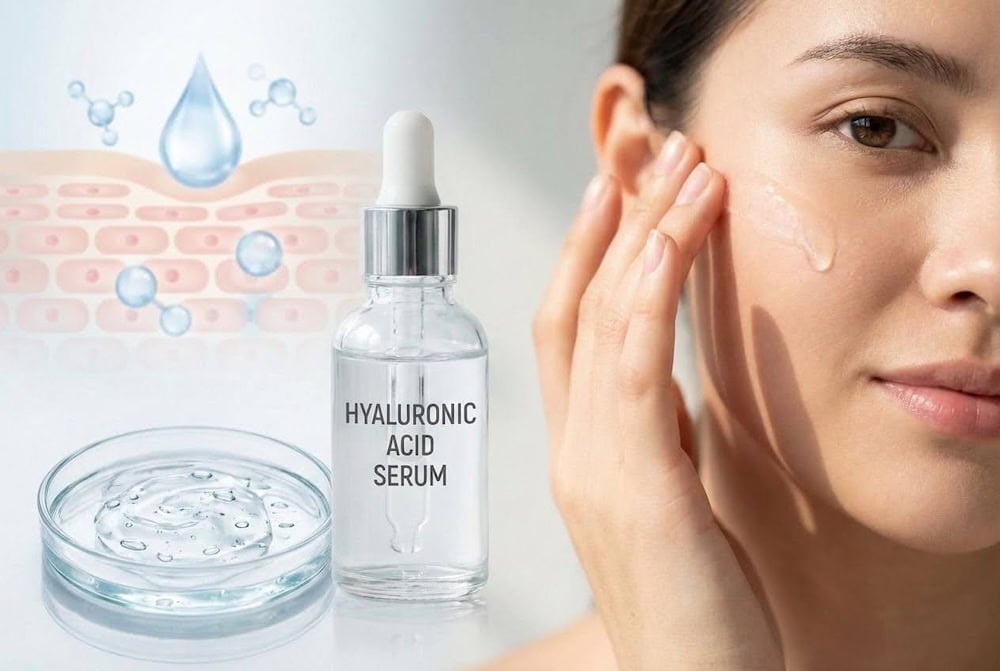
To understand how hyaluronic acid works, it helps to visualise it as a moisture magnet.
When applied topically, hyaluronic acid:
- Draws moisture from the environment and deeper layers of the skin
- Binds water to the skin surface, increasing hydration levels
- Reduces transepidermal water loss [TEWL]
- Supports the skin barrier, making it more resilient
The result is skin that appears plumper, smoother, and more refreshed.
However, effectiveness depends on proper usage. In very dry environments, hyaluronic acid may pull water from deeper layers of the skin instead of the air. This is why pairing it with a moisturiser is essential to lock hydration in.
Hyaluronic Acid Benefits for Skin
The popularity of hyaluronic acid is not merely hype. It is backed by both clinical evidence and long-term dermatological use.
Here are the key hyaluronic acid benefits for skin:
- Deep Hydration: Hyaluronic acid draws water into the skin and helps retain it. This is especially important for individuals experiencing dehydration from air conditioning or frequent sun exposure in Malaysia.
- Improves Skin Texture: Well-hydrated skin appears smoother and softer. Fine lines caused by dehydration become less noticeable.
- Supports Skin Barrier Health: A hydrated skin barrier is better equipped to defend against environmental stressors such as pollution and UV damage.
- Reduces the Appearance of Fine Lines: While it is not a replacement for collagen-stimulating treatments, hydration can visibly soften fine lines and improve skin quality.
- Suitable for Most Skin Types: Hyaluronic acid works well for dry, sensitive, and even acne-prone skin if a correct formulation is used.
Can Hyaluronic Acid Cause Breakouts?
Hyaluronic acid is one of the safest skincare ingredients, as it is non-comedogenic by itself. It does not clog pores.
However, breakouts may still occur if:
- The product contains other pore-clogging ingredients
- The formulation is too heavy for your skin type
- It is layered incorrectly with occlusive products
For acne-prone individuals, lightweight hyaluronic acid serums are usually the best option. At Clique Clinic, we often incorporate hydration support even in acne treatment plans because dehydrated skin can worsen oil imbalance.
At What Age Should You Start Using Hyaluronic Acid?
There is no strict age requirement, but hyaluronic acid skincare can be introduced to those as young as their 20s.
Why this timing matters:
- Natural hyaluronic acid levels begin to decline gradually
- Preventive hydration helps maintain skin balance
- It supports long-term skin health rather than correcting damage later
In your 30s and beyond, the role of hyaluronic acid becomes crucial. It helps counteract dryness, loss of elasticity, and early signs of ageing.
For many patients at Clique Clinic, we combine topical hyaluronic acid with in-clinic treatments to achieve more visible and sustained results.
How to Use Hyaluronic Acid in Your Skincare Routine
Using hyaluronic acid correctly makes a significant difference in results.
Here is a simple guide:
- Apply after cleansing
- Use on slightly damp skin
- Follow with a moisturiser to lock in hydration
- Use before heavier creams or oils
Common forms include:
- Hyaluronic acid serum
- Moisturisers
- Sheet masks
- Cream-based formulations
Can You Use Hyaluronic Acid with Other Skincare Ingredients?
Absolutely, and this is where it becomes especially valuable.
Hyaluronic acid works well with:
- Vitamin C for brightening
- Niacinamide for oil control and barrier support
- Retinoids to reduce dryness and irritation
It is often used as a buffering ingredient to make stronger actives more tolerable.
Can You Use Hyaluronic Acid Every Day?
Yes, it is safe for daily use.
- Can be used morning and night
- Suitable for long-term routines
- Works well as a foundational hydration step
Consistency is key since hydration benefits build over time.
Hyaluronic Acid for Different Skin Concerns
Hyaluronic Acid for Dry Skin
For dry skin, hyaluronic acid acts as a hydration reservoir.
Benefits include:
- Restores moisture levels
- Reduces tightness and discomfort
- Improves overall skin softness
In Malaysia, even individuals with oily skin can experience dehydration due to indoor air conditioning. This makes hyaluronic acid relevant across skin types.
Hyaluronic Acid for Acne-Prone Skin
Many people assume acne-prone skin should avoid hydration. This is a mistake.
Hyaluronic acid for acne-prone skin helps by:
- Providing hydration without clogging pores
- Reducing the overproduction of oil caused by dehydration
- Supporting healing and skin recovery
In clinical settings like Clique Clinic, hydration is often a foundational step before introducing treatments such as lasers or micro-needling.
Hyaluronic Acid vs Other Hydrating Ingredients
Hyaluronic acid is often compared with other hydrating ingredients. However, each plays a different role.
Glycerin
Another humectant that attracts water. It is effective but does not hold as much water as hyaluronic acid.
Ceramides
These help repair the skin barrier rather than attract water. They work best when combined with hyaluronic acid.
Squalane
An emollient that smooths and softens the skin while preventing moisture loss.
In real life, the most effective routines combine these ingredients rather than choosing one over the other.
Professional Treatments Using Hyaluronic Acid
Topical skincare is only one part of the picture. In aesthetic medicine, hyaluronic acid is used in more advanced ways to improve skin quality.
At Clique Clinic, hyaluronic acid is commonly used in:
Skin Boosters
These are micro-injections that deliver hyaluronic acid directly into the skin.
Benefits include:
- Deep, long-lasting hydration
- Improved skin texture and glow
- Enhanced elasticity
Dermal Fillers
Hyaluronic acid is used in derma fillers to restore volume and contour the face.
- Improves facial structure
- Reduces deeper lines and folds
- Provides immediate and longer-lasting results
In Clique Clinic, Belotero remains one of our most effective dermal fillers. Another injectable category was opened by Profhilo, called bioremodeling. The dual action of the two HA components of Profhilo is ideal for remodeling skin laxity.
Combination Treatments
Hyaluronic acid is often paired with:
This combination approach helps improve both hydration and overall skin regeneration.
Final Thoughts
Hyaluronic acid remains one of the most reliable and versatile ingredients in skincare.
It supports hydration, strengthens the skin barrier, and improves overall skin quality without being overly aggressive.
However, the real difference lies in how it is used. The right formulation, correct layering, and integration with professional treatments can elevate results significantly.
At Clique Clinic, we often see patients who have been using hyaluronic acid for years but are not maximising its benefits. With the right guidance, it can become a powerful part of both your daily routine and long-term skin strategy.
If you are considering improving your skin hydration or exploring treatments such as skin boosters, fillers, or combination therapies, talk to us: wa.me/60123537960