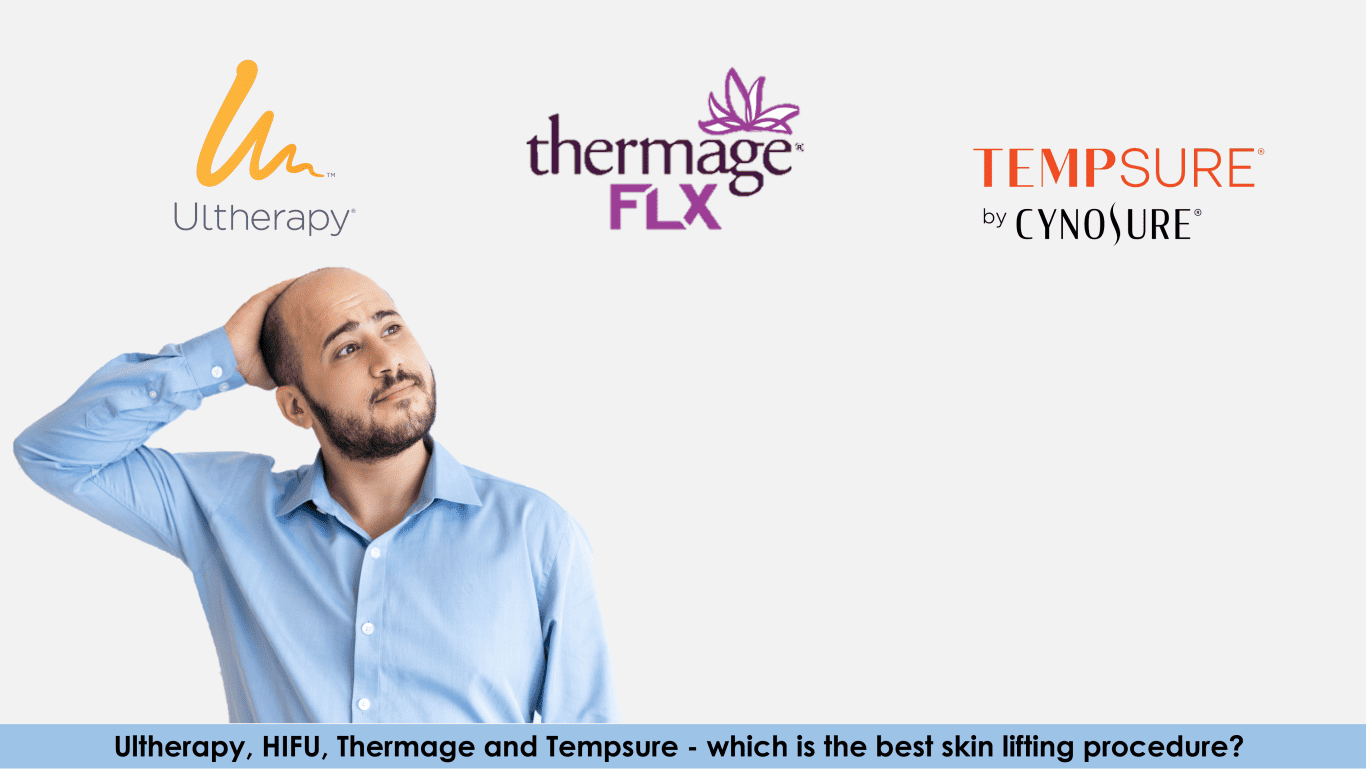
Taking proactive steps to maintain skin health can appreciably delay the visible signs of ageing and enjoy a more vibrant life. Thankfully, two advancements in dermatology offer minimally invasive solutions in this pursuit— Thermage and Ultherapy.
While both treatments aim to tighten and rejuvenate the skin, they achieve this through different approaches. As such, choosing between them can be somewhat confusing.
Fortunately, today’s article breaks down the technical facets, operational distinctions, pricing nuances, and everything else you need to know about Thermage vs. Ultherapy.

What is Thermage?
Thermage is a non-surgical treatment that employs radiofrequency (RF) energy to promote collagen production deep within the skin. This FDA-cleared treatment heats the targeted tissue, triggering the body’s natural healing response, which in turn produces new collagen.
Collagen is the main structural protein responsible for maintaining the skin’s elastic character. Thus, boosting its production may lead to firmer, tighter skin.
What is the benefit of Thermage?
The benefits of Thermage are numerous and quite impressive, including:
- Skin tightening: Thermage effectively tightens loose or sagging skin on various body parts, including the face, neck, and abdomen.
- Wrinkle reduction: It helps smooth out fine lines and wrinkles, mainly around the eyes, mouth, and forehead.
- Contour improvement: Thermage can enhance facial contours, giving a more defined jawline and lifted appearance.
- Long-lasting results: Many patients enjoy the effects of Thermage for up to 1 to 2 years after a single treatment.
- Minimal downtime: Unlike surgical procedures, Thermage requires little to no recovery time. This consequently allows patients to return to their daily activities immediately.
- Versatility: It can be employed on various skin types and tones, making it a suitable option for a wide range of patients.
- Collagen stimulation: By promoting natural collagen production, Thermage helps improve skin quality from within.
What is Ultherapy?
Ultherapy is another non-surgical treatment that utilises micro focused ultrasound energy to stimulate collagen production.
Unlike Thermage’s radiofrequency, Ultherapy delivers targeted ultrasound waves that reach deeper layers of the skin. This FDA-cleared treatment heats these layers, prompting the body to produce new collagen— ultimately leading to a tightening and lifting effect.
Read more here: Everything You Need to Know About Ultherapy.
What is the benefit of Ultherapy?
Ultherapy offers similar benefits to Thermage, but with a focus on deeper skin structures. Some of these benefits include:
- Natural lifting effect: Ultherapy provides a noticeable lift to sagging skin, particularly on the face and neck.
- Collagen stimulation: In practice, the ultrasound energy triggers the body’s natural collagen production. This consequently leads to gradual improvements over time.
- Precision targeting: Ultrasound imaging allows for precise targeting of problem areas, ensuring optimal energy delivery.
- Non-invasive: Like Thermage, Ultherapy doesn’t require any incisions or needles.
- Customisable treatment: It can be tailored to address specific areas of concern, from the brows to the décolletage.
- Gradual, natural-looking results: The improvements develop over 2 to 3 months, providing a subtle and natural rejuvenation.
- Single-session treatment: Most patients achieve their desired results with just one Ultherapy session.
Thermage vs Ultherapy comparison
While both are effective non-surgical skin tightening treatments, Thermage and Ulterapy differ in their purpose, comfort, side effects, treatment depths, target areas, and more. Let’s unpack some of these distinctions.
Purpose
Both Thermage and Ultherapy aim to tighten and lift the skin, but their specific purposes can differ slightly:
Thermage: This treatment primarily focuses on overall skin tightening, wrinkle reduction, and improving skin texture. It’s particularly effective for addressing mild to moderate skin laxity.
Ultherapy: Targets more significant skin sagging and is especially good for achieving a lifting effect, particularly on the face, neck, and décolletage.
Working
Another key distinction between Thermage and Ultherapy lies in the technology they utilise:
Thermage: It exploits radiofrequency energy that heats the deeper layers of one’s skin, stimulating collagen production and tightening existing collagen fibres.
Ultherapy: Employs micro focused ultrasound energy to heat tissue at specific depths (SMAS layer), triggering the body’s natural healing response and stimulating new collagen production.
Comfort
Addressing the question of Thermage vs Ultherapy pain, both treatments can cause some discomfort, but the experience varies:
Thermage: Patients typically feel a heating sensation with intermittent cooling. Some describe it as a warm stone massage. Recent advancements have made the procedure more comfortable.
Ultherapy: It is often described as more uncomfortable than Thermage. In practice, patients may feel brief, intense heat and tingling sensations as the ultrasound energy is delivered. However, pain management options are available to improve comfort.
Thermage vs Ultherapy treatment areas
Face
Thermage: It is effective for overall facial tightening, including the forehead, around the eyes, cheeks, and jawline.
Ultherapy: It is particularly good for lifting the brows, cheeks, and jawline. Furthermore, it’s FDA-cleared for use on the full face.
Stomach
Thermage: It is excellent for tightening loose skin on the abdomen, often used post-pregnancy or after weight loss.
Ultherapy: While it can be used on the body, it’s less commonly applied to the stomach area than Thermage.
Eyes
Thermage: It can effectively treat the delicate eye area, helping to reduce hooding and crow’s feet.

Ultherapy: Also effective for the eye area, particularly for lifting the brows and reducing upper eyelid hooding.
Neck
Thermage: It is good for overall neck skin tightening and improving texture.
Ultherapy: Particularly effective for lifting and tightening neck skin, addressing the “turkey neck” concern.
Jowls
Thermage: This treatment may help tighten and contour the jawline, reducing the appearance of jowls.
Ultherapy: Excellent for lifting and defining the jawline, effectively addressing sagging jowls.
Treatment sessions required
Thermage: Typically requires two treatment sessions, with results lasting up to 1 year.
Ultherapy: Usually, a single treatment is sufficient, with results lasting about 1 year. The second session onwards can last for 1-2 years. Some patients opt for touch-up treatments.
However, both are subject to skin condition, ageing process, and the treatment plan.
Time taken
Thermage: Treatment time varies depending on the area, but it usually ranges from 30 minutes to 2 hours.
Ultherapy: Also varies by treatment area, generally taking 30 to 90 minutes for a full face and neck treatment.
Side effects
Both treatments are generally safe with minimal side effects:
Thermage: Temporary redness, swelling, and, rarely, minor burns or blisters.
Ultherapy: Temporary redness, swelling, tingling, or tenderness. In rare cases, bruising or numbness may occur.
Safety
When it comes to safety, both Thermage and Ultherapy have excellent track records:
Thermage: FDA-cleared since 2002, with a long history of safe use.
Ultherapy: FDA-cleared since 2009, also boasting a strong safety profile.
Overall, both treatments are considered safe when performed by trained professionals. The choice between the two often comes down to individual needs and preferences rather than safety concerns.
Thermage vs Ultherapy before and after
Both treatments can produce impressive results, but the nature of these results can differ. Ultherapy before and after photos often show more dramatic lifting effects, particularly in the brow and jowl areas. Thermage results tend to show overall skin tightening and texture improvement.
It’s imperative to note that results may vary significantly between individuals. Factors like age, skin condition, and lifestyle can all influence the outcome.
Cost
The cost of Thermage vs. Ultherapy can subtly vary depending on the treatment area and the specific clinic in Malaysia. Here are some general price ranges based on my knowledge of the Malaysian market:
Thermage: Generally ranges from RM4,000 to RM20,000 per session, depending on the treatment area. A full-face treatment typically costs around RM8,000 to RM12,000.
Ultherapy: Typically costs between RM6,000 to RM25,000 per session. A full face and neck treatment usually falls in the range of RM10,000 to RM15,000.
Keep in mind that while Ultherapy might have a higher upfront cost, both treatments usually require only one session to see results. Some clinics may offer package deals or promotions that can affect the final price.
Furthermore, it’s important to note that the cheapest option isn’t always the best. When considering these treatments, factor in the expertise of the practitioner, the quality of the equipment, and the overall reputation of the clinic.
Who are good candidates for Thermage and Ultherapy?
Good candidates for both Thermage and Ultherapy share several characteristics:
- Mild to moderate skin laxity: Both treatments work best for those with some skin sagging but who don’t require surgical intervention.
- Realistic expectations: Patients should understand that while results can be significant, they’re not as dramatic as surgical options.
- Good overall health: As with any prevalent cosmetic procedure, being in good health helps ensure optimal results and minimises risks.
- Commitment to skin care: Those who maintain a good skincare routine often see better, longer-lasting results.
However, thermage may be particularly suitable for:
- Younger patients looking for preventative measures.
- Those wanting to address overall skin texture and mild laxity.
- Individuals looking to tighten skin on the body, such as the abdomen or arms.
Ultherapy might be better for:
- Patients with more noticeable sagging, especially in the face and neck.
- Those who are specifically seeking a lifting effect.
- Individuals targeting the brow area for a non-surgical brow lift.
Can Thermage and Ultherapy be done together?
Yes, Thermage and Ultherapy can be done together to achieve comprehensive skin tightening and lifting results. Combining the treatments can address multiple layers of the skin, enhancing overall effectiveness.
However, it’s essential to consult with a dermatologist to ascertain the best approach for your specific needs.
Which is better: Thermage or Ultherapy?
The truth is, there’s no one-size-fits-all answer. Both are excellent treatments using different technologies— and the best choice depends on individual factors and desired outcomes.
Thermage excels in overall skin tightening and improving skin texture. It’s particularly effective for treating larger areas and can be used on various body parts. If you’re looking for general skin rejuvenation and have concerns about mild to moderate skin laxity, Thermage might be your best bet.
Ultherapy, on the other hand, is the go-to treatment for achieving a more significant lifting effect, especially on the face and neck. If you’re primarily concerned with sagging in these areas and want a more pronounced lift, Ultherapy could be the better choice.
Generally, your dermatologist will recommend the most optimal treatment based on several factors, including:
- Your specific concerns and goals.
- The condition of your skin.
- The areas you want to treat.
- Your pain tolerance.
- Your budget.
In some cases, a combination of both treatments might be recommended for optimal results. The key is to have a thorough consultation with a qualified professional who can assess your unique situation and provide personalised advice.
Conclusion
Thermage and Ultherapy are both excellent non-invasive options for achieving tighter, more youthful-looking skin. Understanding the differences between the two treatments, including their technologies, benefits, and suitable treatment areas, can help you make an informed decision.
If you’re considering these treatments, consult with a qualified dermatologist to go over your options and decide the best approach for your skin needs.