
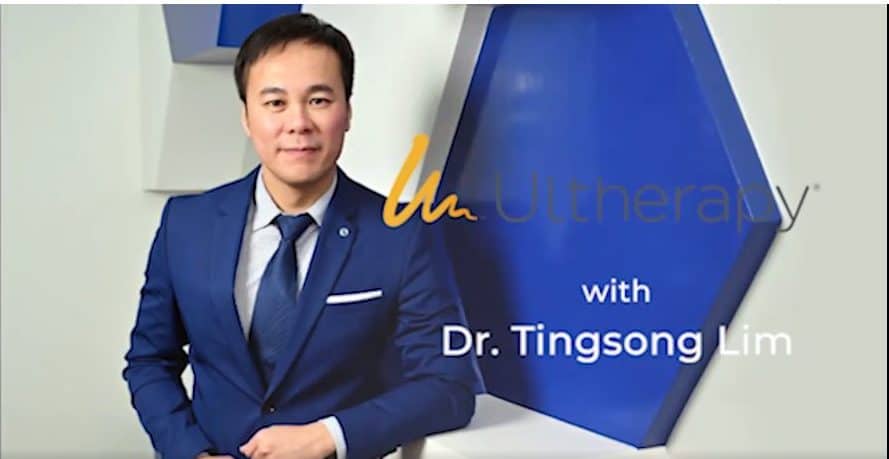
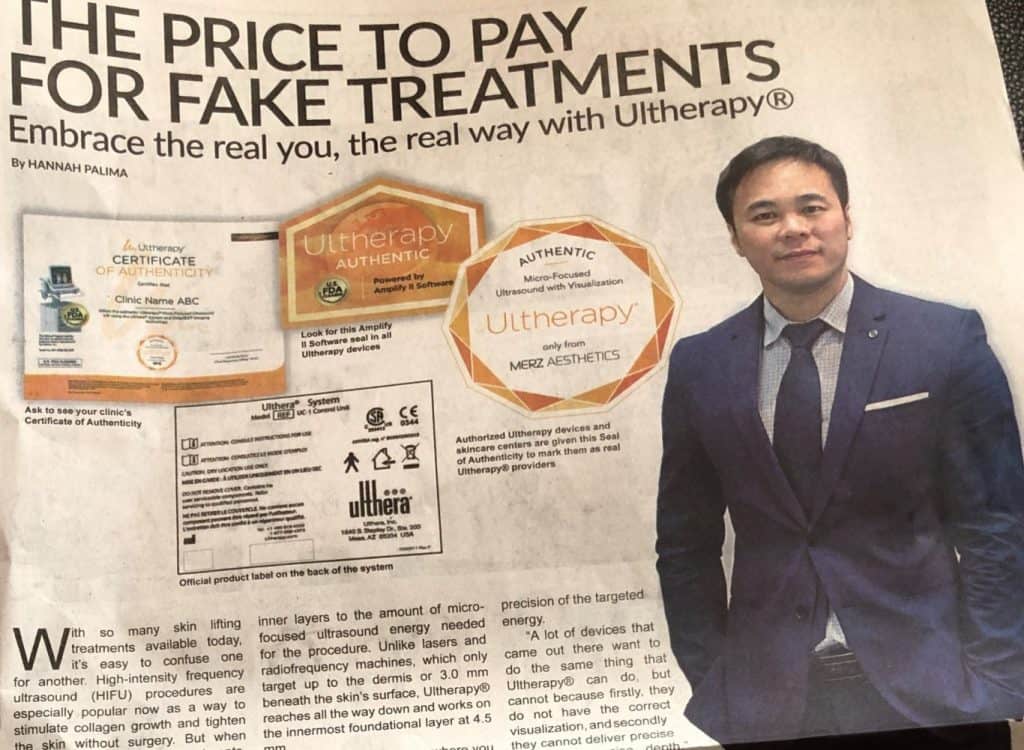
Let’s face it: Ageing is a natural part of life. But that doesn’t mean we have to sit back and watch the wrinkles deepen and our jawline blur!
While ageing is an intrinsic part of life, it’s understandable to want to maintain a youthful appearance for as long as possible. That’s where Ultherapy comes in!
What is Ultherapy treatment?
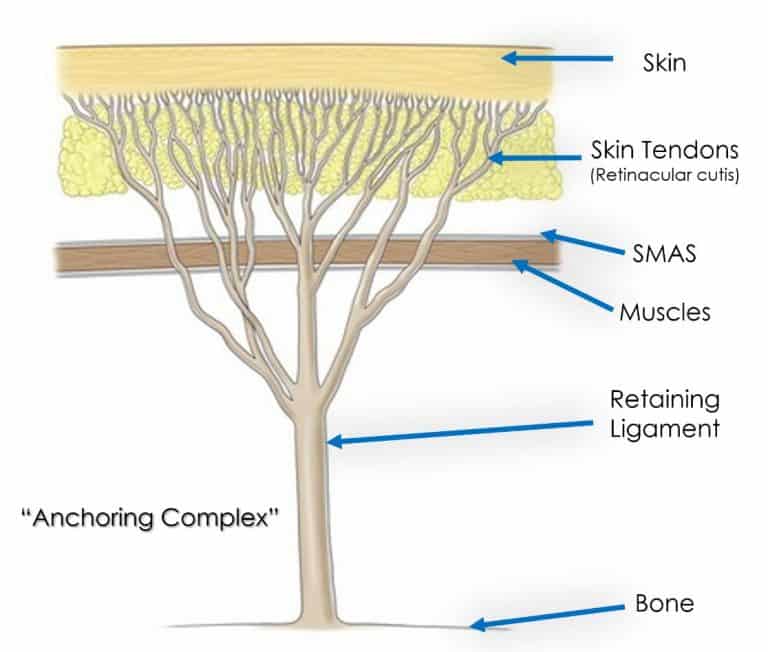
Ultherapy is an FDA-approved non-surgical procedure that tightens and lifts skin using concentrated ultrasonic radiation. It is scientifically designed to stimulate the formation of collagen, providing more youthful skin by targeting the deeper layers of skin tissue —without affecting the surface.
Unlike invasive surgical procedures, ultherapy doesn’t require any incisions or downtime. As such, it’s an excellent option for those looking to address signs of ageing without resorting to more drastic measures.
In fact, the treatment is particularly effective for lifting the eyebrows, neck, and under-chin area, and improving lines and wrinkles on the décolletage.
Ultherapy treatment areas
Ultherapy is versatile and can be used to treat various areas of the face and neck. Let’s take a closer look at some of the most popular treatment areas:
Under eyes
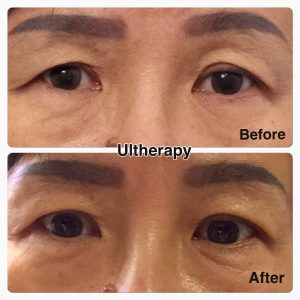
The delicate skin around our eyes is often one of the first areas to show signs of ageing. Ultherapy may help tighten and lift the skin in this area, reducing the appearance of crow’s feet and under-eye bags.
The treatment may also help improve the overall texture of the skin, giving you a more refreshed and youthful look.
Double chin
Many people, regardless of age or weight, feel insecure about their double chins. Ultherapy works well in this area, tightening the skin and making the double chin less noticeable.
By stimulating collagen production in the lower face and neck, it can help create a more defined jawline.
Neck
The neck is another area that often betrays our age. As we get older, the skin on our neck can become loose and crepey, leading to what’s commonly known as a “turkey neck.”
Ultherapy can help appreciably tighten and lift the skin on the neck, creating a smoother, more youthful appearance.
Facelift
While Ultherapy isn’t a replacement for a surgical facelift, it can provide significant lifting and tightening effects for the face. The treatment may help improve the appearance of sagging skin on the cheeks, jawline, and around the mouth.
How does Ultherapy work?
Ultherapy utilises ultrasound energy to target the deeper layers of the skin, specifically the foundational layer, which is usually addressed in cosmetic surgery. Here’s a step-by-step breakdown of the procedure:
- Consultation: To decide if Ultherapy is correct for you, your doctor will examine your skin and discuss your goals
- Cleansing: To get rid of any makeup, oils, or dirt, your skin specialist will ensure the treatment area is well-cleaned.
- Mapping: Subsequently, the practitioner will carefully map out the treatment area, identifying the specific zones that need targeting.
- Gel application: A clear ultrasound gel is then applied to the skin to ensure smooth movement of the Ultherapy device.
- Ultrasound imaging: Afterwards, the practitioner will employ ultrasound imaging to visualise the layers of tissue and ensure the energy is delivered specifically where it will be most beneficial.
- Delivery of ultrasound energy: Focused ultrasound energy is methodically delivered to the targeted areas. This process stimulates collagen production without harming the surface of the skin.
- Post-treatment: There is no downtime required. One can resume their usual activities immediately after the procedure.
Ultherapy downtime
One of the major advantages of Ultherapy is that it requires minimal downtime. In fact, most people can resume their typical activities right away.
However, some may experience mild redness, swelling, or tenderness in the treated areas. Worry not; these side effects are temporary and usually subside within a few hours to days.
Ultherapy benefits
Ultherapy offers numerous benefits for those seeking a non-surgical way to improve their appearance:
- Non-invasive: Unlike surgical facelifts, Ultherapy doesn’t require any incisions or injections.
- Natural-looking results: The gradual improvement in skin tightness and texture looks natural and subtle.
- Customisable: Treatment can be tailored to target specific areas of concern.
- Stimulates natural collagen production: Ultherapy works by encouraging your body to produce more collagen, leading to long-lasting results.
- No downtime: One can resume normal activities immediately after the treatment.
- Single treatment: Many patients achieve their desired results with just one treatment session.
- Suitable for all skin types: Ultherapy is clinically proven safe and effective for all disparate skin types and colours.
- Long-lasting results: While not permanent, the results of Ultherapy can last for 12 to 18 months with proper skincare maintenance.
Ultherapy side effects
While Ultherapy is generally well-tolerated, it’s important to be aware of potential side effects. Nonetheless these are typically mild and temporary:
- Redness: Some patients experience slight redness in the treated area, which usually subsides within a few hours.
- Swelling: Mild swelling may occur but typically resolves within a few days.
- Tenderness: The treated areafeel a bit feel tender to the touch for a few days post-treatment.
- Tingling or numbness: Some patients report temporary tingling or numbness in the treated area.
- Bruising: In rare cases, slight bruising may occur but typically fades within a week.
It’s worth noting that these side effects are usually short-lived and resolve on their own without any intervention.
Post-treatment care: What to do after Ultherapy?
To maximise the benefits of your Ultherapy treatment and ensure a smooth recovery, follow these post-treatment guidelines:
- Stay hydrated: Drink substantial amounts of water to help your body flush out toxins and support the healing process.
- Avoid extreme temperatures: Avoid saunas, hot tubs, and tanning beds for at least a week after treatment.
- Be gentle with your skin: For a few days, use mild, non-irritating skincare products and avoid harsh exfoliants.
- Protect your skin: Apply broad-spectrum sunscreen daily to protect your skin from UV damage.
- Maintain a healthy lifestyle: Maintain a nutritious diet, actively engage in regular exercise, and obtain adequate sleep to help your body produce collagen naturally.
- Follow-up: Attend any scheduled follow-up appointments to monitor your progress.
- Be patient: Remember that Ultherapy results develop gradually over time, with optimal results typically visible after 2 to 3 months.
Ultherapy results
The desirable results of ultherapy are tightened skin, lessened sagging skin, improved skin texture, and noticeably reduced wrinkles and fine lines.
In many cases, ultherapy results are quite impressive, with many patients reporting significant improvements in skin tightness and overall appearance. However, it’s important always to have realistic expectations.
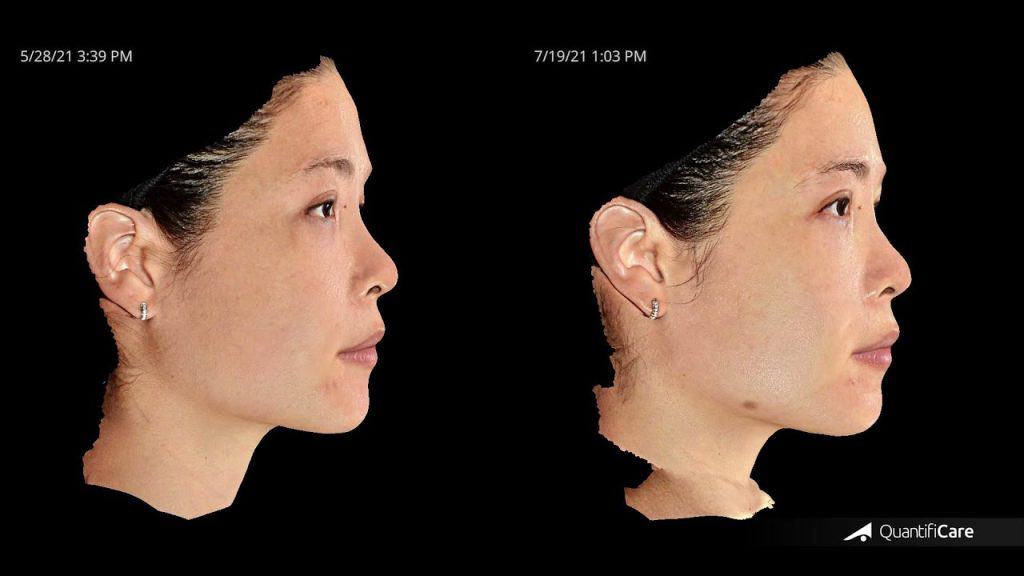
Ultherapy before and after
Initial results may be subtly visible immediately after treatment. However, the most dramatic improvements typically occur over the following 2-3 months as your body produces new collagen. The results continue to improve for up to 6 months post-treatment.
Check out these results to see the before and after differences with Ultherapy.
Ultherapy Malaysia price
The cost of Ultherapy in Malaysia may vary depending on several key factors. For example, the areas being treated, the practitioner’s experience, and the clinic’s location.
Generally, one should expect to pay anywhere from RM3,000 to RM15,000 for a full-face treatment. However, it’s best to consult with a qualified practitioner for a personalised quote based on your specific needs and goals.
Where to get Ultherapy treatment in Malaysia?
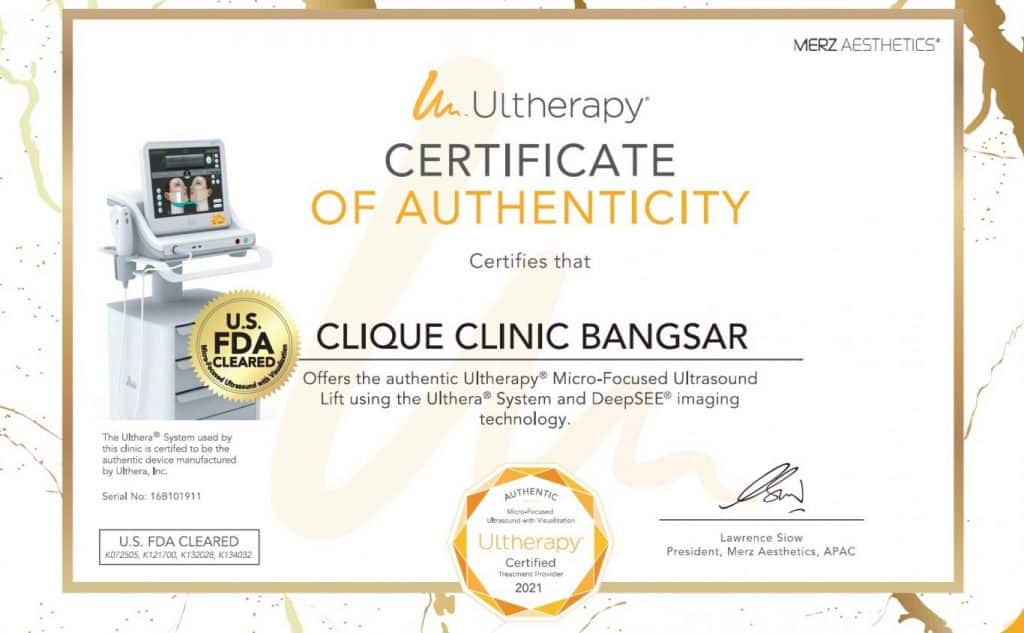
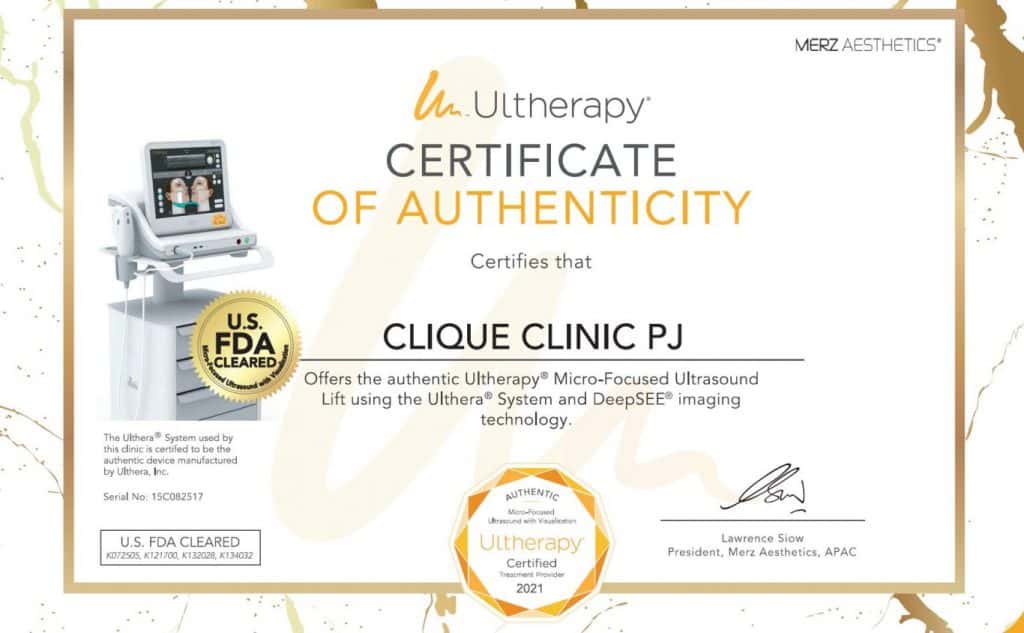
If you’re considering Ultherapy in Malaysia, it’s crucial to identify a reputable clinic with experienced practitioners. One such centre is Clique Clinic, which offers Ultherapy treatments performed by skilled professionals.
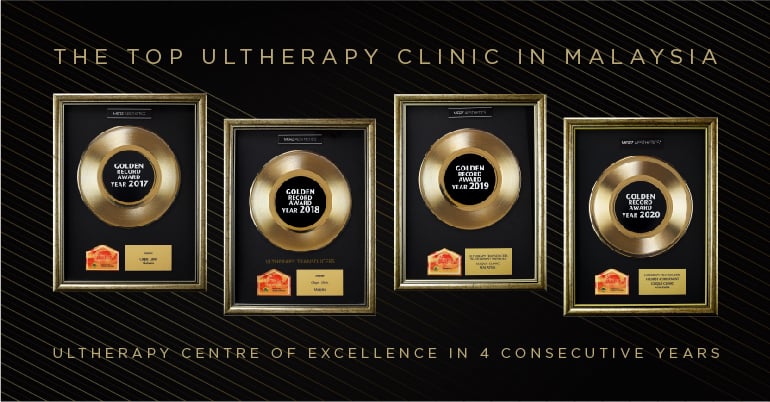
Having won the prestigious Ultherapy Golden Record Award for 4 consecutive years, Clique Clinic is renowned for its result-oriented approach and highest patient satisfaction rates. Our specialists apply advanced technique protocols and customised treatment plans to each patient, thus ensuring the best possible outcomes.
FAQ
What is the best age for Ultherapy?
There’s no specific “best” age for Ultherapy. It can be beneficial for adults of any age who are looking to improve skin laxity and signs of ageing. However, many patients start considering Ultherapy in their 30s or 40s when they begin to notice more pronounced signs of ageing.
How long does it take for Ultherapy to work?
While some patients notice an immediate “lifting” effect, the most significant results typically develop over 2 to 3 months as your body produces collagen. Noticeable improvements may continue for up to 6 months post-treatment.
How long do Ultherapy results last?
Ultherapy results typically last about 1 to 2 years. However, since your skin continues to age, touch-up treatments will help to maintain your results.
How often do you need to repeat Ultherapy?
Most patients find that they need a touch-up treatment every 1 to 2 years. This helps maintain the results. However, this may vary subtly depending on individual factors such as age, skin condition, and lifestyle.
What to avoid after Ultherapy?
Avoid direct sun exposure, strenuous exercise, and harsh skincare products for a few days post-treatment. These precautions help minimise side effects and maximise results.
How do you maintain Ultherapy results?
To maintain your Ultherapy results, follow a good skincare routine, protect your skin from sun damage, maintain a healthy lifestyle, and consider periodic touch-up treatments as recommended by your practitioner.
Where does Ultherapy work best?
Ultherapy works best on areas with mild to moderate skin laxity. It’s particularly effective for lifting the brow, tightening the neck and under-chin area, and improving lines on the décolletage.
How soon after Ultherapy can I exercise?
You can usually resume light exercise the day after your Ultherapy treatment. However, it’s best to avoid strenuous workouts for about a week to allow your skin to heal properly.
How soon can I wash my face after Ultherapy?
You can gently wash their face with a mild cleanser on the same day as your treatment. Avoid hot water and harsh scrubbing.
Can I use moisturiser after Ultherapy?
Yes, using a gentle moisturiser can help keep your skin hydrated and support the healing process.
Who is not a good candidate for Ultherapy?
Ultherapy may not be suitable for individuals with very loose skin, as they might benefit more from surgical options. It’s also not recommended for pregnant women or people with certain medical conditions or active skin infections.
How many sessions of Ultherapy are needed?
Most patients accomplish their desired results with just one Ultherapy session. However, some may benefit from additional treatments, especially if they have more significant skin laxity.
How painful is Ultherapy?
Comfort levels during Ultherapy vary from person to person. Some patients describe feeling a warm sensation or slight discomfort during the treatment. However, steps can be taken to manage any discomfort, such as over-the-counter pain medication, before the procedure.
Conclusion
Ultherapy is a safe, non-invasive option for people who want to improve skin laxity and treat indications of ageing. Without dictating invasive surgery or imposing a lengthy recovery period, its capacity to promote the formation of natural collagen produces effects that are progressive and natural-looking.
With a focus on delivering superior results without surgery or downtime, Clique Clinic has established itself as the go-to destination for Ultherapy in Malaysia.
However, remember that although Ultherapy can provide remarkable outcomes, long-term preservation of your youthful appearance depends on living a healthy lifestyle and adhering to a decent skincare regimen.