
Cryo Facial Therapy: What Is It, Benefits & Expectations
Discover what cryo facial therapy is, how it works, its benefits, what to expect during treatment and whether a cryofacial is worth trying.

Discover what cryo facial therapy is, how it works, its benefits, what to expect during treatment and whether a cryofacial is worth trying.

Collagen filler vs collagen biostimulator: compare how they work, results, longevity, safety and which injectable suits your skin concerns.

Mugwort in Skincare: What Is It, Benefits & Skin Type Suitability Key takeaways: Mugwort is a botanical skincare ingredient from the Artemisia genus, commonly used for soothing, antioxidant, and skin-barrier support. Mugwort helps calm temporary redness, irritation, and environmentally stressed skin, but it is not a treatment for inflammatory skin…

Exosome Serum: How It Can Amplify Your Existing Skincare Routine Key takeaways: Exosome serum is a repair-focused skincare product that supports cellular communication, hydration, barrier resilience and overall skin quality. Unlike retinol, vitamin C or hyaluronic acid, exosome serum works through intercellular signalling rather than primarily targeting cell turnover, oxidative…
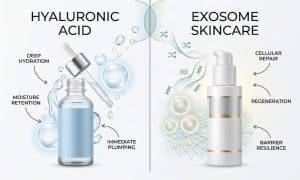
Exosome vs Hyaluronic Acid: Their Differences and How They May Complement Each Other Key takeaways: Exosome skincare and hyaluronic acid support skin in different ways: hyaluronic acid focuses on hydration, while exosome skincare focuses more on repair, resilience and cellular communication. Hyaluronic acid is a well-established hydrator that helps attract…

Exosomes vs Vitamin C: Their Differences & How They May Complement Each Other Key takeaways: Exosomes and vitamin C support skin health in different ways: vitamin C focuses on antioxidant protection, brightening and collagen support, while exosome skincare focuses more on repair, hydration and barrier resilience. Vitamin C has a…

Exosomes vs Retinol: Is Exosome Better Than Retinol? Key takeaways: Exosomes and retinol work differently: retinol speeds up skin renewal, while exosome skincare focuses more on cellular signalling, repair, hydration, and barrier support. Retinol has a longer and stronger evidence base for acne, wrinkles, pigmentation, and photoageing. Exosome skincare may…

Guide to Building a Skincare Routine That Works for You Key Takeaways A good skincare routine does not need to be complicated; for most people, the foundation is cleanser, moisturiser, and sunscreen. The correct skincare order is generally cleanser, treatment serum, moisturiser, and sunscreen in the morning, with sunscreen removed…

PDRN vs Retinol: Two Approaches to Skin Repair & Regeneration Key takeaways: PDRN and retinol are both effective for skin improvement, but they work through different mechanisms—repair vs renewal. PDRN supports skin regeneration, hydration, and barrier repair, making it suitable for sensitive or compromised skin. Retinol accelerates cell turnover and…

PDRN vs Exosomes: What They Do and How They Compare Key takeaways: PDRN and exosomes are regenerative treatments that improve skin repair, healing, and overall skin quality through different mechanisms. PDRN focuses on tissue repair and anti-inflammatory pathways, making it suitable for sensitive, damaged, or post-procedure skin. Exosomes enhance cellular…