Key Takeaways:
- Atrophic scars are indented scars caused by insufficient tissue regeneration, often from acne, chickenpox, or surgery.
- The three main types include:
-
- Ice pick scars (deep and narrow)
- Boxcar scars (broad with sharp edges)
- Rolling scars (wavy, uneven texture)
- Prevention tips: Early acne treatment, avoiding skin picking, proper wound care, sun protection, and maintaining skin health.
- Treatment options range from non-invasive creams and chemical peels to advanced laser therapies, microneedling, radiofrequency treatments, and dermal fillers.
- Multi-modal treatment plans, customised by dermatologists, yield the best results—especially when matched to scar type, skin tone, and patient preferences.
- Aftercare is essential to prevent pigmentation and support healing—gentle skincare, sun protection, and a nutrient-rich diet are recommended.
Introduction
Atrophic scars can have a profoundly negative impact on a person’s confidence and self-esteem. These scars often act as a reminder of previous injuries or skin disorders, such as severe acne.
In fact, they can cause self-consciousness, which could result in avoidance behaviours or a lower quality of life. Fortunately, some effective interventions exist to help minimise the appearance of atrophic scars and restore confidence.
This blog aims to explore atrophic scars, their causes, prevention, and treatment options. From microneedling to laser therapy, we will explore how various dermatological therapies work to significantly reduce the appearance of atrophic scars. Thereby, helping individuals feel more comfortable in their own skin.
What are Atrophic Scars?
Atrophic scars are scars characterised by skin indentations or depressions. In practice, they develop when one’s body fails to produce sufficient new tissue during the healing process from:
- Severe acne
- Chickenpox
- Surgeries
- Wounds
- Certain infections
This results in the loss of underlying structures, such as collagen, fat, or muscle, thus leaving the scar tissue below the normal skin level. They may also be caused by genetic predispositions.
The three primary categories of atrophic scars are:
- Rolling scars (large with sloping edges that provide a wave-like texture)
- Boxcar scars (broad with sharp edges and flat bottoms)
- Ice pick scars (narrow and deep with a V-shaped appearance).
Atrophic scars may differ in pigmentation from the surrounding skin, frequently appearing lighter or darker. In fact, beyond resembling tiny craters or divots, they may have a different texture from other skin parts.
Though they can appear anywhere on the body, they are most frequently found on the face and cheeks. Fortunately, they don’t have any health dangers. However, they can have a significant impact on confidence and self-esteem.
Atrophic vs. hypertrophic vs keloid scars
The three main forms of scars—atrophic, hypertrophic, and keloid—each have unique traits and underlying causes. Atrophic scars are sunken or depressed scars that develop as a result of inadequate collagen synthesis during the healing phase.
Hypertrophic and keloid scars, on the other hand, are elevated scars caused by an overabundance of collagen during the healing process. However, they differ in their growth patterns and severity.
Hypertrophic scars are thick, red, or pink. They stay inside the boundaries of the initial damage. They also typically cause pain or itching, but normally disappear in a year or two.
In contrast, keloid scars extend beyond the original wound site and continue growing over time. They are shiny, firm, and may be darker than the surrounding skin. Keloids are more common in individuals with darker skin tones and often result from injuries like cuts, burns, or piercings.
Atrophic scar types
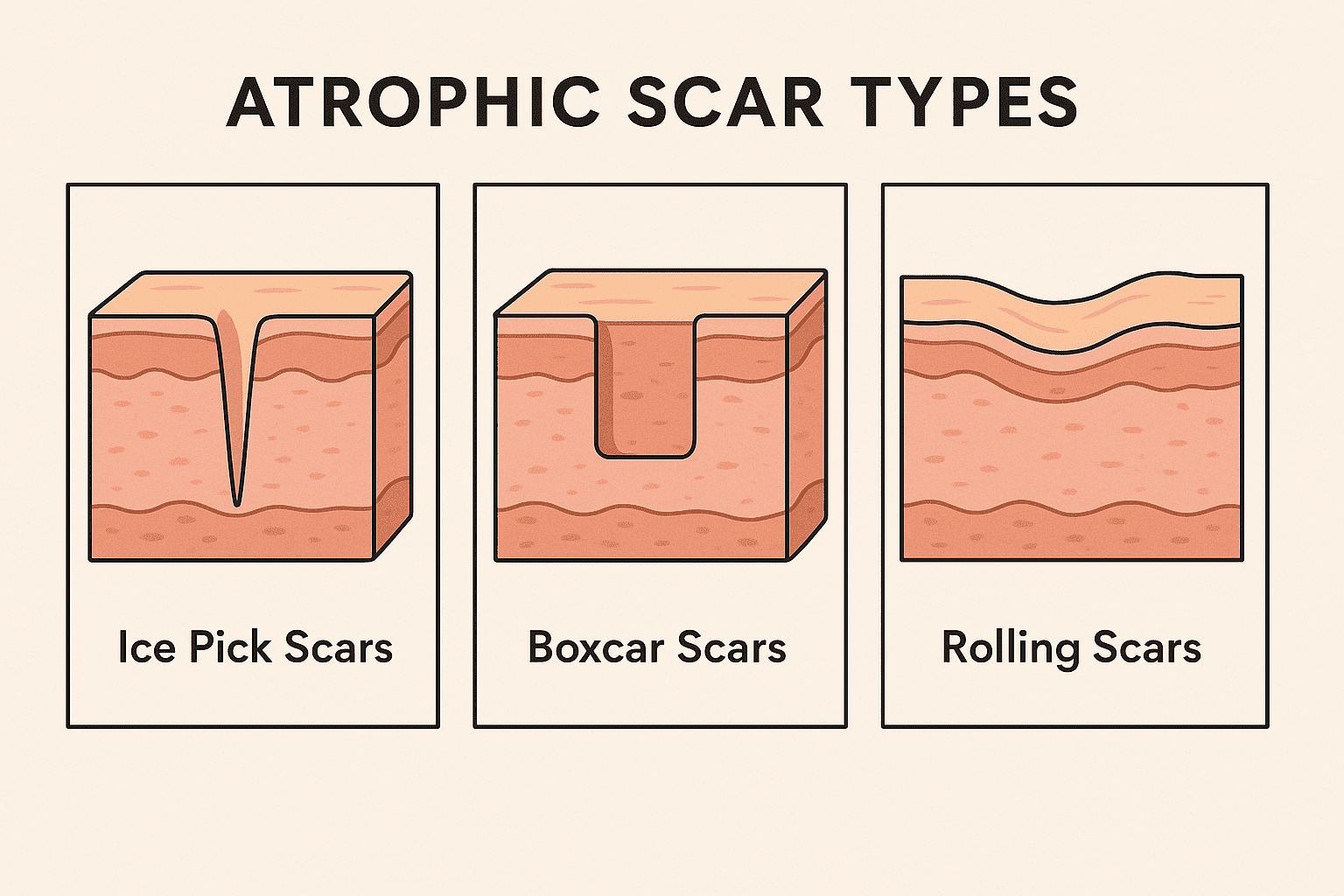
Based on their morphology, atrophic scars can be divided into three primary types, namely:
- Ice Pick Scars: These are thin, deep scars that resemble tiny skin punctures. They make up roughly 60% to 70% of all atrophic scars. As such, they are the most prevalent type of atrophic acne scar. Because of their depth and narrowness, they are very difficult to cure.
- Boxcar Scars: These scars have flat bottoms and sharply-defined edges. They are ‘wider’ than they are ‘deep’, often appearing in places with thicker skin, such as the jaw and lower cheekbones. They are typically caused by chickenpox or extensive acne.
- Rolling Scars: These scars are characterised by a wavy appearance because of the unevenness of the skin surface. Rolling scars account for 15% to 25% of atrophic scars.
Causes of Atrophic Scars
Atrophic scars may be caused by a combination of variables that interfere with the skin’s natural healing process, resulting in the loss of tissue and collagen. The most common causes are:
- Severe inflammatory acne: Collagen may be destroyed by the severe inflammation linked to cystic or nodular acne. Thereby, leaving the skin with deep pits or depressions.
- Other causes: Chickenpox may also cause atrophic scars. Traumatic injuries and aesthetic operations, like mole removal, may also cause atrophic scarring if the wound-healing process is hampered. Second and third-degree burns may also cause astrophic scars.
- Genetic factors: Genetic predispositions may impact a person’s skin type and healing capacity and make them more susceptible to atrophic scarring.
- Skin healing process: When one’s skin doesn’t regenerate new tissue during the healing process, atrophic scars may develop. This failure leads to a loss of collagen and underlying structures like fat or muscle, causing the scar tissue to be below the level of the surrounding skin.
Prevention strategies for Atrophic Scars
To prevent atrophic scars, kindly consider the following approaches:
- Early and effective treatment of acne: Address acne before it becomes severe to appreciably reduce the risk of deep scars. Early treatment may prevent the inflammation that often leads to tissue loss and scarring.
- Avoid picking or squeezing pimples: Squeezing pimples increases the possibility of scarring by introducing bacteria and causing further inflammation.
- Proper wound care for injuries: Keeping wounds clean and free from infection helps promote healthy healing and minimises tissue loss.
- Sun protection to prevent worsening of scars: Protecting scars from UV rays with sunscreen can prevent them from becoming darker and more noticeable.
- Maintaining overall skin health: Keeping the skin well-hydrated and using gentle skincare products can appreciably reduce the risk of scarring. For instance, regularly employing Retinol can help promote collagen production and enhance cell turnover.
Atrophic Scars treatment
In most instances, atrophic scars cannot be permanently eliminated. However, their appearance can be appreciably reduced through a multi-modal approach. A multi-modal approach often yields better outcomes than using a single treatment method.
In fact, this approach should be tailored to an individual’s skin and scar type to address various aspects of scarring, such as texture, volume, and colour. It may involve a combination of non-invasive treatments, minimally invasive procedures—and sometimes even surgical interventions.
Non-invasive treatments
Non-invasive treatments are inherently the first line of defence against atrophic scars. They are less risky and can be used in combination for optimal results, depending on the severity and type of scarring.
1. Atrophic scar creams: Retinoid-based topical therapies may enhance skin texture and foster the production of collagen—both of which help to lessen the visibility of scars. These creams can be used in combination with other treatments to increase their efficacy. In fact, they are usually the first line of treatment for minor atrophic scars.
2. Chemical peels: Trichloroacetic acid (TCA) chemical peels can help resurface the skin by enhancing its texture and lessening the visibility of scars. Particularly, ice pick scars respond very well to the CROSS technique, which uses a concentrated application of high-concentration TCA. Compared to other peeling techniques, this therapy has a small rate of complications and encourages faster healing.
3. Advanced laser treatments: Advanced laser treatments exploit picosecond technology to enhance skin texture and promote collagen formation For instance, Pico Laser Treatment, PicoSure, PicoSure Pro and Pico Majesty.
In practice, pico lasers encourage collagen remodelling and lessen the visibility of boxcar and rolling scars by evening out the skin’s surface.
4. Microneedling: Microneedling involves making tiny punctures into one’s skin to augment skin texture and promote collagen formation. microneedling entails making tiny punctures. By encouraging skin regeneration and increasing collagen synthesis, it helps effectively treat atrophic scars when employed with chemical peels or laser treatments.
5. Radiofrequency microneedling (Potenza): Radiofrequency microneedling tightens the skin and increases the formation of collagen by combining microneedling with radiofrequency energy. This therapy is effective for deeper scars because it offers greater penetration and better outcomes than conventional microneedling.
6. Dermal Fillers: Dermal fillers are typically incorporated into multi-modal treatment programs for atrophic scars, despite not being completely non-invasive. They are safe and effective at replenishing lost volume to fill up depressed scars. Although they produce results instantly, fillers are temporary and may require repeated applications. Also read: Are dermal fillers safe?
How to choose the right treatment approach for Atrophic scars?
Selecting the right treatment approach for atrophic scars involves considering several key factors, namely:
- Scar type and severity: Disparate treatments are more effective for specific types of atrophic scars. For instance, ice-pick scars may benefit from the CROSS technique using TCA peels. Boxcar and rolling scars might respond better to laser treatments or microneedling.
- Skin type: Darker skin types may require more cautious use of chemical peels to avoid post-inflammatory hyperpigmentation (PIH). By the same token, laser settings must also be dynamically adjusted based on one’s skin type to minimise risks.
- Patient’s age and health: Older patients may have thinner skin and specific medications, which could affect the choice of treatments.
- Budget considerations: Non-invasive treatments are generally more affordable than advanced laser treatments or surgical interventions.
Overall, a professional assessment by a dermatologist is crucial for determining the best treatment plan. They can extensively evaluate the scars, and recommend a personalised approach based on the factors mentioned above.
Read: Choosing the Right Aesthetic Physician for Yourself
Clique Clinic’s LCP Certified Doctors curate personalised treatment plans that consider the patient’s lifestyle, budget, and aesthetic goals to tailor a multi-modal treatment approach. This allows Clique Clinic to maximise the effectiveness of treatments whilst minimising potential side effects and downtime.
Recovery and Aftercare
Atrophic scar recovery and aftercare differ depending on the treatment approach. After chemical peels, one’s skin may be red and sensitive. This dictates gentle skincare and sun protection to prevent complications like hyperpigmentation.
Microneedling usually causes some redness and swelling. However, it usually goes away completely in a few days. After the procedure, one should use soft treatments and avoid the sun.
The duration of recovery from laser treatments might vary from a few days to many weeks, and they may produce transient redness and discomfort. Although dermal fillers offer instant results, they can also result in transient bruising or swelling that goes away in a week.
To encourage smooth recovery, general aftercare recommendations may include:
- Cleaning the treatment area
- Limiting sun exposure
- Consuming a balanced diet high in vitamins C and D
- Using mild skincare products.
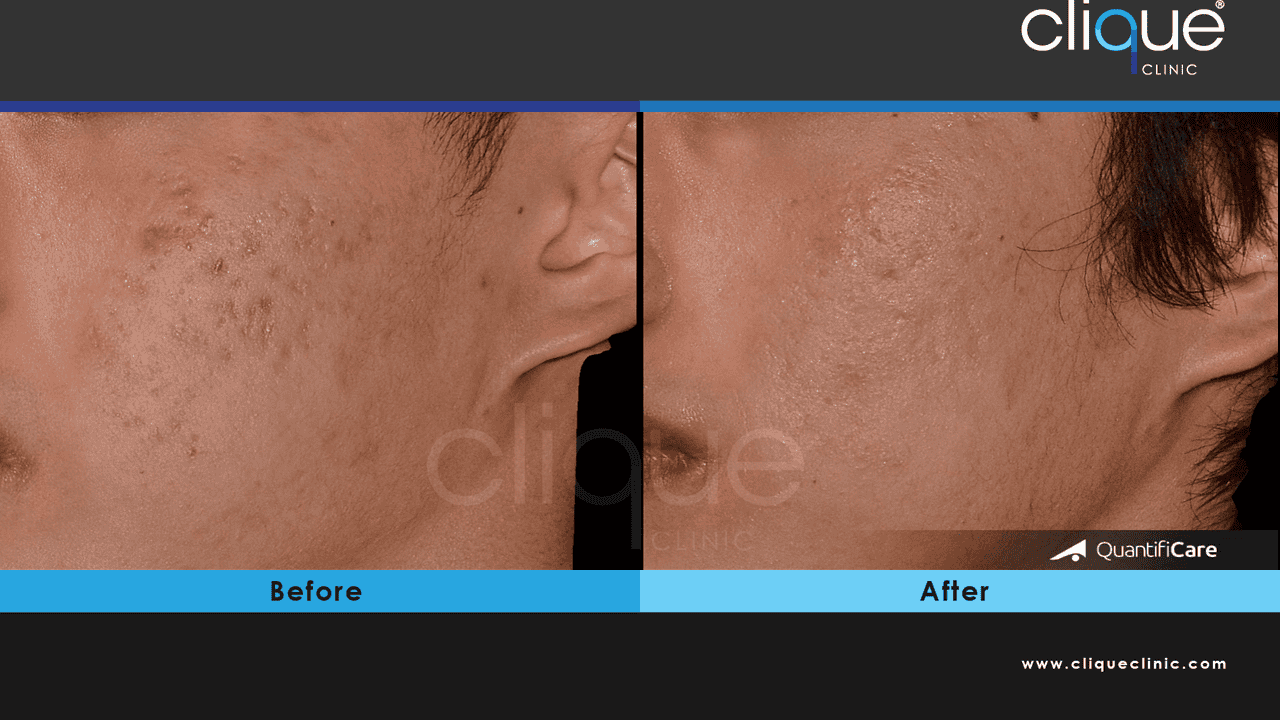
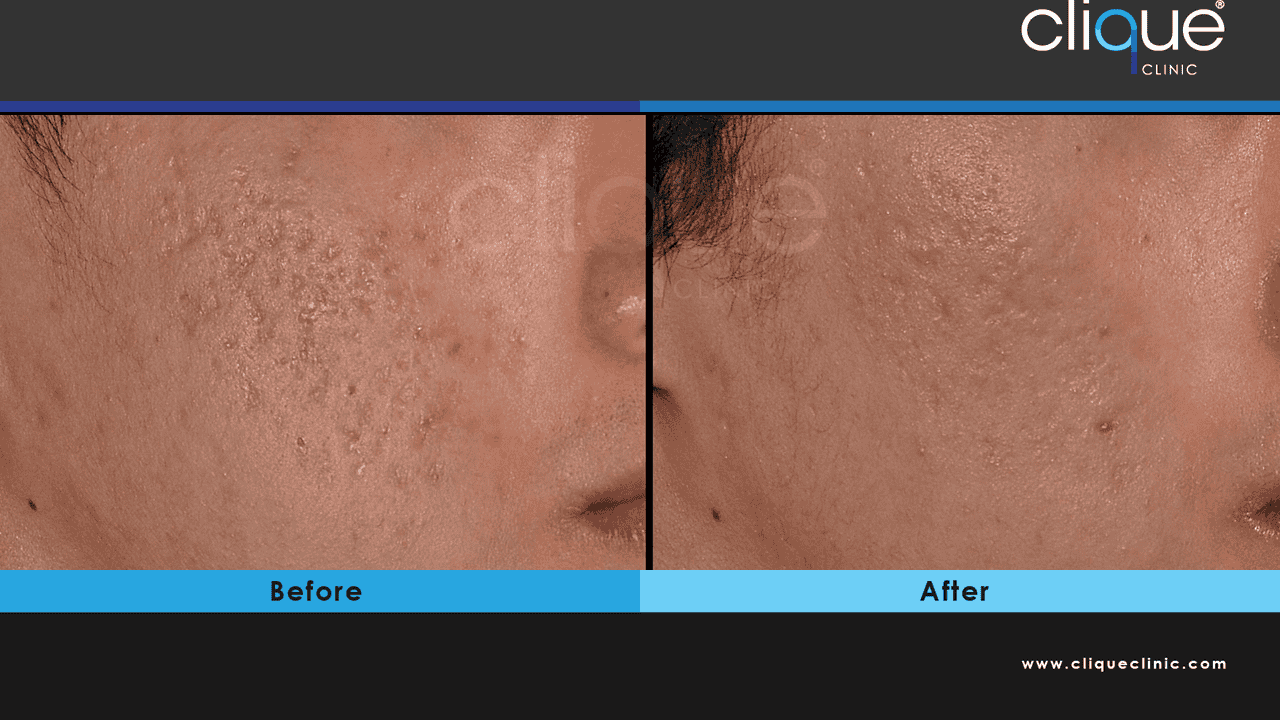
Also read: 5 Mistakes People Make When Getting Aesthetic Treatments
How much do atrophic scar treatments cost in Malaysia?
In Malaysia, the cost of atrophic scar treatments largely depends on the clinic and procedure type. The cost of laser treatments typically varies between RM 500 and RM 3,000 for each session—depending on the size of the treated region and the laser employed.
Each session of microneedling usually costs between RM 1000 and RM 2,500. The cost of each chemical peel session ranges from RM 200 to RM 1,000. Each session of dermal fillers might cost anything from RM 1,500 to RM 4,000. Packages for several sessions are available at many clinics, which can lower the cost of treatments.
FAQs for Atrophic Scar treatment
Are atrophic scar treatments painful?
Atrophic scar treatments vary in terms of pain, depending on the specific procedure. However, they are generally manageable. Chemical peels may cause momentary, mild burning. Microneedling can cause some mild discomfort.
Pico laser treatments are generally well-tolerated with low pain levels. Dermal fillers may cause minor discomfort akin to getting a vaccination.
How many sessions are typically needed for Atrophic scar treatment?
The number of sessions needed for atrophic scar treatment depends on the type of treatment and the severity of the scars. For example, laser treatments require two to five sessions—spaced three to four weeks apart.
Microneedling typically requires an average of four to six sessions to have a significant impact on atrophic scars. TCA chemical peels may also require multiple sessions, often spaced four weeks apart, for the best outcomes.
Is Atrophic scar treatment permanent?
Atrophic scar treatments aren’t always permanent. Their effectiveness can vary depending on the method employed.
For example, microneedling often dictates multiple sessions to achieve desired results. Furthermore, they may not be permanent and may need follow-up treatments to sustain results. Dermal fillers provide immediate but temporary results that last from six to 18 months before needing to be repeated.
Is Atrophic scar treatment suitable for all skin types?
Atrophic scar treatments are generally suitable for most skin types. However, certain considerations must be taken into account. For example, chemical peels and laser therapies can be deployed across various skin types. However, darker skin types may require more cautious use to avoid post-inflammatory hyperpigmentation.
Conclusion
In summary, atrophic scars can be effectively combated utilising a multi-modal approach—tailored to one’s individual needs. Chemical peels can be employed to exfoliate the top layers of the skin, while microneedling can stimulate collagen production to ‘refill’ depressed scars.
Laser treatments can promote skin regeneration and collagen synthesis. Thus, reducing the depth and visibility of scars. At the same time, dermal fillers can lift indented areas.
For personalised treatment plans and expert care, visit Clique Clinic Malaysia for a consultation with our experienced dermatologists to choose the best approach for your atrophic scars.