Key Takeaways:
- Ice pick scars are deep, narrow, and sharply indented acne scars—commonly found on the forehead, cheeks, and chin.
- They result from severe cystic acne, deep inflammation, collagen loss, and delayed or improper treatment.
- Prevention tips include early acne intervention, avoiding skin picking, using retinoids and SPF, and consulting a dermatologist for tailored care.
- Common treatments include: TCA CROSS for deep collagen stimulation, Punch excision & punch elevation for surgical correction, Microneedling and radiofrequency microneedling (Potenza) for collagen remodelling, Laser treatments (e.g., PicoSure, Aerolase) for skin resurfacing.
- Multi-modal therapy is often essential due to the depth of ice pick scars—combining structural and resurfacing techniques for optimal results.
- All skin types can be treated, but methods must be customised to minimise risks like hyperpigmentation.
Introduction
Ice pick scars—distinguished by thin, deep skin indentations—can have a major negative effect on one’s self-esteem. They can attract unwelcome attention and make anyone feel less confident in social situations.
Fortunately, ice pick scars can be properly addressed with several dermatological therapies. This article aims to discuss ice pick scar causes, prevention and treatments, such as chemical peels and microneedling.
It also aims to explore other sophisticated procedures that improve skin texture and increase collagen formation, like punch elevation. So, without further ado, let’s get started!
What are Ice Pick Scars?
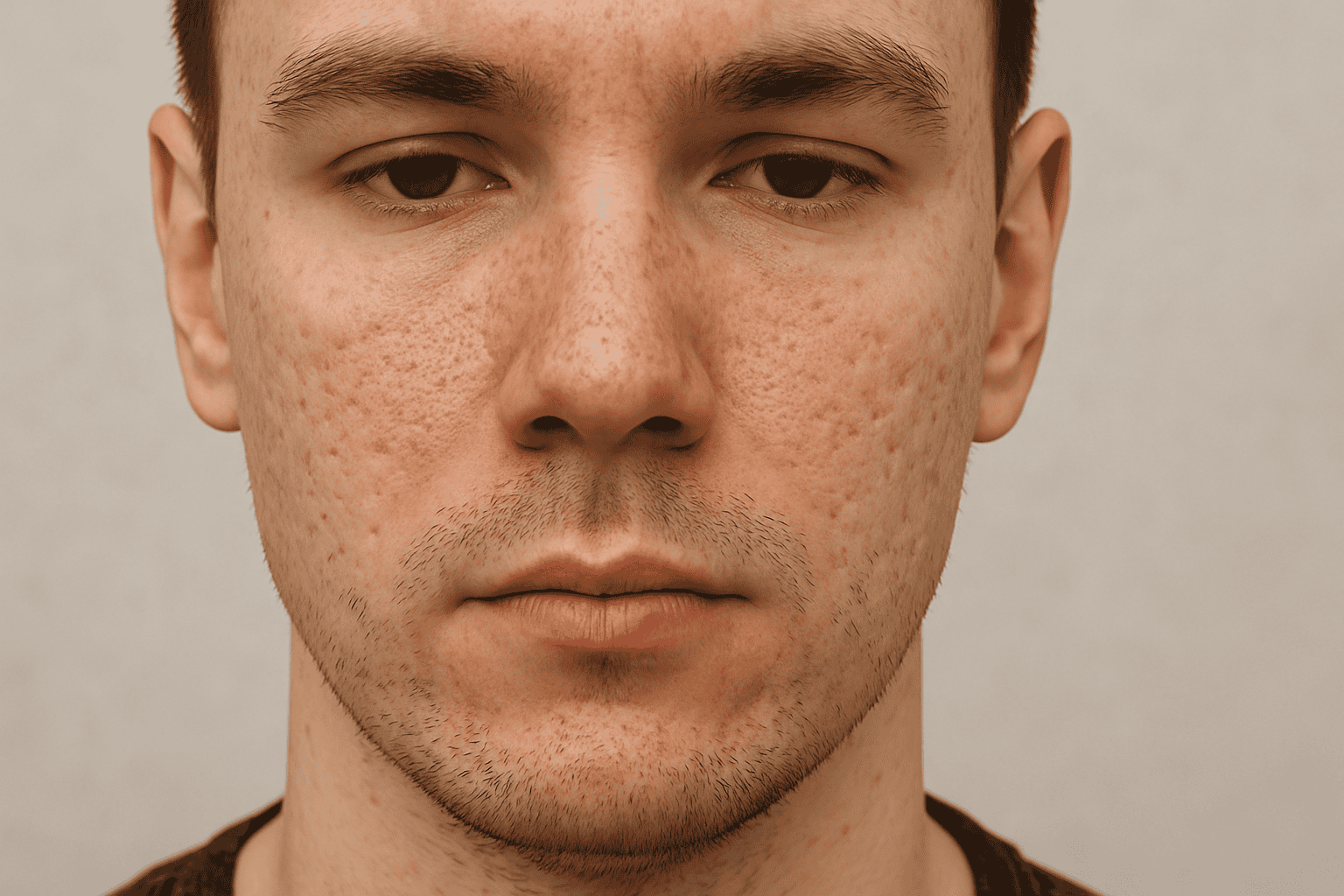
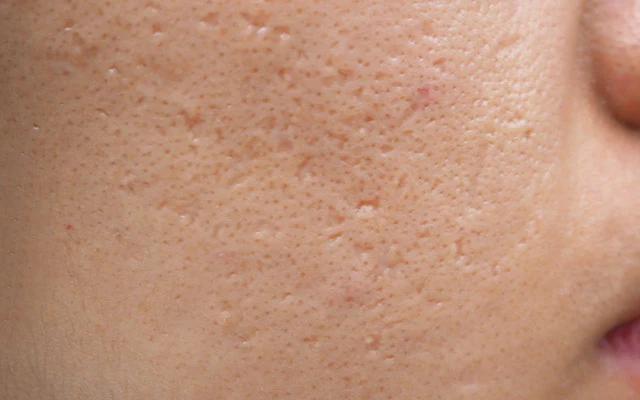
An ice pick scar is a unique type of atrophic acne scar that’s distinguished by deep, pitted and narrow indentations. In practice, these scars are often less than 2 millimetres broad and penetrate deeply into the dermis. Thus, giving them a pierced or “V-shaped” appearance.
Ice pick scars typically result from severe acne, such as cystic acne, which harms the skin’s inner layers. They are often found on the cheekbones, forehead, and occasionally the chin. In fact, because of their sharp borders and steep edges, these scars are very noticeable.
Generally, ice-pick scars differ from other forms of acne scars in terms of their shape and depth. For instance, boxcar scars are larger, have distinct vertical lines, and are rectangular or oval in shape.
Rolling scars are shallow and have sloping edges that give them a wave-like look. Because of their depth, ice pick scars cannot be eliminated without professional care— unlike rolling scars that could gradually diminish. Knowing these distinctions is mission-critical to choosing the best course of dermatological action for each acne scar type.
Causes of Ice Pick Scars
Ice pick scars may be caused by different triggering factors, such as:
- Severe acne: Ice pick scars are primarily caused by severe forms of acne, such as cystic or nodular acne that deeply penetrates the layers of the skin.
- Deep tissue destruction and inflammation: Inflamed acne lesions have the potential to destroy deeper tissue layers, resulting in scarring.
- Collagen destruction: During the healing process of inflamed acne, insufficient collagen production can result in ice-pick scars.
- Genetic predisposition: Due to differences in their skin’s collagen production and healing response, certain people are genetically more likely to scar.
- Treatment delays: Ignored or mishandled acne, such as pricking pimples, interferes with the body’s natural healing process. Thereby increasing the risk of long-lasting scarring.
Prevention strategies for Ice Pick Scars
To prevent ice pick scars, it’s imperative to religiously follow these tips:
- To avoid severe inflammation and reduce scarring risks, aggressively treat cystic and nodular acne as soon as possible.
- Seek individualised dermatological treatment regimens catered to your skin type and acne severity by engaging a professional dermatologist.
- Avoid picking or squeezing acne lesions as it exacerbates inflammation, interferes with the healing process, and increase the risk of scarring.
- To promote skin health and stop acne outbreaks, use mild, non-comedogenic products with active components like retinol.
- Apply broad-spectrum sunscreen daily to prevent UV damage, which can darken scars and hinder skin healing.
Treatment for Ice Pick Scars
The goal of rolling acne scar treatment is to minimise the obvious appearance of shallow skin indentations caused by chronic inflammation and collagen loss.
Common treatment techniques
The most common dermatological therapies for ice pick scars are non-invasive and minimally invasive techniques that promote collagen synthesis and resurface the skin. Here are some examples.
- TCA CROSS (Trichloroacetic Acid Chemical Reconstruction Of Skin Scars): TCA CROSS is a specialised treatment for ice-pick scars that involves directly applying concentrated trichloroacetic acid to the scar’s deepest area. In practice, the acid destroys the epithelial lining of the scar. Thereby, stimulating collagen production and allowing new skin to form across the base of the scar. A patient typically needs 3-4 sessions for a noticeable 50-70% improvement.
- Punch excision: This surgical technique removes individual ice pick scars by excising them and stitching the skin together. Recovery usually involves mild swelling and redness. However, its outcome is typically smoother skin and reduced scar visibility.
- Punch elevation: Unlike punch excision, punch elevation lifts the base of the scar to match surrounding skin levels—without removing tissue. Generally, this intervention is ideal for patients with deeper scars that are not excessively narrow.
- Microneedling: Microneedling improves skin texture and lessens the appearance of scars by stimulating collagen production through carefully regulated micro-injuries. Although it works well for superficial scars when used alone, it might not be as beneficial for deeper ice pick scars.
- Radiofrequency microneedling (Potenza): Potenza enhances collagen stimulation by combining radiofrequency (RF) energy with microneedling. Consequently, this tightens and improves the general texture of the skin around scars.
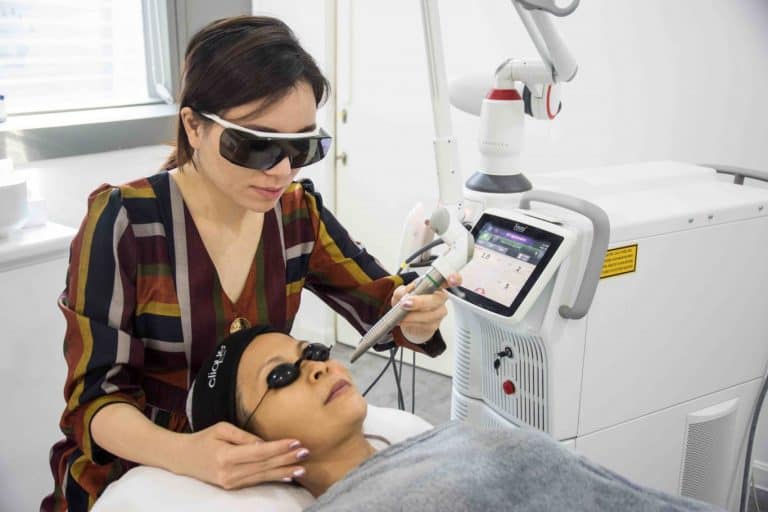
- Laser Treatments (PicoSure, PicoSure Pro, Pico Majesty and Aerolase Laser): These laser treatments target ice pick scar tissue by encouraging collagen remodeling and skin resurfacing. Characterised by minimal downtime, they appreciably improve skin texture and lessen scar depth. However, several sessions might be necessary to get the best effects.
Why multi-modal approaches work best for Ice Pick Scars?
Ice pick scars are exceedingly difficult to treat with a single technique. In fact, they typically require both skin resurfacing and structural correction to provide a discernible improvement. As such, a multi-modal approach is the most effective.
Combining treatments targets different levels and elements of the scars. In fact, customised treatment regimens are critical because scar form, skin tone, severity, and healing ability differ from person to person.
For instance, overall texture and tone can be refined with laser treatments like PicoSure or Aerolase Laser. On the other hand, microneedling can help with collagen remodelling.
How to choose the best treatment approach for ice pick scars?
When choosing the most optimal treatment approach for ice pick scars, it’s imperative to consider the following variables:
- Scar width and depth: The degree of ice pick scarring dictates whether more invasive procedures or non-invasive therapies are necessary. In practice, deeper scars typically dictate surgical procedures for the best results.
- Scar count: A large number of scars may call for multi-modal strategies that combine methods like chemical peels, microneedling, and laser resurfacing.
- Skin tone and type: To prevent issues like post-inflammatory hyperpigmentation (PIH), treatments must be customised for each patient’s unique skin type.
- Budget considerations: Minimally invasive procedures like chemical peels or microneedling are usually more affordable than surgical interventions like punch excision.
- Downtime Tolerance: Radiofrequency microneedling has little downtime. This makes it a great choice for people with hectic schedules. However, surgical procedures like punch excision might require longer recovery times.
For more reading, check out: 5 Mistakes People Make When Getting Aesthetic Treatments
Recovery and Aftercare for Ice Pick Scars
Recovery and aftercare for ice pick scar treatments can vary depending on the technique deployed. Patients can typically anticipate mild side effects like crusting, edema, and redness.
More intrusive procedures like punch excision may take up to a week for early recovery. However, non-invasive treatments like chemical peels and microneedling usually have shorter downtimes—lasting one to three days.
To prevent any side effects, consider:
- Utilising calming lotions, moisturising serums and sunscreen.
- Staying away from harsh skincare products.
- Keeping the treatment area clean to avert infection.
- Refrain from touching or picking at the treated skin.
- Adhere to the dermatologist’s wound care guidelines.
During the early stages of recovery, it’s also advisable to refrain from physically demanding activities and heavy perspiration. It’s also imperative to engage a dermatologist.
Dermatologists’ personalised aftercare regimens guarantee that each patient’s skin demands are satisfied, accelerating healing and improving results.
What is the cost of ice pick scar treatment in Malaysia?
Ice pick scar treatments in Malaysia vary in price depending on the therapy type, number of sessions and clinic reputation. Microneedling costs between RM 1,000 and RM 2,500 per session. Chemical peels typically cost between RM 350 and RM 1,000 per session.
The cost of Pico Laser treatment can range from RM 500 to RM 2,500 for each session— with package discounts typically lowering the pricing.
FAQs on Ice Pick Scar Treatment
Are ice pick scar treatments painful?
Ice pick scar treatments are typically not thought to be painful. However, a local anaesthetic is deployed to ensure the patient is pain-free during surgical procedures like punch excision.
TCA CROSS application may result in a slight burning sensation. However, this irritation is temporary and controllable without anaesthetic. Overall, most patients can endure little discomfort or a tingling sensation during non-invasive procedures like microneedling.
How many sessions are typically needed for icepick scar treatment?
Scar depth, the treatment selected, and the patient’s skin type all affect the number of sessions needed for ice-pick scar treatment.
For non-invasive procedures like chemical peels and microneedling, three to six sessions separated by a few weeks are usually needed to provide a visible improvement.
Pico laser treatments typically require two to five sessions. Surgical methods like punch excision may require fewer sessions. However, for best outcomes, follow-up treatments like resurfacing may be required.
Can ice pick scars be completely eliminated?
Because they are deep and narrow, ice pick scars are one of the most difficult forms of acne scars to cure. However, their appearance can be appreciably improved by promoting collagen synthesis and replacing scar tissue with healthier skin. To get the greatest outcome, dermatologists frequently advise a multi-modal strategy catered to each patient’s needs.
What is the success rate for ice pick scar treatments?
The technique employed, the extent of the scars, and each person’s skin response all affect how successful ice pick scar treatments are. Studies show that 70-75% of patients demonstrate appreciable improvements after 3–4 sessions.
In certain situations, surgical techniques like punch excision, when combined with chemical peels or laser therapy, have shown remarkable improvements of up to 90%— for deeper scars.
Are there any risks or side effects for ice pick scar treatment?
Ice-pick scar treatments have disparate risks and adverse effects, depending on the treatment chosen. While microneedling might result in temporary swelling or bruising, non-invasive therapies like TCA CROSS may cause temporary hypopigmentation or redness.
In addition to redness, peeling, and increased sun sensitivity, radiofrequency treatments come with a small risk of infection if correct aftercare is not followed. Generally, religiously following recovery guidelines suggested by your dermatologist can help manage any side effects.
Is ice pick scar treatment suitable for all skin types?
Ice pick scar treatments can benefit all skin types. However, to guarantee safety and efficacy, the treatment selection must be tailored to the patient’s skin tone, scar depth and type.
Conclusion
Ice pick scars can be unsettling because of their deep and narrow appearance. Nonetheless, there are a number of efficient treatments for these scars. For example, TCA CROSS and microneedling smooth out the texture of the skin and lessen the visibility of scars by stimulating collagen production.
With an emphasis on safety and customer satisfaction, Clique Clinic provides a variety of dermatological therapies catered to addressing ice pick scars. Our team of specialists offer individualised treatment programs. Thanks to this all-encompassing approach, each treatment approach is carefully chosen to augment the texture and appearance of your skin.