Key Takeaways:
- Rolling scars are atrophic acne scars with a wave-like appearance, caused by collagen loss and fibrous bands tethering the skin.
- They are most commonly found on the cheeks, jawline, and temples, becoming more visible with age due to loss of skin elasticity.
- Key causes include severe inflammatory acne, chronic inflammation, collagen breakdown, genetics, and delayed acne treatment.
- Prevention tips: Early acne management, avoiding skin picking, sun protection, and maintaining a consistent skincare routine.
- Effective treatments: Microneedling and radiofrequency microneedling (Potenza), Chemical peels and microdermabrasion, Laser therapies like PicoSure and Aerolase, Subcision and dermal fillers to release tethering and restore volume
- Multi-modal treatments combining methods are the most effective, personalised to scar type, skin tone, and budget.
- Recovery times vary: mild redness from peels and microneedling, bruising with subcision, or swelling with fillers.
Introduction
While rolling scars can’t be completely removed, their appearance can be significantly improved with consistent care and expert intervention.
Atrophic acne scars, such as rolling scars, can negatively influence one’s self-consciousness. Their appearance in noticeable places, like the face, can intensify emotions of shame—interfering with social relationships.
Thankfully, there are a number of dermatological interventions that may lessen the visibility of rolling scars. This educational blog aims to unpack rolling scars and discuss the efficacy of different therapies in minimising their visibility.
What are Rolling Scars?
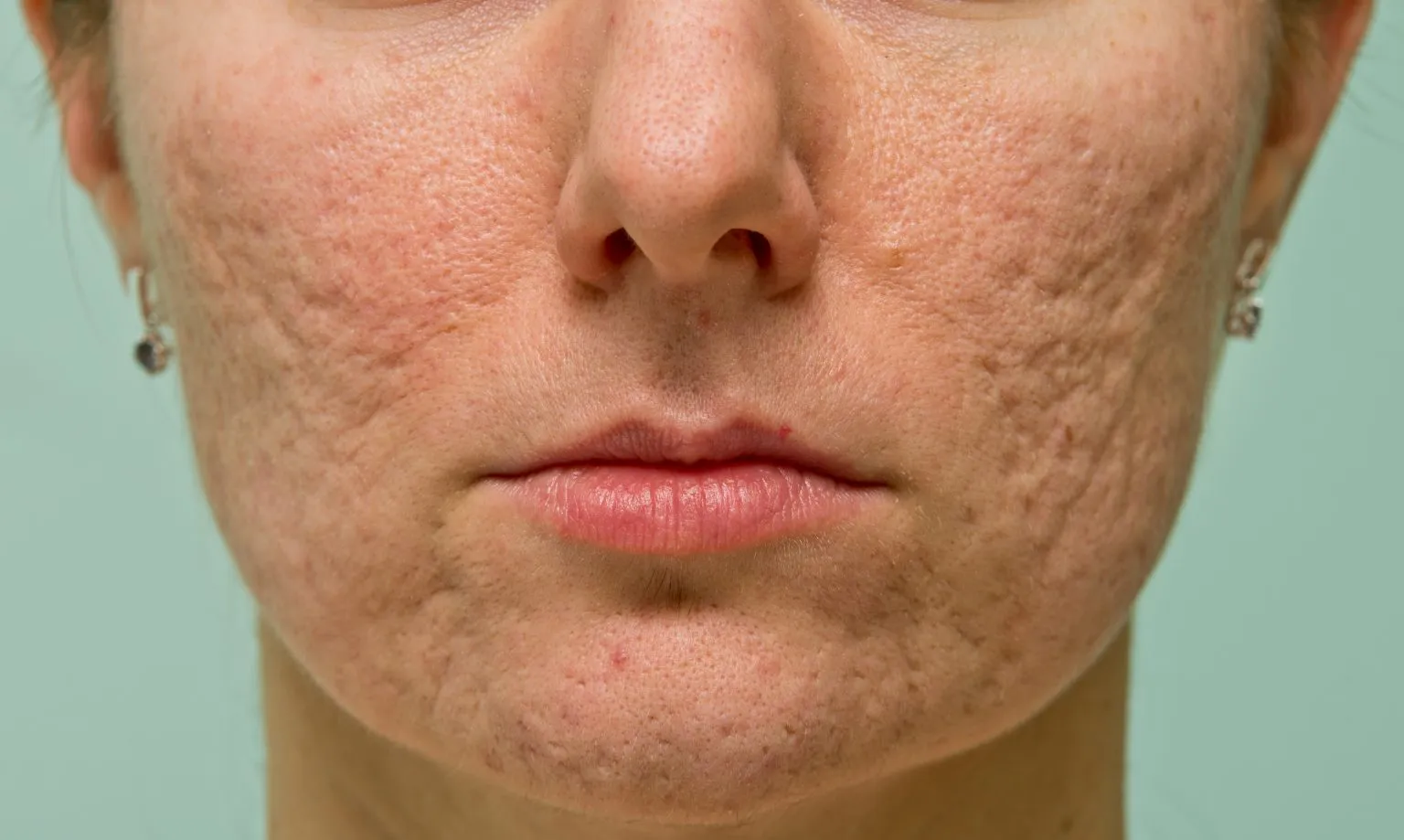
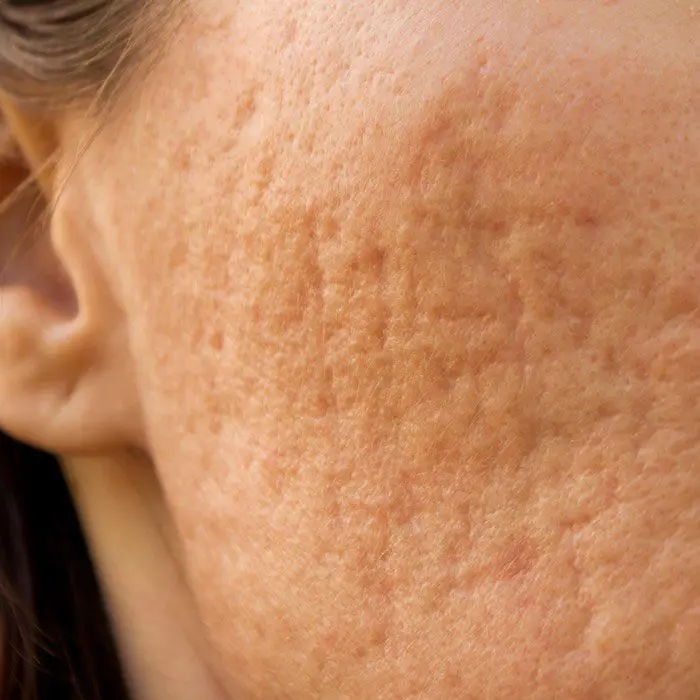
Rolling scars are a type of atrophic acne scar characterised by a smooth, wave-like appearance on one’s skin’s surface. Unlike other acne scar types, rolling scars lack sharply defined edges. Rather, they have rounded, sloping borders that are several millimetres wide.
Rolling scars’ small indentations typically intensify with age as the skin loses its elasticity. In fact, they are particularly evident in places with thicker skin, such as the jawline, temples, and lower cheeks.
In practice, the healing of severe inflammatory acne, such as cysts or nodules, is directly associated with the development of rolling scars. During this process, collagen production may be insufficient or disrupted, thus leading to abnormal fibrous anchoring between the dermis and subcutaneous tissues.
Consequently, this tethering effect pulls the surface of the skin downward—giving these scars their distinctive uneven texture and “rolling” look.
Rolling scar vs boxcar
There are two distinct types of atrophic acne scars: rolling scars and boxcar scars. Rolling scars are defined by their shallow, wavy, undulating appearance—frequently several millimetres broad with sloping edges.
Boxcar scars, on the other hand, are usually round or oval depressions with steep, well-defined edges. They are often narrower than rolling scars but larger than ice-pick scars. Generally, boxcar scars are more difficult to heal than rolling scars because of their deeper and more defined edges.
Causes of Rolling Scars
Rolling scars may be caused by a variety of factors, such as:
- Inflammatory acne: Severe inflammatory acne, such as cysts or nodules, is the main cause of rolling scars.
- Chronic inflammation: Prolonged inflammation caused by acne lesions can cause the dermis’s collagen to break down. This significantly raises the risk of rolling scarring.
- Collagen destruction: Rolling scars may result from the breakdown of collagen fibres in the skin’s deeper layers.
- Fibrous bands: Fibrous bands that develop beneath the skin’s surface and pull it downward may cause rolling scars.
- Genetic factors: Some individuals may naturally be more prone to developing scars due to inherited traits.
- Delayed or improper treatment: Delayed or improper treatment of acne, exacerbated by habits like picking or squeezing acne lesions, increases the risk of scarring.
Prevention strategies for Rolling Scars
To prevent rolling scars, kindly consider:
- Moderate to severe acne must be treated as soon as possible to avoid scarring. Early treatments can decrease inflammation, appreciably reducing the chances of rolling scars developing.
- If your acne is persistent, it’s crucial to speak with a dermatologist. They can offer suitable treatment options based on your skin type to help avoid rolling scarring.
- Avoid picking or squeezing pimples because these behaviours can worsen inflammation and increase the risk of scarring.
- Maintain a regular skin care regimen that constitutes mild washing, exfoliation, and moisturising. This will help effectively manage acne and lower the risk of scarring.
- Utilise sunscreen with SPF 30 or higher to prevent worsening of existing scars.
Rolling Acne Scar treatment
The primary goal of rolling acne scar treatment is to minimise the appearance of the wide, shallow skin indentations that characterise rolling scars.
Non-Invasive and Minimally Invasive Treatments
Different non-invasive and minimally invasive techniques can be deployed to promote collagen synthesis, resurface the skin, or smooth out skin texture. These dermatological techniques can be employed individually or in combination. Here are some examples.
- Microdermabrasion: Microdermabrasion is a mechanical exfoliating method that encourages the creation of new skin by removing dead skin cells. It enhances the texture of the skin and can be utilised with other treatments to get better outcomes.
- Chemical peels: This solution can be applied to the skin to remove its outermost layers, thereby promoting collagen formation and new skin development.
- Microneedling: Microneedling imposes tiny wounds on one’s skin to promote the development of collagen and elastin. Thus, resulting in smoother skin as it promotes skin regeneration. It’s minimally invasive with little recovery time, making it beneficial for rolling scars.
- Radiofrequency microneedling (Potenza): This therapy deeply stimulates collagen formation by combining radiofrequency radiation with microneedling. Potenza is effective against rolling scars as it promotes collagen synthesis and skin tightening.
- Subcision: This is a minor surgical intervention where a needle is inserted under the rolling scar to break up the fibrous bands tethering the skin. This consequently allows the area to rise and smooth out. For optimal results, it’s typically combined with other procedures like laser resurfacing.
- Dermal fillers: Dermal fillers are injected behind the scar to smooth the skin’s surface and restore volume. They are safe and provide instant results, making them perfect for temporarily addressing rolling scars. Also read: Are dermal fillers safe?
- Laser treatments (PicoSure, PicoSure Pro, Pico Majesty, Aerolase Laser): These advanced therapies employ high-energy light to stimulate collagen production and improve skin texture. They are highly effective for rolling scars, with limited downtime. In fact, pico laser treatment can be combined with other treatments for optimal results.
Why multi-modal approaches work best for rolling scars?
Rolling scars can be effectively treated using multi-modal techniques since they enable a personalised combination of therapies based on each patient’s needs.
For example, chemical peels, which encourage neocollagenesis, can be utilised with subcision and microneedling, which increases the production of collagen.
Such a multi-modal approach guarantees that every scar component is addressed. Thus, resulting in an extensive improvement in the look of the scar.
How to choose the best treatment approach for rolling scars?
Several important aspects must be taken into account while deciding on the best course of treatment for rolling scars. For instance:
- Scar severity: Milder scars may benefit from chemical peels or microneedling, while more severe scars may need more radical treatments like subcision
- Skin type and tone: Darker skin tones may dictate gentler treatments to prevent hyperpigmentation.
- Budget considerations: Some treatments, like laser therapy or dermal fillers, might be more expensive than their counterparts.
- Downtime tolerance: More intrusive procedures could have longer recovery times, whereas treatments like radiofrequency microneedling usually have less downtime.
Generally, setting reasonable expectations is crucial when choosing a rolling scar therapy.
For more reading, check out: 5 Mistakes People Make When Getting Aesthetic Treatments.
Recovery and Aftercare for rolling scars
Depending on the treatment approach, rolling scar recovery and aftercare can differ. For instance, mild peeling and redness are typically expected when using chemical peels—which have a recovery time of 3 to 7 days.
Bruising and mild swelling should be expected after subcision, which typically requires two to three days of recovery.
One might feel mild discomfort after microneedling. However, there is also little to no recovery time.
To promote faster recovery, it’s critical to adhere to certain aftercare instructions. For instance:
- Cleaning the treated area
- Avoiding direct sunlight
- Using mild skincare products.
To accomplish the best results, follow-up treatments are advised because rolling scars may dictate several sessions to be completely addressed.
Results: before and after rolling scar treatment
Depending on the dermatological therapy chosen, rolling scar treatments may or may not show immediately noticeable changes. In the case of subcision, significant improvement is usually seen after 2 to 4 months when the scar tissue remodels and new collagen grows.
Laser treatments usually start to show results after 7 to 10 days after the procedure. However, the best results are sometimes obtained after repeated sessions spaced out over several months.
Overall, most rolling scar treatments are characterised by progressive outcomes. This means that while early improvements could be apparent— as the skin continues to rebuild—additional improvements may appear over several months. As such, patience and follow-up care are mission-critical in pursuit of optimal results.
What is the cost of rolling scar treatment in Malaysia?
In Malaysia, the price of rolling scar treatments largely depends on the clinic and therapy type. On average, microneedling costs between RM 1,000 and RM 2,500 per session.
Chemical peels typically cost between RM 400 and RM 1,000 per session, making them more reasonably priced. The cost of each pico laser treatment ranges from RM 500 to RM 2,500. The price range for dermal fillers is RM 1,500 to RM 4,000 per session.
Overall, treatment costs are influenced by the location of the clinic, the degree of scarring, the number of sessions needed, and the type of technology employed. Packages for several sessions are available at most clinics, which can lower the cost of treatments.
FAQs on Rolling Scar treatment
How many sessions are typically needed for rolling scar treatment?
The degree of the scarring and the type of treatment determine how many sessions are required for rolling scar treatment. For example, microneedling usually requires 4 to 8 treatments spaced 4 to 6 weeks apart. Depending on the extent of the scar, subcision may take one to three sessions.
Is rolling scar treatment painful?
Rolling scar treatments typically cause mild to moderate discomfort. For example, during laser treatments, one might feel discomfort for one to two hours. The minor prickling sensation that comes with microneedling is usually tolerable with numbing ointment. Applying chemical peels can result in a tingling or slight burning sensation.
How long do results last?
Depending on the therapy, rolling scar treatments can have varying degrees of durability. Although minor changes may happen over time as a result of natural ageing or collagen remodelling, subcision offers permanent benefits.
In order to retain the intended appearance, dermal fillers usually require re-injection after one to two years. Microneedling and chemical peels may require periodic maintenance treatments to sustain improvements.
Are there any risks or side effects for rolling scar treatment?
There are several risks associated with rolling scar treatments. Generally, temporary redness, swelling, and soreness are the most common side effects. These are usually mild and go away in a few days to a week.
Infections and other more severe side effects may occur, particularly if appropriate post-treatment care isn’t received. For example, in people with darker skin tones, hyperpigmentation or hypopigmentation might occur.
Can rolling scars be completely eliminated?
No, rolling scars cannot be totally eliminated. Rather, the objective is to improve skin texture and reduce their visibility. This usually calls for a mix of therapies catered to the severity of the scar and one’s type of skin.
Are rolling scar treatments suitable for all skin types?
Most skin types can benefit from rolling scar treatments. However, there are several things to keep in mind. For example, laser treatments work well on a variety of skin types. However, they may need to be modified in terms of strength to prevent issues like hyperpigmentation in darker skin tones.
Chemical peels and microneedling are also adaptable to all skin types. However, caution is required for darker skin to avoid pigmentation problems. To guarantee safety and efficacy, it’s imperative to seek advice from a dermatologist.
Conclusion
All things considered, rolling scars can negatively affect one’s self-confidence. These scars, which have a wavy, undulating appearance, are usually caused by severe acne.
However, it’s comforting to know that there are a number of effective therapies that minimise their appearance.
Clique Clinic offers customised dermatological therapies that target rolling scars. We employ state-of-the-art equipment and evidence-based approaches to stimulate collagen production and resurface the skin to reduce scar visibility.
Additionally, we emphasise the importance of combination treatments and early intervention to achieve optimal results. Reach out and speak to one of our dermatologists for guidance.