
Emsella Benefits & Differences from Other Treatments
Key Takeaways
- Emsella uses HIFEM technology to deliver over 11,000 pelvic floor muscle contractions in a single 30-minute session.
- It is completely non-invasive, requiring no surgery, needles, anaesthesia, or downtime.
- Emsella helps improve both stress and urge urinary incontinence by strengthening weakened pelvic floor muscles.
- Compared to Kegel exercises and physiotherapy, Emsella may deliver noticeable results faster with less effort from the patient.
- Unlike medications, Emsella targets the underlying muscle weakness rather than only managing symptoms.
- A typical treatment plan consists of six sessions over 2–3 weeks, with maintenance sessions recommended every 3–6 months.
Introduction
The involuntary leakage of urine affects millions of people, causing embarrassment and limiting daily activities. Many people suffer in silence, not knowing solutions exist.
Fortunately, non-invasive interventions are now available in Malaysia. Emsella is a groundbreaking chair-based pelvic floor physiotherapy solution designed to address urinary incontinence.
What Is Emsella?
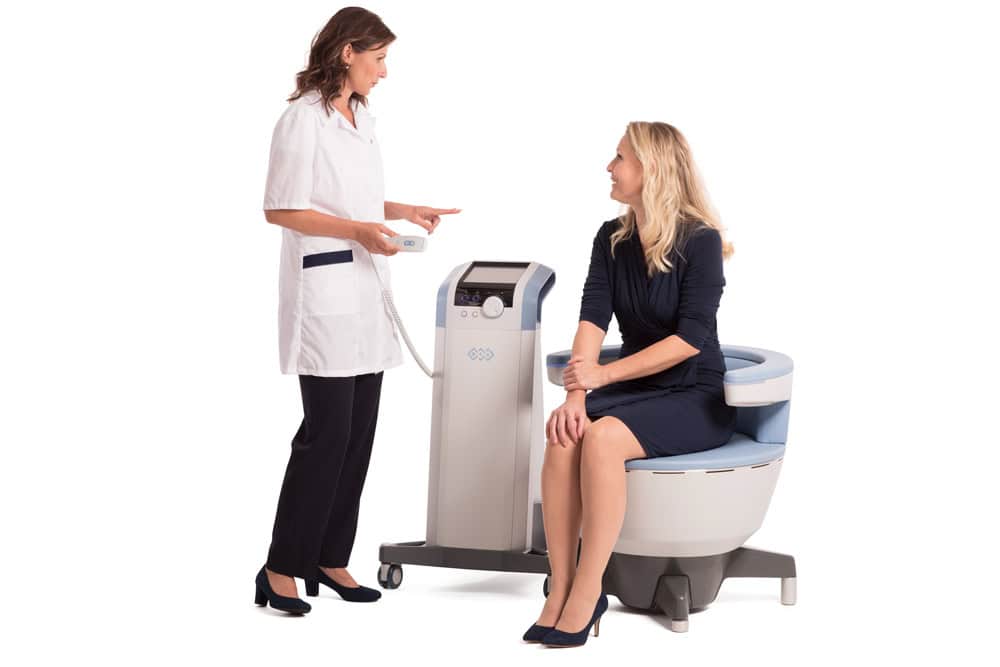
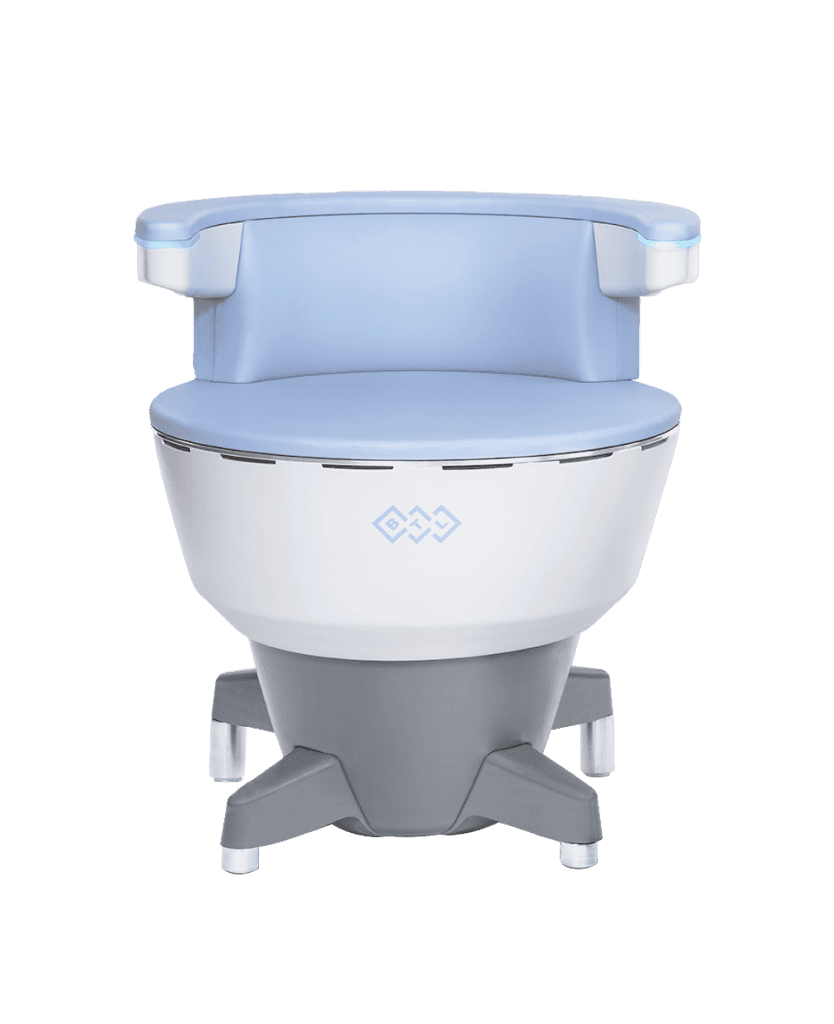
Emsella is a groundbreaking chair-based pelvic floor physiotherapy intervention that leverages electromagnetic technology. More specifically, it employs High-Intensity Focused Electromagnetic (HIFEM) technology to stimulate deep pelvic floor muscles.
In practice, HIFEM triggers over 11,000 involuntary pelvic contractions per session. Thereby, strengthening one’s pelvic floor, restoring muscle tone, and improving bladder control—without any downtime.
It is typically 30 minutes per session, with the standard treatment plan consisting of 6 sessions scheduled twice a week over 2–3 weeks.
How does Emsella work?
Emsella stimulates supramaximal pelvic floor contractions by leveraging HIFEM technology. HIFEM’s electromagnetic pulses penetrate deep into one’s pelvic floor muscles, mimicking the natural action potential of nerves that cause muscle contractions.
However, it does so at an intensity, speed, and volume that would be physically impossible to achieve via voluntary Kegel exercises.
Key Benefits of Emsella
This FDA-cleared intervention manifests several benefits, such as:
Non-Invasive & Needle-Free
Emsella requires no surgery, no needle injections, no anaesthesia, and no downtime. This makes it a safe, painless option for individuals seeking pelvic floor strengthening.
Strengthens Pelvic Floor Muscles Effectively
One Emsella session delivers over 11,000 supramaximal pelvic floor contractions. This is equivalent to 11,000 Kegel exercises that would be impossible to perform voluntarily.
Improves Stress & Urge Incontinence
Emsella appreciably reduces leakage episodes from stress incontinence (coughing, sneezing, laughing) and urge incontinence (sudden bladder urgency). Consequently, patients experience improved bladder control and better support for the bladder and urethra.
Enhances Quality of Life
Incontinence affects confidence. It limits social activities. It impacts relationships. Emsella changes this. Better bladder control means better confidence.
Convenient & Time-Efficient
Treatment sessions last thirty minutes. You remain fully clothed. No prep work. No recovery time. In essence, sessions can fit into busy schedules.
How Does Emsella Compare to Other Incontinence Treatments?
Let’s explore how it compares to traditional options like Kegels, physiotherapy, medications, or surgery.
Emsella vs Kegel Exercises
Kegel exercises require manual, voluntary muscle contractions that depend on proper technique and consistent effort. Emsella combines non-invasiveness with technology-driven, supramaximal muscle stimulation.
Furthermore, Kegels may take months to show results if done perfectly. In contrast, most Emsella patients notice improvements after just 1–2 sessions, with continued progress over 2–3 weeks.
Emsella vs Pelvic Floor Physiotherapy
Pelvic floor physiotherapy traditionally involves supervised, hands-on therapy sessions with a trained physiotherapist. Emsella’s technology-driven supramaximal stimulation requires no active participation from the patient.
Furthermore, physiotherapy typically requires weekly appointments for several months. Emsella’s standard 6-session plan spans just 2–3 weeks (twice weekly) with no additional home routine.
Emsella vs Medications
Medications often focus on relaxing the bladder muscle or reducing urgency signals. But they don’t fix the problem and may come with side effects like blurred vision and constipation. Emsella fixes the underlying problem by strengthening muscles permanently—with no side effects.
Emsella vs Surgery
Surgical options for incontinence require anaesthesia, incisions, and hospital stays. Conversely, Emsella is completely non-invasive with no incisions, anaesthesia, or hospital requirement.
Furthermore, surgical risks include infection, bleeding, nerve damage, scarring, and urinary retention. Emsella carries virtually no risk beyond mild, temporary tingling.
Who Is a Suitable Candidate for Emsella?
Ideal candidates for Emsella include:
- Postpartum women: Pregnancy and childbirth weaken pelvic floor muscles. Emsella restores strength quickly.
- Women experiencing menopause: Declining oestrogen levels cause pelvic muscle thinning and loss of tone. Thus, resulting in increased leakage.
- Men post-prostate procedures: Prostate surgery may weaken pelvic floor control. Emsella rebuilds strength.
- Individuals with mild to moderate incontinence: Mild incontinence may be caused by stress triggers like coughing/sneezing. Emsella strengthens the underlying muscles that control bladder function.
- Individuals seeking preventative strengthening: Emsella can prevent future incontinence. Maintenance sessions keep muscles strong.
What Results Can You Expect with Emsella?
Emsella’s typical treatment protocol includes six sessions. Sessions happen twice weekly for three weeks. Improvement is often noticeable after two to four sessions. However, most people experience significant improvement by session six.
Results typically last up to 6 months after completing the initial treatment. In practice, the strengthened pelvic floor muscles gradually return to their pre-treatment state over time. To maintain benefits, maintenance sessions are recommended—usually 1–2 sessions every 3–6 months.
Are There Any Side Effects or Risks Associated with Emsella?
Its safety profile is excellent. In fact, Emsella is FDA-cleared, and its side effects are minimal. Some people report mild muscle soreness, which goes away quickly.
However, pregnant women, individuals with pacemakers and metal implants shouldn’t use Emsella. Always mention medical history before treatment.
Is Emsella Right for You (When to Choose it)?
Choose Emsella if:
- You want non-invasive treatment
- You want results without downtime
- You want faster results than exercises
- You want to avoid medications or surgery
Consider alternatives if:
- You have severe incontinence requiring surgery
- You’re pregnant or have a pacemaker.
- You have structural abnormalities, such as a significant bladder prolapse.
A thorough assessment should determine if Emsella is right for you. So, talk to a specialist to extensively evaluate your condition and recommend the best intervention.
Final Thoughts
Overall, Emsella is a game-changer for urinary incontinence. Compared to other traditional treatments, Emsella offers unique advantages. It is non-invasive, effective and convenient. Results come fast without downtime.
Incontinence doesn’t have to limit your life. Modern treatments like Emsella that leverage HIFEM (High-Intensity Focused Electromagnetic) technology offer relief. Don’t suffer in silence. Talk to specialists at Clique Clinic to determine whether Emsella is right for you. Regain confidence. Regain control.