Hair Loss: What Causes It, How to Stop It, and Treatments Available
Key takeaways:
- Hair loss has many possible causes, including genetics, hormones, stress, illness, nutritional deficiencies, autoimmune conditions, and repeated hair damage.
- Normal shedding is usually around 50–100 hairs a day, while a widening part, receding hairline, visible scalp, or bald patches may point to true hair loss.
- Androgenetic alopecia is one of the most common forms of hair loss, affecting around 50% of men and women overall.
- How to stop hair loss depends on the cause; temporary shedding may recover once the trigger resolves, while pattern hair loss usually needs ongoing management.
- Treatment options can include minoxidil, prescription medication, PRP, hair transplantation, and regenerative approaches such as exosome therapy.
- Persistent, sudden, or progressive hair loss should be assessed early so the cause can be identified and the most suitable treatment plan chosen.
Introduction
Finding a few strands on your pillow or in the shower is normal. But when your part looks wider, your hairline changes, or shedding suddenly increases, it is worth asking why.
Hair loss can affect both men and women and may be temporary, progressive, or permanent depending on the cause. Genetics is one of the most common reasons, but hormones, stress, illness, nutritional deficiencies, medications, and scalp conditions can all contribute.
That is why treatment should start with identifying the cause rather than immediately choosing a serum, supplement, or procedure.
How Much Hair Loss Is Normal?
Losing some hair every day is part of the normal hair-growth cycle. Most people shed around 50 to 100 hairs a day, with new hairs normally growing as older ones fall out.
You may notice this more after washing your hair, brushing it, or taking down a hairstyle, especially if you have longer hair.
The more important question is whether something has changed from your usual pattern.
A widening part, an increasingly visible scalp, a receding hairline, or a distinct bald patch points to hair loss rather than everyday shedding.
Hair Shedding vs Hair Loss: What Is the Difference?
Hair shedding means more hairs are entering the shedding phase, while hair loss happens when something affects normal replacement or damages the follicles themselves.
Excessive shedding, or telogen effluvium, often follows illness, childbirth, surgery, rapid weight loss, or significant stress.
Hair loss may instead involve shrinking, inflamed, or damaged follicles. A receding hairline, widening part, or bald patch therefore points to something different from simply seeing more loose hairs.
What Are the Main Types of Hair Loss?
Hair loss can appear in several different forms:
- Androgenetic alopecia: Hereditary pattern hair loss that causes gradual thinning in men and women.
- Telogen effluvium: Temporary excessive shedding, often triggered by stress, illness, childbirth, surgery, or rapid weight loss.
- Alopecia areata: An autoimmune condition that causes round or patchy hair loss.
- Traction alopecia: Hair loss caused by repeated pulling from tight hairstyles.
- Scarring alopecia: A group of conditions that permanently damage hair follicles.
Different types can look similar, so diagnosis usually depends on the pattern, timing, scalp condition, and medical history.
What Causes Hair Loss?
There is rarely one universal answer to “Why is my hair falling out?”
Heredity, hormonal changes, medical conditions, medications, stress, and damaging hairstyles can all contribute.
The way the hair changes often provides the first clue.
Genetics and Androgenetic Alopecia
Hereditary pattern hair loss, or androgenetic alopecia, is one of the most common causes. Androgenetic alopecia affects around 50% of men and women overall, with prevalence increasing with age.
In men, it often appears as a receding hairline or thinning at the crown. In women, it more commonly causes a widening part or diffuse thinning over the top of the scalp.
Over time, affected follicles miniaturise and produce finer, shorter hairs. Starting treatment earlier may help preserve more active follicles.
Stress, Illness and Sudden Changes to the Body
Illness, high fever, surgery, childbirth, rapid weight loss, and intense physical or emotional stress can disrupt the hair-growth cycle.
This may trigger telogen effluvium, where increased shedding appears weeks or months after the original event.
In many cases, shedding improves once the trigger resolves, although normal growth takes time to return.
Hormonal Changes
Androgens, thyroid hormones, pregnancy, childbirth, and menopause can all affect hair growth.
Some hormonal changes cause temporary shedding, while others contribute to progressive thinning. Treating the scalp alone may therefore not solve the problem if an underlying hormonal issue is involved.
Nutritional Deficiencies and Rapid Weight Loss
Hair growth requires enough energy, protein, iron, and other nutrients. Crash diets, severe calorie restriction, and rapid weight loss can disrupt the normal growth cycle and trigger shedding. Iron deficiency may also contribute in some individuals.
That does not mean everyone experiencing hair fall needs biotin or a general hair supplement.

Where a deficiency is suspected, identifying and correcting it is more useful than taking high doses unnecessarily. Excessive supplementation can also cause problems, and high-dose biotin can interfere with certain laboratory tests.
Autoimmune and Scalp Conditions
In alopecia areata, the immune system attacks hair follicles, often producing smooth, round, or oval patches of hair loss.
It can affect the scalp, eyebrows, beard, or other areas of the body. Some people experience spontaneous regrowth, while others need medical treatment.
Scalp infections and inflammatory disorders can also interfere with hair growth. Sudden patches, persistent scaling, redness, itching, pain, or signs of scarring should therefore be assessed rather than treated as ordinary thinning.
Hairstyles, Heat and Chemical Damage
Repeated pulling from tight braids, buns, ponytails, or extensions can cause traction alopecia.
Frequent bleaching, straightening, and high heat can also weaken the hair shaft and increase breakage.
If traction continues for long enough, follicle damage may become permanent.
How to Stop Hair Loss
There is no single way to stop every type of hair loss. The best approach is to identify what is causing it and protect follicles that are still capable of producing hair.
Treat the Cause Early
Pattern hair loss usually needs ongoing management, while telogen effluvium may improve after its trigger resolves.
Nutritional deficiencies should be corrected, scalp disease treated appropriately, and damaging hairstyles changed before permanent follicle damage develops.
Eat Enough Protein and Key Nutrients
Avoid crash dieting and aim for enough protein, iron-rich foods, and overall nutritional balance.
If a genuine deficiency is identified, target that problem rather than taking multiple supplements unnecessarily.
Also read: Supplements & Vitamins for Hair Loss: What Helps Hair Growth.
Reduce Hair and Scalp Damage
Give the hair fewer reasons to break.
Avoid repeatedly pulling it into very tight styles, reduce excessive heat and chemical processing, and handle wet hair gently.
Scalp care matters too. If dandruff, inflammation, or another condition is present, use an appropriate treatment rather than simply applying more cosmetic hair products.
Manage Stress, Sleep and General Health
Good sleep, nutrition, and recovery after illness support a normal hair-growth cycle.
However, lifestyle changes alone cannot reverse genetically driven pattern hair loss.
Hair can sometimes grow back once the underlying trigger resolves. Temporary shedding often improves, and early pattern hair loss may be slowed, with some regrowth possible. Scarring hair loss is different because permanently destroyed follicles cannot simply be stimulated back into normal growth.
What Hair Loss Treatments Are Available?
Hair loss treatment should match the diagnosis, severity, age, medical history, and treatment goals.
Minoxidil
Minoxidil is one of the most established treatments for pattern hair loss.
Usually applied topically, it helps support hair growth and may slow further thinning. The trade-off is consistency: results usually take months, and continued use is generally needed to maintain them.
Some people notice temporary shedding or scalp irritation when they first start.
Prescription Hair Loss Medication
For some forms of pattern hair loss, prescription medication may target the underlying hormonal pathway.
In men, finasteride reduces dihydrotestosterone (DHT), a hormone involved in follicle miniaturisation. In selected women, doctors may consider spironolactone depending on hormonal factors, medical history, and pregnancy plans.
These treatments can be effective, but they are not suitable for everyone and require medical supervision.
PRP for Hair Loss
Platelet-rich plasma, or PRP, uses a concentrated portion of the patient’s own blood.
It is injected into the scalp with the aim of supporting follicular activity and is often considered for androgenetic alopecia.
PRP may also be used alongside other treatments rather than as a standalone solution.
Hair Transplant Surgery
Hair transplantation takes a different approach: instead of stimulating existing follicles, it moves healthy follicles from donor areas into thinning or bald areas.
It may suit selected patients with stable pattern hair loss and sufficient donor hair.
However, it does not stop untreated surrounding hair from continuing to thin, so ongoing management may still be needed.
Also read: Hair Transplant in Malaysia: All You Need to Know.
Exosome Therapy for Hair Loss
Exosome therapy is a newer regenerative approach.
Exosomes are tiny extracellular vesicles that carry biological signals between cells. In hair restoration, they are used to support follicle activity, tissue repair, and the scalp environment.
Early clinical research has reported improvements in hair density and thickness, particularly in androgenetic alopecia.
The key limitation is that exosomes work with existing, viable follicles. They do not create new follicles, so suitability depends heavily on the cause and stage of hair loss.
Also read: Exosome Therapy for Hair Loss: How It Works & Benefits.
Which Hair Loss Treatment Is Right for You?
The right treatment starts with the cause.
Someone experiencing telogen effluvium after an illness may need a very different approach from someone with progressive androgenetic alopecia.
Age, sex, medication use, nutritional status, scalp health, previous treatments, and how long the thinning has been present can all shape the treatment plan. Combination approaches may also make sense because different therapies target different parts of the hair-loss process.
Also read: Derma Roller for Hair Loss Treatment: Would It Work?
How Long Does Hair Loss Treatment Take to Work?
Hair grows slowly, so most treatments need months rather than weeks.
Early improvement may appear as reduced shedding before obvious regrowth. Minoxidil, for example, may take around 6–12 months to assess properly.
Standardised photographs and scalp measurements can make gradual progress easier to track.
When Should You See a Doctor About Hair Loss?
Not every extra strand needs medical attention, but some changes are worth checking sooner rather than later.
Seek professional assessment if hair loss:
- Starts suddenly or progresses quickly
- Appears in distinct patches
- Comes with scalp pain, redness, scaling, or signs of scarring
- Occurs alongside fatigue, unexplained weight changes, or menstrual changes
- Continues to worsen despite changes to haircare or lifestyle
Progressive thinning is also worth addressing early. The longer follicles remain miniaturised or inactive, the harder it may be to preserve density.
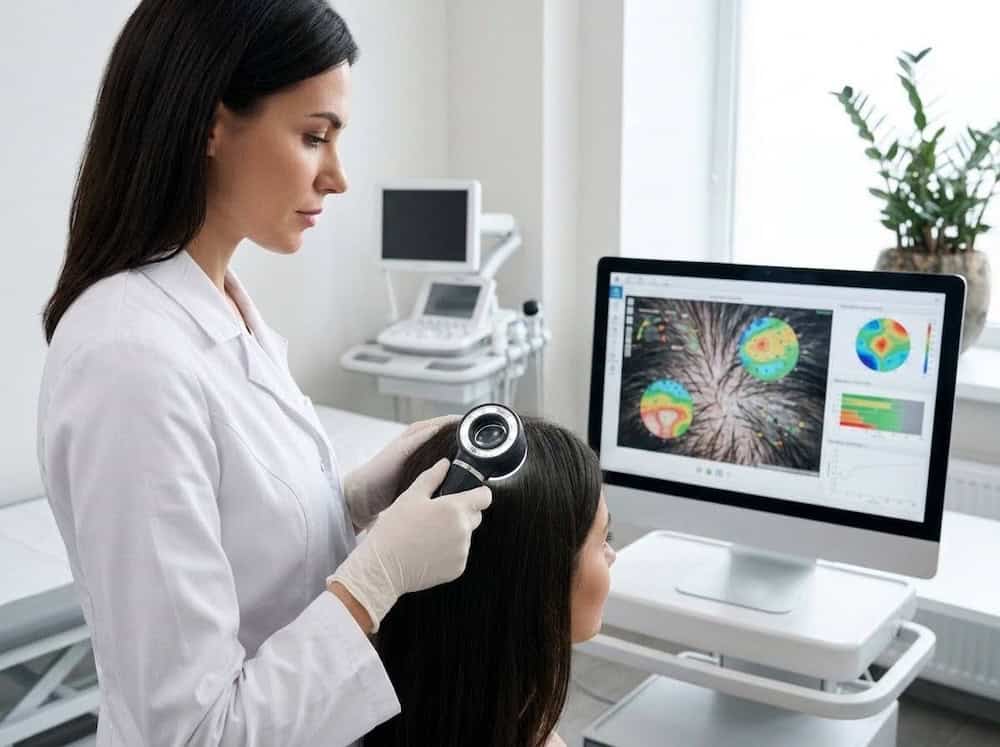
At Clique Clinic, the first step is to look at the pattern of hair loss, scalp condition, and individual history before deciding what treatment makes sense.
Depending on the cause and goals, options may include Sylfirm X, exosome therapy, Plinest, Fotona Hair Laser, or Revitacare Haircare. These can be used individually or combined as part of a personalised plan.
The goal is not to jump straight into treatment, but to understand what is driving the hair loss first and choose the most suitable way to support regrowth and preserve the hair that remains.
Final Thoughts
Hair loss is not simply about how much hair ends up in the shower. What matters is why it is happening and whether the follicles remain healthy enough to respond.
Genetics is one of the most common causes of progressive thinning, while stress, illness, childbirth, rapid weight loss, nutritional deficiencies, autoimmune conditions, and damaging hairstyles can also play a role.
Some types of hair loss may recover once the trigger is addressed. Others need earlier and more consistent treatment to slow further thinning and preserve the follicles that remain.
That is why there is no single “best” treatment. Minoxidil, prescription medication, PRP, hair transplantation, and regenerative options such as exosome therapy all work differently and suit different causes of hair loss.
If you are experiencing persistent thinning, excessive shedding, or a changing hairline, a personalised hair and scalp assessment at Clique Clinic can help identify what may be contributing and guide the next step.
Book a consultation with us to understand what may be causing your hair loss and explore the treatment options most suitable for you.