Exosome Therapy for Hair Loss: How It Works & Benefits
Key takeaways:
- Exosome therapy for hair loss uses cell-signalling particles to support existing hair follicles, scalp recovery, and the environment involved in healthy hair growth.
- It may be most relevant for early to moderate thinning, especially when follicles are still present and capable of producing hair.
- Potential benefits include improved hair density, thicker-looking strands, and better support for the scalp environment.
- Exosome therapy does not create new follicles or replace a hair transplant; it works with viable follicles that are already present.
- Treatment is commonly delivered through methods such as microneedling or micro-infusion, with results developing gradually over the following weeks and months.
- The best results depend on correctly identifying the cause and stage of hair loss before deciding whether to use exosome therapy alone or as part of a broader treatment plan.
Introduction
Hair thinning rarely happens overnight. More often, the changes are subtle: your part looks wider, your ponytail feels thinner, or the scalp becomes easier to see under bright light.
That is also why timing matters. Hair follicles can gradually miniaturise long before an area becomes completely bald, leaving a window where existing follicles may still respond to treatment.
One newer option gaining attention is exosome therapy for hair loss. Rather than replacing follicles or acting directly on hormones, exosome treatment uses cell-signalling particles to support communication around existing hair follicles and the scalp environment.
Early clinical evidence is encouraging. A 2026 systematic review reported improvements in hair density of around 8–20% in early clinical studies, alongside increases in hair-shaft thickness. These findings add to growing interest in exosome therapy as a regenerative option for supporting existing hair follicles and improving visible hair density.
So, what exactly are exosomes, how could they support hair growth, and who might benefit from treatment?
What Is Exosome Therapy for Hair Loss?
Exosome therapy for hair loss uses exosome-based formulations to deliver biological signals to the scalp and support the activity of existing hair follicles.
Exosomes are tiny extracellular vesicles that cells naturally use to communicate. They carry biological material such as proteins, peptides, lipids, mRNA, and microRNA between cells, influencing how surrounding cells respond.
In the scalp, exosome signalling may support processes involved in:
- Hair-follicle activity
- Dermal papilla cell function
- Tissue repair
- Scalp recovery
- Inflammatory regulation
- Hair-growth signalling
This can be particularly relevant in thinning hair, where follicles may still be present but gradually producing finer, shorter strands.
Exosome therapy does not create new follicles. Its role is to support follicles that remain viable and improve the biological environment around them.
That also makes it very different from a hair transplant. Transplantation physically moves follicles from one part of the scalp to another, whereas exosome treatment works with the follicles already present.

How Does Exosome Therapy Work for Hair Growth?
Hair follicles may look simple from the outside, but each one depends on a complex network of cells and signalling pathways.
One important structure is the dermal papilla, which sits at the base of the follicle and helps regulate the hair-growth cycle. When follicles begin to miniaturise, as in androgenetic alopecia, the active growth phase shortens, and the hairs produced become progressively finer.
Exosome-based therapy aims to support this environment through regenerative signalling. Exosomes may influence processes involved in follicle activity, inflammation, tissue repair, and communication between cells around the hair root.
The practical goal is straightforward: support follicles that are still present and capable of producing hair.
That means timing can matter. Treatment generally has more to work with when the concern is thinning or follicle miniaturisation rather than an area where follicles have already been permanently lost.
How Are Exosomes Delivered to the Scalp?
Simply applying an exosome formulation on top of the hair is not the same as delivering it closer to the scalp and follicles.
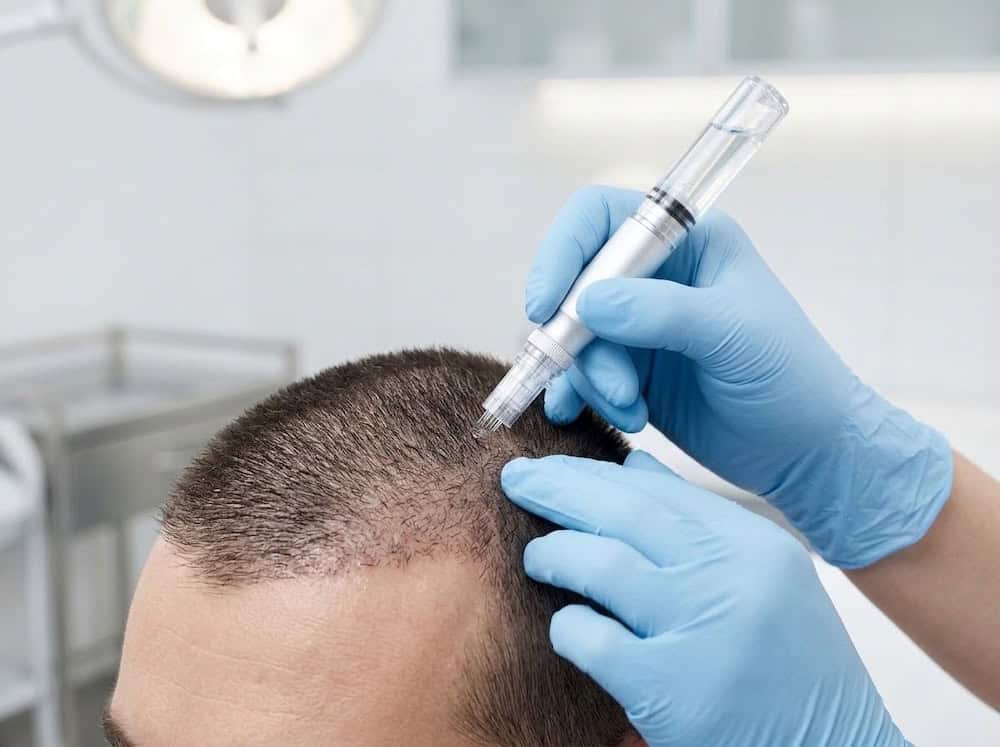
Professional exosome treatments may use delivery methods such as microneedling or micro-infusion to help the formulation reach the targeted areas more effectively.
Microneedling creates controlled microchannels in the scalp, which can support product delivery while also stimulating a local healing response.
The most appropriate delivery method depends on factors such as the pattern of thinning, scalp condition, existing hair density, and treatment goals.
Also read: Derma Roller for Hair Loss Treatment: Would It Work?
What Are the Potential Benefits of Exosome Therapy for Hair Loss?
The main appeal of exosome therapy is that it targets the follicular environment rather than a single surface-level concern.
Supports Hair Density
For someone with thinning hair, density often matters most visually.
Early clinical research suggests exosome-based treatment may increase the number of visible hairs within treated areas when viable follicles remain.
A 2025 systematic review of 11 clinical studies found that all included studies reported improvement in at least one hair parameter. Depending on the exosome source and study, increases in hair density ranged from approximately 9.5 to 35 hairs per cm².
Those findings are promising, but they should not be treated as a guaranteed result for every patient.
May Improve Hair Thickness
Sometimes fuller-looking hair comes from improving the quality of individual strands rather than simply increasing their number.
As androgenetic alopecia progresses, affected follicles can gradually produce finer and shorter hairs. Exosome therapy may help support follicular activity and the surrounding scalp environment, which may contribute to stronger, thicker-looking hair over time.
This can be especially relevant for people experiencing gradual thinning rather than complete hair loss, where follicles are still present and can still produce hair.
May Support the Scalp Environment
A healthy follicle does not function in isolation.
The surrounding scalp tissue, inflammation levels, and local cellular environment can all influence how effectively a follicle performs.
Exosome signalling may support processes associated with tissue repair and inflammatory regulation. This is one reason exosome treatment may be considered as part of a broader scalp-regeneration strategy.
It is not, however, a substitute for treating an active scalp infection, uncontrolled inflammatory disease, or another underlying medical condition.
May Complement Other Hair-Loss Treatments
Hair loss often involves more than one biological process.
For example, a person with androgenetic alopecia may need to manage ongoing follicle miniaturisation while also supporting scalp health and existing follicular activity.
Exosome therapy may therefore sit alongside other treatments rather than replace them.
That distinction matters. Minoxidil, finasteride, PRP, laser-based approaches, and exosomes do not all work in the same way, so a combination may sometimes address different parts of the problem.
Who May Benefit From Exosome Therapy for Hair Loss?
Exosome treatment may be considered for men and women with early to moderate hair thinning, particularly when the follicles are still present and capable of producing hair.
It may be relevant for people with:
- Androgenetic alopecia
- Gradual loss of hair density
- Miniaturised follicles
- Thinning without complete follicle loss
- Interest in a non-surgical regenerative option
It is less likely to help where follicles have been permanently destroyed, such as in some forms of scarring alopecia.
Active scalp infections and certain medical conditions may also need to be addressed before treatment.
The key question is not simply whether exosome therapy is available, but whether the cause and stage of your hair loss make it a suitable option.
What Happens During an Exosome Hair Treatment?
Treatment usually begins with a hair and scalp assessment to review the pattern of thinning, scalp condition, medical history, previous treatments, and treatment goals.
If exosome therapy is suitable, the scalp is prepared and topical numbing may be applied depending on the delivery method.
The exosome formulation is then delivered to targeted areas of the scalp, commonly through techniques such as microneedling or micro-infusion.
A session may take around 30 minutes, although treatment time varies according to the area treated and delivery method. Mild redness or sensitivity may occur afterwards, but downtime is generally limited.
Treatment usually involves a course of several sessions rather than a single procedure. The number and spacing of sessions depend on the degree of thinning, scalp condition, and response to treatment.
When Can You Expect Results From Exosome Hair Treatment?
Hair grows slowly, so visible results develop gradually rather than immediately.
One of the first changes may be reduced shedding before any obvious improvement in density. Thicker-looking hair and changes in overall hair quality may become more noticeable over the following months.
Some treatment protocols report reduced shedding within approximately 2–4 weeks, with changes in hair thickness becoming more noticeable after 1–3 months. Further improvement may continue as the hair completes subsequent growth cycles.
These timelines are only a guide. Results vary according to:
- Cause of hair loss
- Severity of thinning
- Follicle viability
- Scalp condition
- Treatment protocol
- Age and medical history
- Other treatments being used
Because hair changes gradually, standardised photographs or scalp measurements can provide a clearer way to track progress than relying on day-to-day changes in the mirror.
Also read: Exosome Treatment: Benefits & Differences from Other Treatments.
Is Exosome Therapy for Hair Loss Worth Considering?
Exosome therapy may be worth considering if you have early to moderate thinning and want a non-surgical approach that focuses on supporting existing follicles and the scalp environment.
It is less useful to think of it as a standalone cure.
Hair loss can result from genetics, hormones, nutritional deficiencies, illness, autoimmune conditions, medication, and scalp disorders. A regenerative treatment cannot address every underlying cause, which is why diagnosis should come first.
At Clique Clinic, treatment begins with an assessment of the hair-loss pattern, scalp condition, medical history, and whether the existing follicles are still suitable for regenerative support.
From there, exosome therapy may be considered on its own or as part of a broader hair-loss plan, depending on what is driving the thinning.
The aim is not simply to recommend exosomes because they are a newer treatment, but to determine where they fit within the overall strategy for preserving existing hair and supporting healthier growth.
Final Thoughts
Exosome therapy for hair loss takes a different approach to traditional hair restoration.
Instead of replacing follicles or acting directly on hormones, it uses biological signalling to support existing follicles, scalp recovery, and the environment involved in healthy hair growth.
Clinical research continues to show encouraging improvements in hair density and thickness, particularly in androgenetic alopecia. As treatment methods become more refined, exosome therapy is increasingly being explored as part of a regenerative approach to hair restoration.
The most important question is not simply whether exosomes can support hair growth, but whether your follicles are still viable, what is driving the thinning, and how exosome therapy fits into your overall treatment plan.
If you are considering exosome treatment for hair loss in Malaysia, a personalised hair and scalp assessment at Clique Clinic can help determine whether exosome therapy, another approach, or a combination plan is appropriate for your hair-loss pattern and goals.