
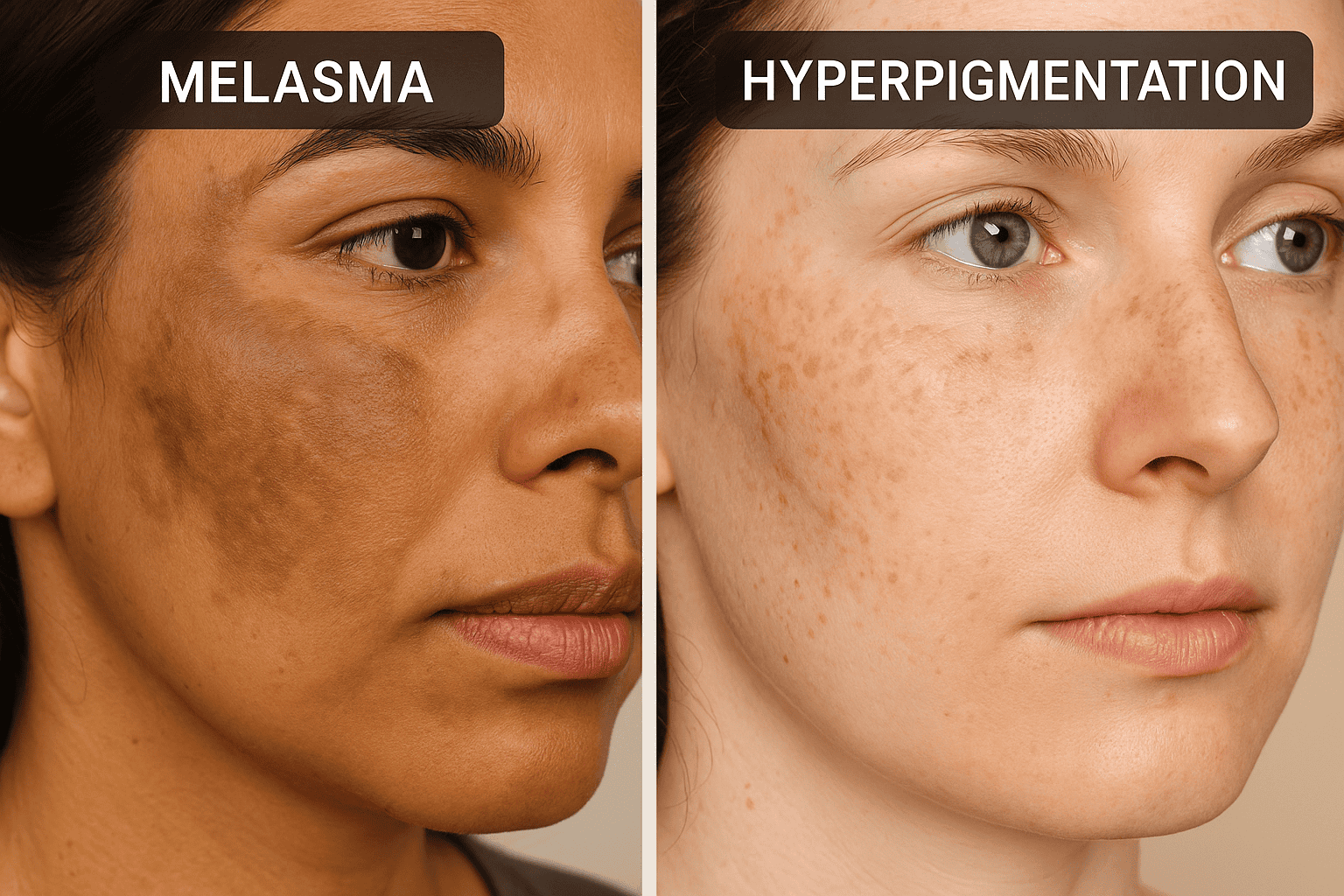
Melasma vs Hyperpigmentation: Understanding the Difference & Treatment Approaches
Key Takeaways
- Melasma: typically presents as symmetrical brown patches on the face and is primarily triggered by sun exposure and hormonal changes, while hyperpigmentation is a broader term for darkened skin caused by sun damage, inflammation, or certain medications.
- Topical treatments: such as hydroquinone, retinoids, and vitamin C are first-line options for both conditions, reducing melanin production and promoting skin cell turnover.
- Meanwhile, getting professional treatments: including chemical peels, laser therapy, and microneedling, offers more targeted and often faster results, especially for deeper or more stubborn pigmentation.
- Melasma: often requires a more comprehensive, long-term approach due to its chronic and hormone-related nature, while other types of hyperpigmentation may respond more quickly to treatment.
Introduction
Melasma and hyperpigmentation have a significant emotional and psychological impact on those affected. These skin disorders are difficult to conceal due to their visible appearance.
This consequently leads to heightened self-consciousness and a decline in self-esteem.
In fact, authoritative studies have revealed that people with melasma and hyperpigmentation are at an increased risk of depression.
Despite sharing similarities, both skin disorders manifest notable distinctions. Understanding these differences is mission-critical to accurate diagnosis and effective treatment.
What is Melasma?

Melasma is a common, skin problem that causes dark patches to form. It sometimes primarily affects women of childbearing age and is often referred to as chloasma or the mask of pregnancy.
In practice, it’s usually found in sun-exposed parts, like the neck and forearms, but mostly appears on the face, covering the cheeks, forehead, bridge of the nose, and lips, manifesting as symmetrical, irregular, light-to-dark brown macules and patches.
These patches tend to be more noticeable during pregnancy or when using hormonal contraceptives, due to the influence of estrogen and progesterone.
Though melasma isn’t fatal and doesn’t cause physical discomfort, it can be distressing and tends to worsen with sun exposure.
Even though the exact aetiology of melasma is still unknown, a number of factors may cause or exacerbate it.
For example, exposure to ultraviolet light, hormones, genetics, drugs that contain phototoxic substances, components of some cosmetics, and mental stress.
These factors may stimulate the overproduction of melanin by melanocytes in one’s skin.
What is Hyperpigmentation?
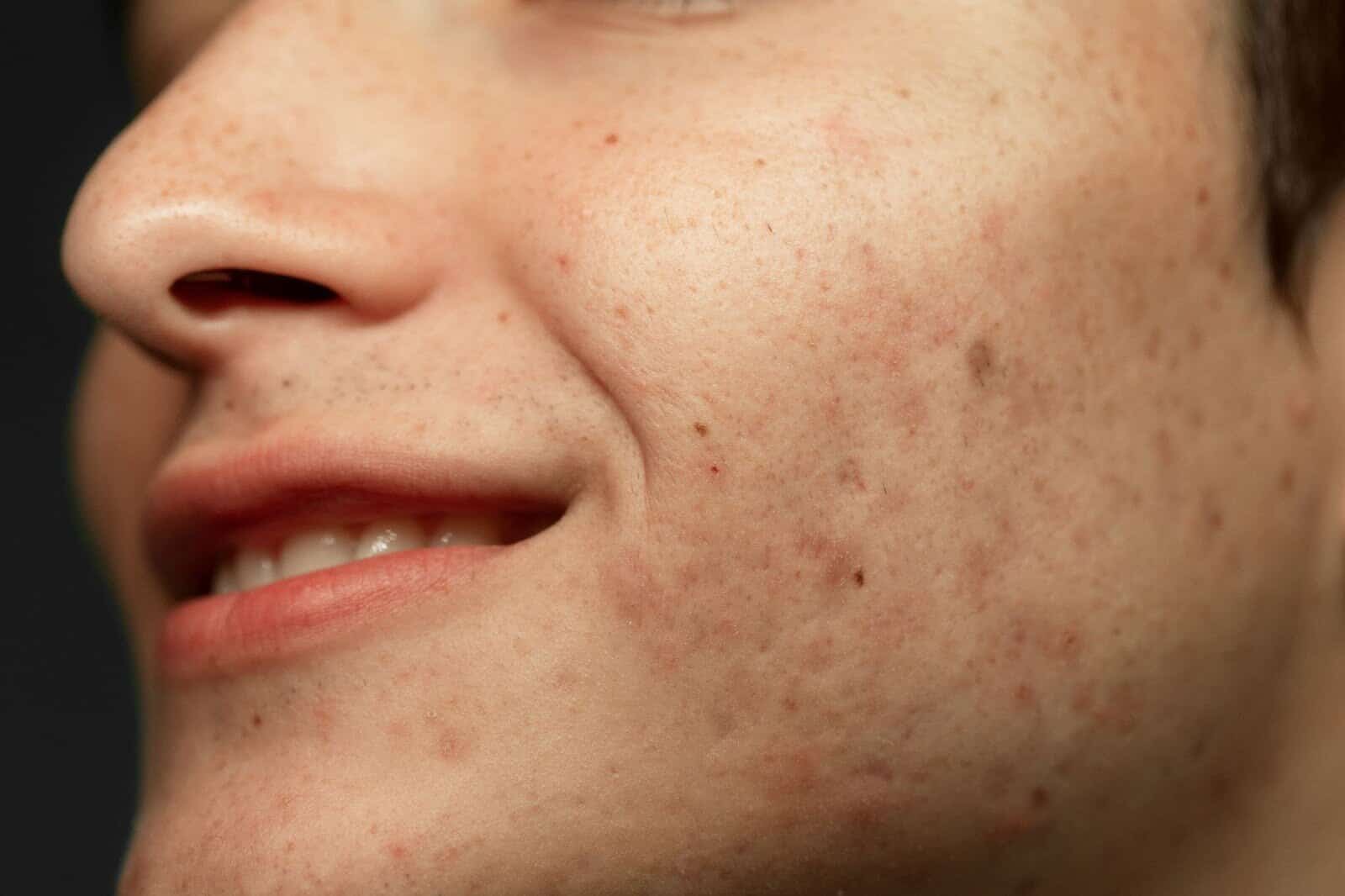
Hyperpigmentation is a common skin disorder that occurs when melanin is produced in excess. Thus, resulting in patches of skin that appear darker than the surrounding areas.
It’s important to note that hyperpigmentation is an umbrella term that covers various conditions where skin darkening occurs.
These darker patches or spots can show up anywhere on the body and range in colour, from brown to black, grey, red, or pink.
Although hyperpigmentation is relatively harmless, it can have negative effects on self-esteem and cause cosmetic issues.
Hyperpigmentation may be caused by:
- Prolonged sun exposure: including ultraviolet (UV) and visible light, stimulates melanocytes to produce excess melanin.
- Hormonal changes: such as those during pregnancy or with birth control use.
- Skin injury or inflammation: from acne, eczema, burns, or other skin conditions, where the skin darkens as it heals.
- Metabolic deficiencies: such as Vitamin B12 and folic acid deficiencies.
- Specific medications and medical conditions:
- Genetic predisposition: following one’s skin type and family history.
Types of hyperpigmentation
Hyperpigmentation manifests in three common types, each with distinct causes and characteristics. For instance:
- Post-inflammatory hyperpigmentation (PIH): This hyperpigmentation occurs after skin inflammation or injury, such as acne, eczema, burns, or cuts.It’s more pronounced with sun exposure.
- Sunspots: Also commonly known as age spots or solar lentigines, are a type ofhyperpigmentation that is characterised by flat, brown, or black spots that develop because of prolonged exposure to UV radiation.These spots typically appear on sun-exposed areas like one’s face, hands, and arms.
- Freckles (ephelides): These are small, flat, brown marks that often appear on sun-exposed skin.They are especially common in individuals with lighter skin tones and are genetically influenced.They also tend to darken with sun exposure but fade during periods of low UV exposure.
Melasma vs Hyperpigmentation: Key differences
Although both result in dark patches on the skin, melasma and hyperpigmentation differ in their causes, appearance, and depth.

Pathophysiology
Melasma is primarily driven by hormonal changes combined with sun exposure. Hormonal fluctuations during pregnancy, birth control pill usage, or hormone replacement therapy are the main triggers.
It predominantly appears on the face, especially the cheeks, forehead, nose, and upper lip.
In contrast, hyperpigmentation is a broader term encompassing any darkening of the skin caused by excess melanin. It may be caused by different triggers, such as sun damage, inflammation from acne or eczema, skin injuries, or certain medications.
Unlike melasma, hyperpigmentation may indiscriminately appear anywhere on the body.
Treatment approaches
Hydroquinone, retinoids, Vitamin C, and chemical peels are common topical treatments for hyperpigmentation. These treatments help reduce melanin synthesis and encourage skin cell turnover.
Laser therapy and microneedling are other effective interventions for improving skin texture and reducing hyperpigmentation, depending on the type and depth of the pigmentation.
However, melasma typically requires a more comprehensive, multifaceted approach. This is primarily because of its hormonal foundation and propensity to be more treatment-resistant.
Melasma management typically consists of topical treatments such as hydroquinone and retinoids, individualised laser and light therapy, oral medication, and rigorous sun protection.
Treatment options for Hyperpigmentation
Hyperpigmentation treatments can be categorised into two main types— topical treatments and professional treatments.
Topical treatments
Topical treatments are the cornerstone of hyperpigmentation management. They target excess melanin production and promote a more even skin tone. They are usually the first-line therapy due to their accessibility and proven efficacy.
Hydroquinone
Hydroquinone is essentially considered the gold standard for treating hyperpigmentation.
In practice, it works by inhibiting the enzyme tyrosinase, which is mission-critical in melanin synthesis. Thereby, reducing the production of new pigment in the skin.
Hydroquinone is typically employed in concentrations ranging from 2% to 4%, with 4% being especially effective for conditions like melasma.
Hydroquinone can also be combined with retinoids to enhance its effectiveness and penetration.
Retinoids
Retinoids are vitamin A derivatives that help reduce hyperpigmentation via multiple mechanisms. For instance, they accelerate skin cell turnover and promote the shedding of pigmented cells from the epidermis.
They also inhibit tyrosinase transcription, thereby decreasing melanin production.
Retinoids, including tretinoin and retinol, can also improve the penetration of other topical agents, such as hydroquinone, when employed in combination.
Vitamin C
Vitamin C (ascorbic acid) serves asan effective antioxidant that inhibits tyrosinase activity and reduces melanin synthesis.
By neutralising free radicals generated by UV rays and environment pollution, it protects one’s skin from oxidative stress, which may trigger excess pigment production.
Disparate skin types, particularly those prone to post-inflammatory hyperpigmentation, may benefit from vitamin C.
In fact, it is often used in conjunction with other skin-lightening products for enhanced effects.
Professional treatments
Professional treatments for hyperpigmentation are executed by trained practitioners and tend to guarantee better patient outcomes.
Chemical peels
Chemical peels exploit specially formulated acid solutions, like glycolic acid, salicylic acid, lactic acid, or trichloroacetic acid (TCA), to exfoliate the superficial layers of one’s skin.
In practice, these peels remove pigmented skin cells and break down excess melanin. Thereby, stimulating the growth of fresh, evenly pigmented skin.
In fact, professional chemical peels tend to offer faster and more consistent results than topical treatments utilised in isolation.
This is because they penetrate multiple skin layers to target pigmentation at its source.
Laser therapy
Laser therapy employs focused light energy to target and break down excess melanin in one’s skin.
Different types of lasers, such as PicoSure Lasers and fractional lasers, can be deployed based on the type of pigmentation and the skin’s characteristics.
Laser therapy is especially effective for stubborn or deeper pigmentation that doesn’t respond well to topical agents or chemical peels.
However, it dictates careful application by experienced practitioners to avoid side effects.
Treatment options for Melasma
Melasma treatments target different aspects of the condition’s complex pathogenesis to reduce melanin production, accelerate pigment removal, and prevent new pigmentation.
These treatments may be broadly categorised into topical, oral, and professional therapies.
Given melasma’s refractory nature and tendency to recur, these treatments may be combined.
Topical Treatments
Topical treatments form the foundation of melasma management. They target the overproduction of melanin, helping to lighten the dark patches characteristic of the condition.
These treatments may be utilised alone or in combination to enhance efficacy while minimising side effects.
Hydroquinone
Hydroquinone works by inhibiting the enzyme tyrosinase. This enzyme is essential for melanin synthesis.
Hydroquinone effectively lightens melasma patches with consistent application over several weeks to months.
However, prolonged use may sometimes cause skin irritation or ochronosis—a rare bluish-black discolouration. As such, a dermatologist should carefully monitor treatment duration and concentration.
Tretinoin
Tretinoin is a vitamin A derivative typically utilised in combination with hydroquinone to enhance treatment outcomes.
It promotes skin cell turnover, accelerates the shedding of pigmented cells, and disperses melanin granules.
Furthermore, tretinoin improves the penetration of other topical agents. This makes it a valuable component of combination therapies, with mild irritation being the most common side effect.
Corticosteroids
Topical corticosteroids have strong anti-inflammatory properties that help reduce skin inflammation and irritation that may exacerbate pigmentation.
They also augment the effectiveness of hydroquinone and tretinoin.
However, prolonged utilisation of corticosteroids may lead to side effects such as skin thinning and steroid-induced acne.
As such, their use is generally limited to short durations and under medical supervision.
Oral medications
Tranexamic acid
Oral tranexamic acid (TXA) is a promising treatment option for moderate to severe melasma, particularly in cases that are resistant to topical therapies.
TXA functions by inhibiting plasminogen activation, which reduces melanocyte activity and dermal blood flow in melasma-affected skin. Thereby, decreasing pigmentation.
TXA can be utilised alone or in combination with topical agents and sun protection for enhanced results.
However, it isn’t FDA-approved specifically for melasma and must be used cautiously.
Vitamin C
Vitamin C is an antioxidant that may be employed as a supplementary treatment for melasma.
In practice, it possesses the ability to inhibit tyrosinase, a key enzyme in melanin production.
Oral vitamin C protects against oxidative stress that can worsen pigmentation, especially when combined with other treatments.
Professional treatments
Chemical peels
Chemical peels exfoliate the skin’s surface by using acid solutions like glycolic acid, salicylic acid, or trichloroacetic acid.
By carefully removing pigmented skin layers, these pees promote the growth of new, uniformly pigmented skin.
For melasma, superficial to medium-depth peels are recommended in order to reduce discomfort and the possibility of pigmentation deterioration.
Laser therapy
Due to its propensity to recur and the possibility of post-inflammatory hyperpigmentation, melasma is notoriously difficult to treat. As such, it sometimes dictates more advanced treatment options like laser therapy.
Pico laser therapy, for example, exploits concentrated light energy to break up pigment particles in melanin. Subsequently, the body’s immune system then eliminates them.
Generally, the type and degree of pigmentation determine which lasers are utilised.
Also read: What Is The Best Way To Treat Melasma?
Melasma and Hyperpigmentation in Malaysia
Melasma and hyperpigmentation are prevalent skin conditions in Malaysia. This is largely due to the country’s tropical climate, which translates into high exposure to ultraviolet (UV) radiation.
In practice, intense and prolonged sun exposure stimulates melanocytes to produce excessive melanin.
This prevalence is particularly notable among women of reproductive age. This is because hormonal factors play a significant role in the development of melasma.
Cultural and lifestyle factors in Malaysia also contribute to the incidence of melasma. The common use of oral contraceptives and hormone replacement therapies among Malaysian women is known to trigger melasma by influencing melanocyte activity.
Despite the commonality of these conditions, access to effective treatment varies. While topical agents and sun protection are widely recommended, consulting a dermatologist for an accurate diagnosis and tailored treatment plan is advised.
Conclusion
Melasma is a type of hyperpigmentation and cutaneous disorder that’s usually caused by hormonal changes.
On the other hand, hyperpigmentation is a more general term that encompasses any darkening of the skin triggered by increased melanin production.
While melasma often extends deeper into the skin, making it more challenging to treat, other forms of hyperpigmentation are confined to the top layer (epidermis).
Additionally, melasma’s hormonal link means it often recurs and requires a more comprehensive treatment approach.
Book a consultation with us today at Clique Clinic and take the first step toward healthier, glowing skin. WhatsApp our team: wa.me/60123537960


Informative article on melasma vs hyperpigmentation. The comparison between topical treatments and chemical peels is particularly helpful for understanding treatment options.