EMFace vs Ultherapy: What is the difference?
We now live in a world where advancements in facial rejuvenation and skin-tightening treatments are rapidly evolving, and the desire to look younger and reverse the signs of aging is more intense than ever.
With a growing number of people willing to invest in achieving healthier, tighter skin, numerous treatments have emerged to cater to these needs.
But why do we at Clique Clinic boast about two of our best-selling modalities? Why are EMFace and Ultherapy creating such a buzz and leading the pack in facial rejuvenation?
Let’s dive into what makes both treatments unique and why they are making the most waves in the industry.
What is EMFace?
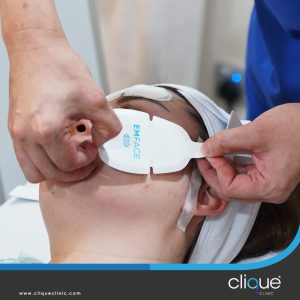
EMFace is a groundbreaking skin lifting procedure that utilizes synchronized radiofrequency and high-intensity focused electrical stimulation. It works by targeting both the skin and facial muscles. At the skin level, it stimulates the production of collagen and elastin, enhancing the skin’s natural regenerative abilities.
Simultaneously, strengthening the facial muscles, it improves their capacity to support and lift the skin, all of which contribute to a more youthful and lifted appearance. This dual-action approach aims to lift, tone, and rejuvenate the face, all without the need for invasive surgery or downtime.
What is Ultherapy?
Ultherapy is likewise a non-invasive treatment. It uses micro-focused ultrasound technology to lift and tighten the skin. By delivering ultrasound energy to the deeper layers of the skin, Ultherapy stimulates the body’s natural regenerative process, promoting collagen production. This results in a firmer, more youthful appearance over time, with gradual and natural-looking results.

What is the difference between EMFace and Ultherapy?
EMFace vs Ultherapy technology and procedure
EMFace combines radiofrequency and electrical stimulation to target both the skin’s surface and underlying muscles, promoting a holistic rejuvenation effect.
On the other hand, Ultherapy micro-focused ultrasound energy is the only technology that non-invasively treats at 3 discrete depths (1.5mm, 3mm and 4.5mm), which target both the dermis and the foundational tissue layers where laxity begins.
EMFace vs Ultherapy treatment areas
EMFace primarily focuses on the facial area, targeting specific muscle groups and skin layers to achieve a comprehensive lifting effect. Ultherapy, while also focusing on the face, can be used on various parts of the body, including the neck, décolletage, and even the chest area, providing a more versatile treatment option.
EMFace vs Ultherapy benefits
EMFace offers a dual-action approach, enhancing both muscle tone and skin texture, resulting in a more contoured and defined facial appearance. Ultherapy, with its deep-tissue focus, provides a subtle yet effective lifting effect, ideal for those seeking a gradual enhancement without drastic changes.
EMFace vs Ultherapy treatment longevity
EMFace results are progressive, as they induce collagen and elastin production that improves even after your last treatment. It also increases facial muscle tone and density. The full effects of EMFace peak around 12 weeks post-treatment and usually last for one year, with maintenance sessions recommended every three to six months to maintain improved skin elasticity.
Ultherapy, however, provides results that become more noticeable over the course of two to three months, with effects lasting up to a year or more, depending on individual factors.
EMFace vs Ultherapy side effects
Both EMFace and Ultherapy are known for their minimal side effects, with most patients experiencing mild redness or swelling that subsides within a few hours. EMFace may cause slight muscle soreness or tingling due to the electrical stimulation, while Ultherapy may lead to temporary discomfort during the procedure due to the ultrasound energy.
EMFace vs Ultherapy: Which is more painful?
Pain tolerance varies among individuals, but based on our patients’ feedback, EMFace is considerably less painful due to its dual-action approach and less invasive technology. Ultherapy, while non-invasive, may cause more discomfort during the treatment due to the deep penetration of ultrasound energy into the skin’s layers.
EMFace vs Ultherapy: Before and After
Both treatments show significant improvements in what Dr Lim termed as the 4 skin quadrants – skin tone evenness, skin surface evenness, skin firmness and skin glow. EMFace provides an immediate lifting effect with ongoing improvement, while Ultherapy offers gradual results that continue to enhance over time. Click to view Ultherapy before and after photos: https://www.cliqueclinic.com/blog/ultherapy-before-and-after
EMFace vs Ultherapy price
The cost of EMFace and Ultherapy treatments varies depending on the provider and the specific treatment plan. Generally, EMFace tends to be more affordable due to its targeted approach, while Ultherapy may be priced higher due to its deeper, more extensive treatment capabilities.
Which is better: EMFace or Ultherapy?
The choice between EMFace and Ultherapy depends on your individual needs and desired outcomes. If you’re looking for a quick, less invasive option with immediate results, EMFace might be the better choice. For those seeking a deeper, more gradual transformation with long-lasting effects, Ultherapy could be the ideal option.
Can I combine EMFace and Ultherapy?
Yes, combining EMFace and Ultherapy treatments can provide comprehensive rejuvenation, targeting both the superficial and deep layers of the skin. This combination can maximize the benefits of each treatment, resulting in a more youthful and revitalized appearance.
Conclusion
In conclusion, both EMFace and Ultherapy offer unique advantages in the realm of facial rejuvenation. The best choice depends on your specific goals, skin condition, and personal preferences.
To explore your options and discover the best treatment for you, visit Clique Clinic and consult with our experienced professionals today.