
Exosomes vs Retinol: Is Exosome Better Than Retinol?
Key takeaways:
- Exosomes and retinol work differently: retinol speeds up skin renewal, while exosome skincare focuses more on cellular signalling, repair, hydration, and barrier support.
- Retinol has a longer and stronger evidence base for acne, wrinkles, pigmentation, and photoageing.
- Exosome skincare may be better suited to sensitive, stressed, or retinol-intolerant skin, especially when the priority is recovery, resilience, and overall skin quality.
- Exosomes do not directly replace retinol because they target different skin processes and concerns.
- Exosomes and retinol may be used within the same skincare plan, often by alternating them or prioritising barrier recovery before introducing stronger actives.
- The better choice depends on your skin concern, tolerance, barrier health, and treatment history, rather than one ingredient being universally better.
Introduction
Two skincare ingredients are generating a lot of conversation right now: exosomes and retinol. One has decades of clinical data backing it. The other is newer but increasingly relevant in a clinical setting.
At Clique Clinic, we see patients debating exosomes vs retinol more and more, and the question is rarely as straightforward as which one is better, because the honest answer is “It depends on what your skin actually needs.”

Exosomes vs Retinol: An Overview
When comparing exosome skincare vs retinol, the key lies in what each one is meant to do.
Retinol accelerates skin cell renewal and addresses specific concerns such as acne, wrinkles, pigmentation, and uneven texture. Exosomes vs retinol is not really a fair contest, because exosome skincare operates on a different level entirely, focusing on inner cellular communication, repair, barrier resilience and overall skin quality.
Retinol has a longer and more established clinical track record. Exosome skincare is a newer category with promising but less standardised evidence. So, the right choice depends on whether the priority is corrective renewal or supportive recovery.
What Are Exosomes in Skincare?
Exosomes in skincare are tiny extracellular vesicles that act as messengers between cells. They may carry proteins, lipids, growth factors, and other signalling materials involved in skin repair. A systematic review published in PMC found that exosome-based topicals show promising benefits including wound healing, hydration, texture improvement and anti-ageing effects, though neither exosomes nor peptides are yet FDA-approved as topical skincare actives.
In exosome skincare, these vesicles are used to support hydration, resilience, recovery and overall skin quality. They may be particularly useful for stressed, sensitised, or retinol-intolerant skin. Their effectiveness varies according to source, stability, concentration, delivery, and formulation quality. Not all exosome products are created equal.
Also read: Exosomes in Skincare: How They Work & Benefits For Skin
What Is Retinol in Skincare?
Retinol is a vitamin A derivative commonly used in anti-ageing and acne skincare, and the retinol benefits for skin are well documented. It works by accelerating skin cell turnover and supporting collagen production.
Research published in PMC confirms that retinol stimulates collagen synthesis, reduces oxidative stress and modulates gene expression. The results from the above are improved fine lines, reduced clogged pores, pigmentation and uneven texture. It has a longer and more established evidence base than exosome skincare. However, retinol may cause dryness, redness, peeling, or purging, especially when first introduced.
Also read: Retinol For Beginners: Benefits For Skin, Usage and More
What Is the Difference Between Exosomes and Retinol?
The exosome vs retinol comparison is best understood by looking at their mechanisms side by side. An exosome serum vs retinol is not a straightforward swap, as they work through fundamentally different biological pathways and both have their place in your skincare routine, depending on your skin.
| Exosome Skincare | Retinol | |
|---|---|---|
| Main approach | Supports cellular communication, repair and recovery | Accelerates cell turnover and supports collagen production |
| Evidence base | Promising but still emerging and product-dependent | Extensive and long-established |
| Common goals | Barrier support, hydration, resilience, recovery and overall skin quality | Wrinkles, acne, pigmentation, and uneven texture |
| Irritation potential | Often positioned as gentler, depending on formulation | May cause dryness, redness, peeling, or purging |
| Skin barrier | May support barrier recovery | May temporarily irritate or weaken a compromised barrier |
| Best suited for | Sensitive, stressed, dry, damaged, or retinol-intolerant skin | Acne-prone, photoaged, textured, or pigmentation-prone skin |
| Overall role | Supportive and regenerative | Corrective and renewal-focused |
Exosomes vs Retinol for Different Skin Concerns
Exosomes vs Retinol for Wrinkles
Retinol has stronger evidence for fine lines and photoageing. The effectiveness of retinol for wrinkles is backed by decades of clinical study, with PMC research confirming that retinoids promote keratinocyte proliferation, protect collagen from degradation, and inhibit metalloproteinase activity.
Exosomes for wrinkles are more focused on hydration, support for elasticity, and overall improvement in skin quality. So retinol suits corrective wrinkle care, while exosomes may suit those who cannot tolerate retinol or who are recovering from a procedure.
Exosomes vs Retinol for Acne
Retinol for acne helps prevent clogged pores and manage active breakouts by regulating cell turnover. Exosomes for acne are better positioned for the aftermath: calming inflammation and supporting post-acne recovery.
A PMC study demonstrated that microneedling combined with exosome therapy showed improvement in post-inflammatory hyperpigmentation following acne. That said, persistent or active acne still requires professional treatment rather than using topical products alone.

Exosomes vs Retinol for Pigmentation
Retinol may improve uneven skin tone through faster cell renewal, making it a reasonable option for mild pigmentation. Exosomes may support skin recovery, but the evidence for exosomes as a pigmentation treatment is less established.
Sunscreen remains essential regardless of which option you use. At Clique Clinic, melasma and pigmentation concerns are typically addressed with a combination of targeted skin treatments and appropriate skincare rather than any ingredient in isolation.
Exosomes vs Retinol for Sensitive Skin
Retinol is known to cause dryness, peeling or redness, particularly on compromised or reactive skin. Using exosomes in sensitive-skin products offers a gentler option, as exosome skincare supports hydration and barrier recovery without the adjustment phase that retinol often requires.
A retinol alternative for sensitive skin is not always about replacing it permanently, but it is about sequencing correctly or choosing the right moment to introduce it. For reactive skin, one should always introduce new products cautiously.
Exosomes vs Retinol for Skin Barrier Repair
Retinol may temporarily worsen dryness or irritation when the skin barrier is already compromised. So, using exosomes for skin barrier repair aligns with recovery and resilience, supporting the skin’s natural repair signalling rather than accelerating turnover. Supporting ingredients such as ceramides and peptides may enhance results.
At Clique Clinic, barrier health is assessed before we recommend any corrective skincare active, particularly for patients who have recently undergone procedures or are managing reactive skin.
Exosomes vs Retinol After Aesthetic Treatments
Retinol is commonly paused before and after lasers, peels, microneedling and other procedures. Post-procedure skin is temporarily sensitised, and adding a corrective active too soon can compromise recovery. This is where exosome skincare or professional exosome therapy may offer genuine value. A randomised clinical study on PMC found that exosome-based formulations applied after fractional non-ablative laser treatment supported post-operative recovery and selected rejuvenation parameters.
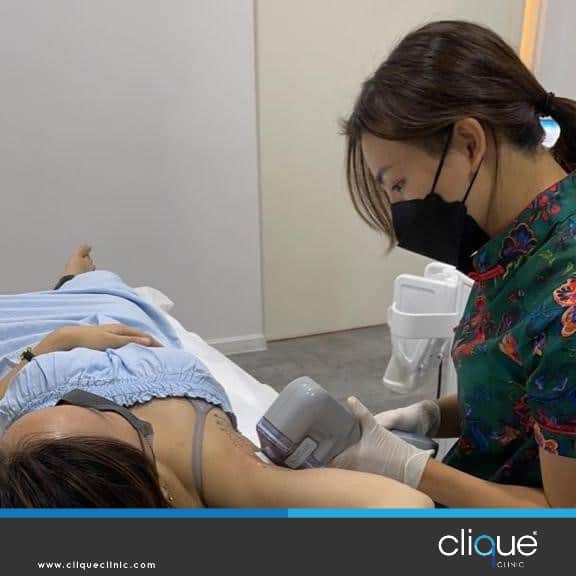
At Clique Clinic, exosome therapy is also used alongside procedures such as microneedling and RF microneedling (Sylfirm X, Potenza) as a recovery-supporting option. Timing always depends on the procedure, formulation and condition of the skin. Only products recommended by our doctors should be applied to freshly treated skin.
Is Exosome Better Than Retinol?
So is exosome better than retinol? The direct answer is: it depends on what your skin needs right now.
Retinol is generally more corrective and focused on skin renewal. Exosome skincare is generally more supportive and repair-focused. So exosome-based skincare may be a better fit for individuals who cannot tolerate retinol or whose main concerns are barrier health, recovery, hydration, or overall skin quality. The better option depends on the skin concern, tolerance, current routine, and product quality.
Can Exosomes Replace Retinol?
Exosomes may work as an alternative for individuals who cannot tolerate retinol, but they should not be taken as an exact replacement. Retinol directly supports cell turnover and corrective renewal, while exosome skincare focuses on cellular signalling, repair, hydration and resilience.
To this day, retinol remains better established for active acne, pigmentation and visible photoageing, while exosomes offer a gentler route for individuals prioritising barrier health and overall skin quality.
Can You Use Exosomes and Retinol Together?
Potentially yes, because they support the skin through different pathways. Retinol may provide corrective renewal, while exosome skincare supports hydration, recovery, and barrier resilience. Rather than layering them in the same skincare routine, they may be better alternated when first introduced.
So, introduce one product at a time to identify sensitivity. For example, individuals with reactive skin may prefer to prioritise barrier health first before introducing retinol. Research on exosome-based therapies notes that while preclinical studies show meaningful benefits in fibroblast function and wound repair, clinical studies in aesthetics remain limited. The excitement is real, but should be matched with realistic expectations about formulation quality and product selection.
Which Should You Choose: Exosomes or Retinol?
Retinol remains the more established corrective active for concerns such as acne, wrinkles, pigmentation and uneven texture. Exosome skincare may be more suitable when the priority is barrier health, recovery, hydration, and lower potential for irritation. The debate of “is exosome better than retinol” still comes down to using the right choice depending on skin condition, tolerance, and treatment goals.
Some individuals benefit from using both within a structured routine: retinol for corrective renewal, exosomes for recovery support. At Clique Clinic, our exosome-based skincare range is curated and trusted, and our doctors will only recommend products and routines based on individual skin concerns, sensitivity and treatment history.
Final Thoughts
Exosomes and retinol support skin improvement through different pathways. Retinol remains a proven active for wrinkles, acne, pigmentation and cell renewal. Exosome-based skincare provides a more supportive, repair-focused approach for sensitive, stressed or retinol-intolerant skin.
Therefore, exosomes should not be positioned as superior or as a direct replacement for retinol. The two may complement one another when introduced appropriately, and product quality matters because exosome formulations vary significantly, making professional selection important.
Regenerative skincare is an evolving space, and the most effective skincare routines are rarely built on a single ingredient alone. What works is knowing what your skin needs, at which stage, and in which combination.
So if you are unsure where exosomes, retinol or both fit into your current skincare and treatment plan, talk to our team. Our exosome-based skincare range, available exclusively in Clique Clinic, is a repair-focused option for individuals prioritising barrier health, recovery, and overall skin quality.
Chat with us on WhatsApp to book a personalised skin consultation, and our doctors will assess your skin condition, skin barrier health, sensitivities, and treatment history before recommending an appropriate skincare routine.