Key Takeaways
- Transcranial Magnetic Stimulation (TMS) is a non-invasive therapy that uses magnetic pulses to stimulate targeted areas of the brain.
- TMS is most commonly used for major depressive disorder, particularly when medication or psychotherapy has not provided sufficient improvement.
- Treatment is performed while the patient is awake and does not require surgery, injections, or general anaesthesia.
- A typical TMS course involves repeated sessions over several weeks, although the exact schedule depends on the device and treatment protocol.
- TMS has an established evidence base, but response rates, treatment duration, and long-term benefits vary between individuals.
- EXOMIND is a modern rTMS platform that uses the same core magnetic-stimulation principle, with differences mainly in protocol, schedule, and treatment goals.
Introduction
Using magnetic pulses to influence brain activity may sound unusual, but Transcranial Magnetic Stimulation (TMS) has been used clinically for decades.
TMS is a non-invasive therapy that stimulates targeted areas of the brain without surgery, injections, or general anaesthesia. It is most strongly associated with the treatment of major depressive disorder, particularly when medication or psychotherapy has not provided sufficient improvement.
Unlike medication, TMS works by directly stimulating specific brain regions rather than circulating throughout the body.
So what actually happens during TMS therapy, how does it affect the brain, and does it really work?
What Is Transcranial Magnetic Stimulation (TMS)?
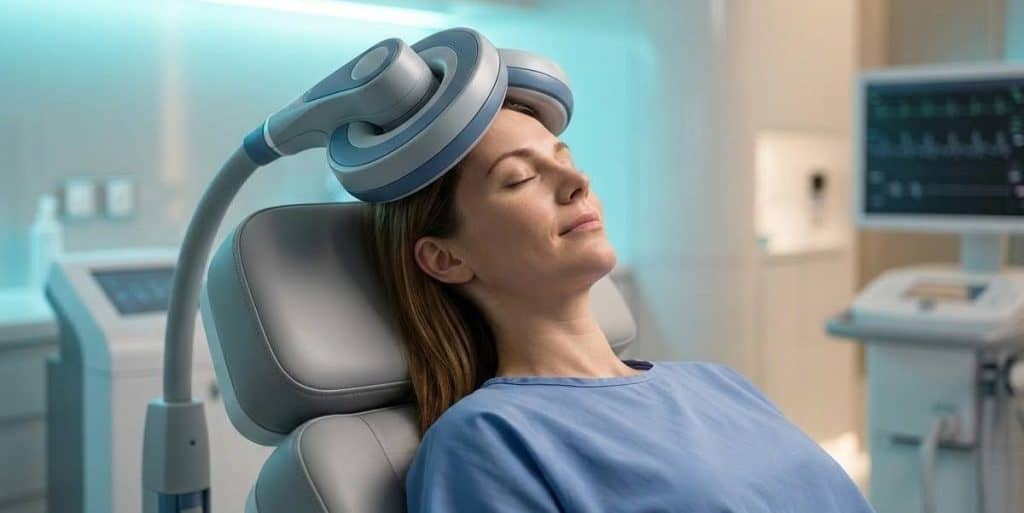
Transcranial Magnetic Stimulation is a non-invasive brain-stimulation treatment that uses magnetic fields to activate nerve cells in targeted areas of the brain.
The most commonly used form is repetitive Transcranial Magnetic Stimulation (rTMS), in which repeated magnetic pulses are delivered during a treatment session.
Patients remain awake throughout treatment, and no incisions or injections are required.
TMS is best established for major depressive disorder, particularly in individuals who have not experienced sufficient improvement with conventional treatment. Specific TMS systems and protocols may also have other clinical indications.
How Does TMS Therapy Work?
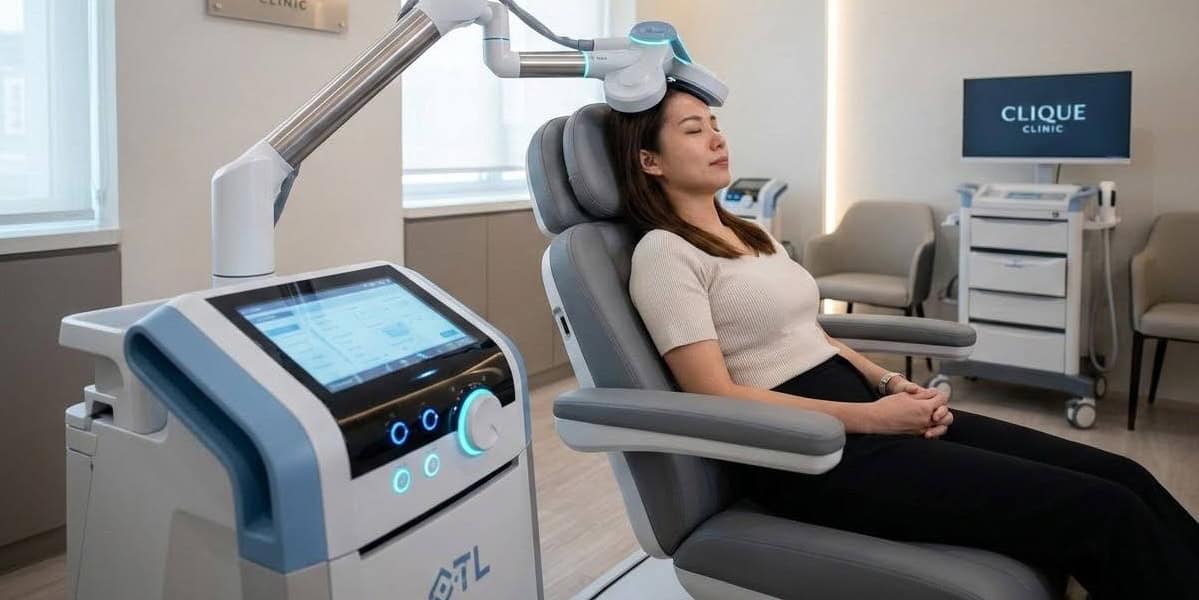
During TMS therapy, an electromagnetic coil is positioned against the scalp. The coil generates brief magnetic pulses that pass through the skull and induce electrical activity in nerve cells beneath the treatment area.
For depression, stimulation commonly targets the dorsolateral prefrontal cortex (DLPFC), a region involved in mood regulation, attention, and executive function.
The exact treatment depends on:
- The brain area being targeted
- Pulse frequency and intensity
- Number of pulses delivered
- Session duration
- Total number of sessions
This means two TMS programmes can use the same underlying technology but follow very different clinical protocols.
Does TMS Rewire the Brain?
Not literally. “Rewiring” is a simplified way of describing neuroplasticity, the brain’s ability to adapt and change how its neural networks communicate.
Repeated magnetic stimulation may help influence brain activity and connectivity over time. These changes usually develop across a treatment course rather than occurring after a single session.
What Is TMS Therapy Used For?
TMS is most commonly used to treat major depressive disorder.
It may be considered when antidepressant medication, psychotherapy, or other standard approaches have not provided adequate improvement or have caused unacceptable side effects.
Depending on the specific device and treatment protocol, TMS may also be used for other recognised indications.
The important distinction is that not every TMS protocol is appropriate for every condition. The diagnosis, brain target, pulse pattern, and clinical objective all matter.
Does TMS Therapy Really Work?
Yes. TMS has established clinical evidence for certain conditions, particularly major depressive disorder.
However, there is no single “TMS success rate” because results vary depending on the treatment protocol, symptoms, previous treatments, and individual response.
As of 2026, a large expert review of nearly 2,400 TMS studies reported that, in real-world settings, up to 83% of patients may experience improvement and more than half may achieve remission.
While these results are encouraging, outcomes vary from person to person. TMS should therefore be viewed as an evidence-based treatment option rather than a guaranteed cure.
What Happens During a TMS Session?
A TMS session is usually straightforward.
The patient sits in a chair while the treatment coil is positioned against the scalp. Once treatment begins, the machine delivers repeated magnetic pulses. Patients may hear clicking sounds and feel rhythmic tapping or pulsing against the scalp.
The patient remains awake throughout the session, and sedation is not typically required.
Session duration varies significantly depending on the protocol. Some newer stimulation patterns can be completed within minutes, while conventional sessions may take considerably longer.
For major depression, traditional treatment courses commonly involve sessions several days per week over approximately four to six weeks.
What Are the Side Effects and Cons of TMS?
TMS is generally well tolerated, but it is not completely free from side effects.
Common temporary effects may include:
- Headache
- Scalp discomfort
- Tingling
- Facial or scalp muscle twitching
- Light-headedness
Rare but more serious complications, including seizures, can occur. Individuals with certain metallic or electronic implants, seizure disorders, or neurological conditions may require additional screening or may not be suitable.
A proper medical assessment is therefore essential before treatment.
Is TMS Safer Than Antidepressants?
TMS and antidepressants have different risk profiles, so it is more accurate to compare their types of side effects than to say one is universally safer.
Antidepressants circulate throughout the body and may cause systemic effects depending on the medication and individual.
TMS delivers targeted magnetic stimulation and therefore avoids many medication-related systemic effects. However, it has its own considerations, including scalp discomfort, headache, treatment frequency, cost, and rare neurological risks.
TMS may also be used alongside antidepressants in some treatment plans.
Prescribed medication should never be stopped or changed solely to begin TMS without medical guidance.
What Happens After You Finish TMS?
Benefits from TMS do not necessarily disappear when treatment ends.
Some individuals maintain improvement for an extended period, while symptoms may gradually return in others.
Depending on the response, follow-up care may involve:
- Medication
- Psychotherapy
- Repeat TMS
- Maintenance TMS
- Other mental-health support
TMS should therefore be viewed as part of a longer-term treatment strategy rather than a permanent one-time solution.
Is EXOMIND a Type of TMS?
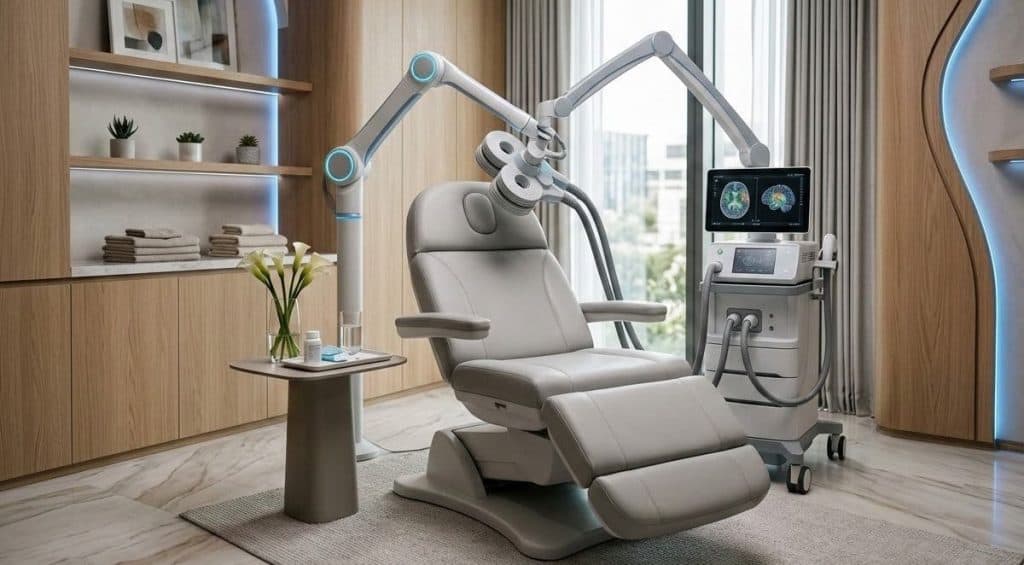
Yes. EXOMIND is a modern rTMS platform that uses the same fundamental principle of non-invasive magnetic brain stimulation.
The main differences between EXOMIND and traditional TMS relate to the device, stimulation protocol, session schedule, and treatment objective.
EXOMIND may be used with different protocols depending on whether the goal is a structured clinical programme or a wellness-focused approach.
For more on EXOMIND, read: EXOMIND vs Traditional Transcranial Magnetic Stimulation (TMS): What’s the Difference?
FAQ
How much does one session of TMS cost?
TMS cost varies according to the clinic, device, protocol, and total number of sessions required. A professional assessment is usually needed before accurate pricing can be provided.
How many TMS sessions are usually needed?
For depression, a common clinical course involves approximately 30–36 sessions delivered over four to six weeks, although the exact number varies by device and protocol.
Is TMS painful?
Most people describe tapping or pulsing sensations rather than pain. Temporary scalp discomfort or headache may occur during or after treatment.
Can TMS be repeated if symptoms return?
Yes, repeat or maintenance treatment may be considered in some individuals after reassessment, particularly if they previously responded well to TMS.
Does TMS work immediately?
Not usually. Some individuals notice changes during the treatment course, while others improve more gradually. Response timing depends on the condition, protocol, and individual factors.
What happens if you stop TMS treatment?
Stopping early may reduce the chance of achieving the intended benefit, especially if the full course has not been completed. Any decision to pause or stop treatment should be discussed with the treating clinician.
Conclusion
Transcranial Magnetic Stimulation is a non-invasive treatment that uses magnetic pulses to influence targeted areas of the brain.
It has one of its strongest evidence bases in major depressive disorder, especially when conventional treatment has not provided sufficient relief.
TMS avoids surgery and general anaesthesia, but proper diagnosis, medical screening, and selection of the correct stimulation protocol remain essential.
Modern rTMS platforms such as EXOMIND demonstrate how the same underlying technology can be delivered through different treatment protocols and for different goals.
At Clique Clinic, individuals exploring TMS or magnetic brain stimulation can undergo a personalised assessment to determine whether EXOMIND or another appropriate care pathway is suitable for their symptoms, medical history, and goals.
Book a consultation today to explore your options with our doctors.