
Black Ginger (Kaempferia parviflora): What Is It, Benefits and Nutritional Value
Key Takeaways
- Black ginger is rich in polymethoxyflavones (PMFs), powerful plant compounds linked to circulation, energy, and antioxidant support.
- Research suggests it may support physical performance, metabolism, healthy ageing, vascular health, and male vitality when combined with a healthy lifestyle.
- Unlike regular ginger, black ginger has a unique nutritional profile and different health applications.
- Most studies use 90–180 mg of standardised extract daily, with benefits typically observed after 4–12 weeks of consistent use.
- Black ginger has a favourable safety profile at recommended doses, but people with certain medical conditions or medications should consult a healthcare professional before use.
Introduction
Black ginger, known scientifically as Kaempferia parviflora, is earning serious attention across sports nutrition, healthy ageing research, and integrative medicine, not because of clever marketing, but because the science is finally catching up with centuries of traditional use.
At Clique Clinic in Malaysia, our patients care about whole-body wellness, not just what happens on the surface. Ingredients like black ginger belong in that conversation.
What Is Black Ginger (Kaempferia parviflora)?
Origin and Traditional Uses of Black Ginger
Kaempferia parviflora is a perennial rhizomatous plant from the Zingiberaceae family. Known locally in Thailand as “Krachai Dum,” it grows across Thailand, Laos, and parts of Southeast Asia, in a climate not unlike Malaysia’s own.
Thai folk medicine has used the rhizome for over a thousand years, traditionally for:
- Improving physical stamina, energy, and vitality
- Supporting blood circulation and cardiovascular function
- Managing digestive disorders and gastric complaints
- Enhancing male sexual health and vigour
Black Ginger vs Regular Ginger
The name causes confusion, but black ginger and regular ginger (Zingiber officinale) belong only to the same plant family.
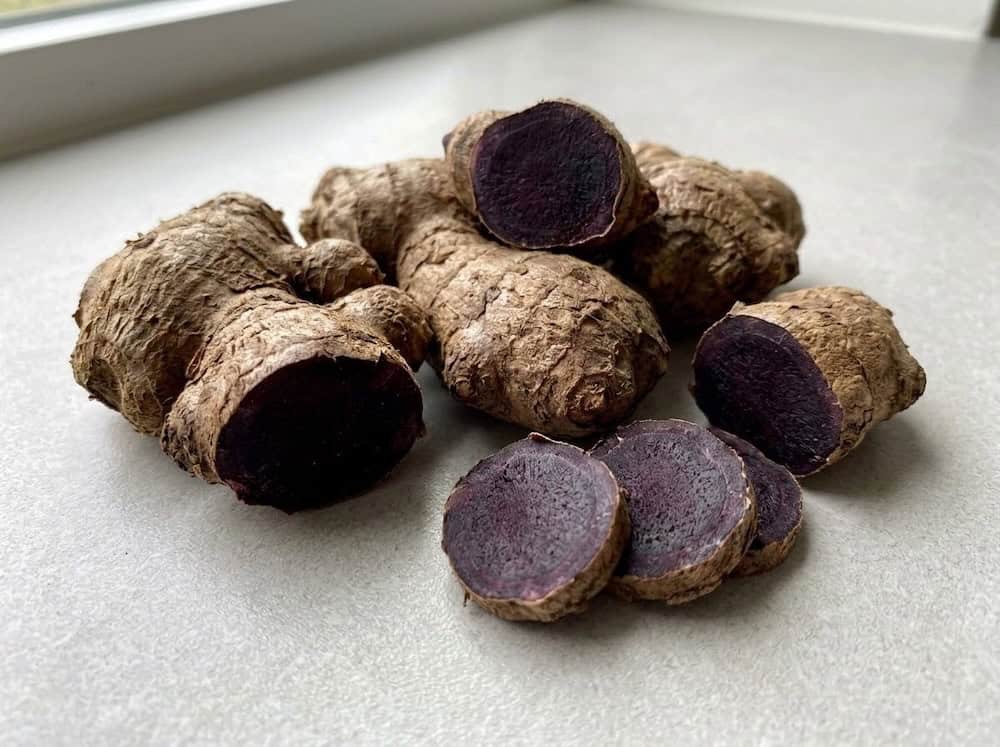
- Appearance: Black ginger’s rhizome is deep purple, almost black inside. Regular ginger is pale cream or yellow.
- Bioactive compounds: Regular ginger relies on gingerols and shogaols. Black ginger is dominated by polymethoxyflavones (PMFs), a structurally different class of flavonoids.
- Effects: Black ginger works mainly on vascular function, mitochondrial energy metabolism and antioxidant pathways.
These two plants are not interchangeable.
Also read: Red Ginger: What is it, Benefits, and Nutritional Value
Also read: Blue Ginger: What is it, Benefits, and Nutritional Value
Nutritional Value of Black Ginger
Like most rhizomes, black ginger contains dietary fibre, potassium, magnesium and calcium. The more interesting layer is its bioactive plant compounds:
- Polymethoxyflavones (methoxyflavones): The lead actives, including 5,7-dimethoxyflavone and 5,7,4-trimethoxyflavone, responsible for most documented effects.
- Flavonoids: Plant polyphenols contributing to antioxidant and anti-inflammatory activity.
- Antioxidants: High concentrations of phenolic antioxidants fighting free radical damage at a cellular level.
- Polyphenols: Including phenolic glycosides and terpenoids with adaptogenic and anti-obesity properties.
When choosing a black ginger supplement, extract quality matters as much as dose. Products standardised to a defined PMF content are more reliable than generic powder with no specified active compound concentration.
How Does Black Ginger Work?
On circulation: Black ginger extract upregulates endothelial nitric oxide synthase (eNOS), increasing nitric oxide production, which relaxes and dilates blood vessels, improving blood flow.
On cellular energy: PMFs activate AMP-activated protein kinase (AMPK), shifting the body toward more efficient fat oxidation during exercise.
On oxidative stress: Methoxyflavones act as potent free radical scavengers, reducing oxidative burden on cells and tissues, with direct relevance to skin health and ageing.
On metabolism: Black ginger interacts with peroxisome proliferator-activated receptor gamma (PPARgamma), a master regulator of fat storage and glucose handling.
What Are the Benefits of Black Ginger?
May Support Energy Levels and Physical Performance
The most robustly researched black ginger benefits relate to energy and physical performance. A 2022 study published in Nutrients confirmed that black ginger extract enhanced endurance capacity by improving energy metabolism and substrate utilisation, with significant effects on lipid metabolism and mitochondrial gene expression in skeletal muscle.
Separately, a randomised double-blind placebo-controlled trial involving 60 soccer players found that 12 weeks of Kaempferia parviflora supplementation at 180 mg daily led to significant improvements in multiple physical fitness parameters, including cardiorespiratory fitness and muscular strength. This is one of the stronger human trials in the black ginger literature.
A further study found that PMFs in black ginger extract increased energy production by activating AMPK in muscle cells, and significantly improved swimming endurance, grip strength, and post-exercise recovery in animal models.
May Help Support Healthy Metabolism
Black ginger for weight loss is one of the more nuanced applications. A preclinical study published in Food and Nutrition Research showed that KP rhizome extract significantly reduced body weight, body fat mass, adipocyte size, and serum levels of glucose, triglycerides, cholesterol, insulin, and leptin in high-fat-diet-fed mice.
A human clinical trial found that daily intake of KP extract produced meaningful reductions in abdominal fat in overweight and pre-obese subjects. At Clique Clinic, where we support patients through body sculpting and personalised nutrition, black ginger represents the kind of evidence-informed internal support that complements external interventions.
Rich in Antioxidants
Oxidative stress accelerates ageing at the cellular level. It impairs skin cell turnover, degrades collagen, and worsens the very processes our treatments at Clique Clinic are designed to address. Black ginger extract delivers a meaningful antioxidant load through its flavonoid and polyphenol content.
In an 8-week human trial, supplementation with Kaempferia parviflora extract led to significant increases in superoxide dismutase, catalase, and glutathione peroxidase activity, alongside measurable reductions in malondialdehyde, a key marker of oxidative damage. These are not cosmetic markers. They reflect real changes in the body’s antioxidant defence systems.
May Support Healthy Blood Circulation
Black ginger blood circulation research is some of the most well-mechanised in the literature. Studies in human endothelial cells demonstrated that KP extract dose-dependently increased nitrite concentrations and upregulated eNOS mRNA and protein expression, supporting vascular endothelial health at a molecular level.
Animal research confirmed that chronic oral administration of KP extract caused a decrease in vascular resistance alongside an increase in nitric oxide production from blood vessels, with secondary benefits including reductions in visceral fat and fasting glucose. Black ginger vascular health benefits are among its most consistent and compelling documented properties.
Better circulation supports skin luminosity, wound healing after aesthetic procedures, and overall organ function. It is rarely thought about in the context of aesthetics, but it should be.
May Support Cognitive Function
This is an emerging area. Animal studies have shown that KP extract prevented cognitive decline and supported hippocampal neurogenesis under conditions of chemically induced brain stress. A 2025 study published in PLOS ONE demonstrated that KP extract and its methoxyflavones showed multi-target potential against Alzheimer’s disease pathways and improved memory performance in amnesic mice.
Important caveat: large-scale human trials focused on cognitive outcomes have not yet been conducted. The direction of the science is promising, but the conclusions remain preliminary.
May Support Men’s Health and Vitality
Black ginger for men has a long traditional history, and it is increasingly backed by clinical evidence. A pilot study published in the Journal of Integrative Medicine found that 100 mg of KP ethanolic extract taken daily for 30 days led to statistically significant improvements in erectile function, intercourse satisfaction, and overall IIEF scores in men aged 50 to 68.
The mechanism involves PDE-5 inhibition and nitric oxide-mediated vasodilation, the same pathway as certain pharmaceutical options, but working through natural plant compounds.
Crucially, testosterone levels were not affected in either major study, making this a safe adjunct rather than a hormonal intervention.
Black ginger for vitality, in both the physical and sexual sense, remains one of its most historically supported and scientifically interesting applications.
What Does the Research Say About Black Ginger?
A systematic review of clinical studies on Kaempferia parviflora in the Journal of Evidence-Based Integrative Medicine found measurable benefits across physical performance, sexual health, and antioxidant status in human subjects.
Preclinical evidence spans anticancer activity, neuroprotection, anti-obesity effects, and vascular support. Universiti Tun Hussein Onn Malaysia published a 2023 study identifying black ginger as a potential anticancer and anti-migration agent in breast cancer cell models.
The honest picture: most studies remain animal-based or small-scale in humans. Black ginger is a well-supported functional ingredient, not a pharmaceutical drug.
Who May Benefit From Black Ginger?
- Active individuals and athletes seeking better stamina and exercise metabolism
- Older adults maintaining physical fitness, vascular health, and antioxidant resilience
- Men in their 40s, 50s, and beyond exploring natural support for vitality and circulation
- Individuals focused on healthy ageing and skin wellness who want internal support alongside aesthetic treatments
- People on weight management programmes where metabolic support may help alongside diet and movement
For our Clique Clinic patients in Malaysia, black ginger fits naturally into a more holistic approach to looking and feeling well from the inside out.
How to Take Black Ginger?
Common Forms
- Black ginger capsules: The most widely used form, offering precise, standardised dosing.
- Black ginger powder: Blendable into smoothies, teas, and functional foods, though less reliably standardised.
- Functional beverages: A growing format used in several clinical trials, typically pre-measured to a fixed dose.
- Concentrated extracts: Dry or liquid formats generally higher in PMF concentration per gram.
Typical Dosages
Studies have used doses from 25 mg to 180 mg of standardised extract daily, with the most commonly documented effective range between 90 mg and 180 mg. Measurable outcomes have generally appeared after 4 to 12 weeks of consistent use.
Always follow the dosing guidance on your chosen product, and consult a healthcare professional first if you have underlying health conditions or take prescribed medications.
Is Black Ginger Safe?
Based on human trials to date, Kaempferia parviflora at standard doses has a favourable safety profile, with no serious adverse events reported. Possible mild side effects include digestive discomfort on an empty stomach and mild sensitivity reactions at higher doses.
People with cardiovascular conditions, those on anticoagulant or antihypertensive medication, pregnant or breastfeeding women, and anyone sensitive to the ginger family should seek medical advice before use.
Frequently Asked Questions
Is Black Ginger the same as regular ginger?
No. They are different species that share a botanical family but have entirely different bioactive profiles and health applications, and should not be used interchangeably.
Can Black Ginger help with weight loss?
It may support metabolism and fat oxidation alongside a balanced diet and exercise. Human trials show modest reductions in abdominal fat, positioning it as a metabolic support ingredient rather than a standalone solution.
Does Black Ginger increase energy?
It may reduce fatigue and support performance by activating AMPK and improving mitochondrial energy metabolism, with human trials showing measurable improvements in endurance and stamina.
Is Black Ginger safe to take every day?
Daily use at standard doses appears safe over study periods of 4 to 12 weeks, though long-term human safety data is still limited. Consult a healthcare professional for guidance specific to your health profile.
How long does it take to see results from Black Ginger?
Studies reporting significant outcomes have generally used 4 to 1[TRUNCATED IN SOURCE — please confirm the full sentence]
What is the best time to take Black Ginger?
Most clinical studies use once daily dosing without specifying a time window. Taking it with food can reduce digestive discomfort.
Final Thoughts
Black ginger (Kaempferia parviflora) is not a wellness trend searching for a scientific basis. It has a documented history of traditional use and a growing body of credible research behind it, from circulation and stamina to antioxidant protection and male vitality.
At Clique Clinic in Malaysia, we believe lasting results in skin quality, body composition, and overall well being are built from the inside and the outside together. If you are thinking about how nutrition and supplementation can work alongside your aesthetic goals, our Meal Surveillance programme is a great starting point.
If you would like to speak with one of our Clique doctors directly, reach out on WhatsApp and we will take it from there.