
Dimethicone for Skin: All You Need To Know
Healthy, resilient skin depends on a fine balance between water content, skin barrier integrity, and sensible product choices. In humid Malaysia, that balance is constantly challenged by heat, UV sun rays, and poor lifestyle habits.
At Clique Clinic, our doctors lean on evidence‑based ingredients that reinforce the barrier without smothering it, and dimethicone sits high on that list.
This in‑depth guide unpacks what dimethicone is, why it appears in so many great skincare formulations, and how you can decide whether it belongs in your daily routine.
What Is Dimethicone?
Dimethicone is a silicone‑based polymer (technical name: polydimethylsiloxane) widely used in skincare, cosmetics, and even medical dressings. Its unmatched slippery texture gives lotions that “cloud‑soft” feel, yet it is classed as non‑comedogenic, meaning it does not clog pores when formulated correctly.
- Smooth, silky texture: that instantly helps the spreadability of creams and serums.
- Breathable protective film: that slows transepidermal water loss (TEWL), crucial in Malaysia’s air‑conditioned indoor climate.
- Low surface tension: as it glides across micro‑crevices of the skin, making foundations and sunscreens apply evenly.
Dimethicone crosspolymer, a 3D atom-interlaced version is commonly used in cosmetics. This form provides a plush, cushiony feel in makeup primers while controlling oil breakthrough, useful for those who need makeup to last through long days.
Chemical Composition & Properties of Dimethicone
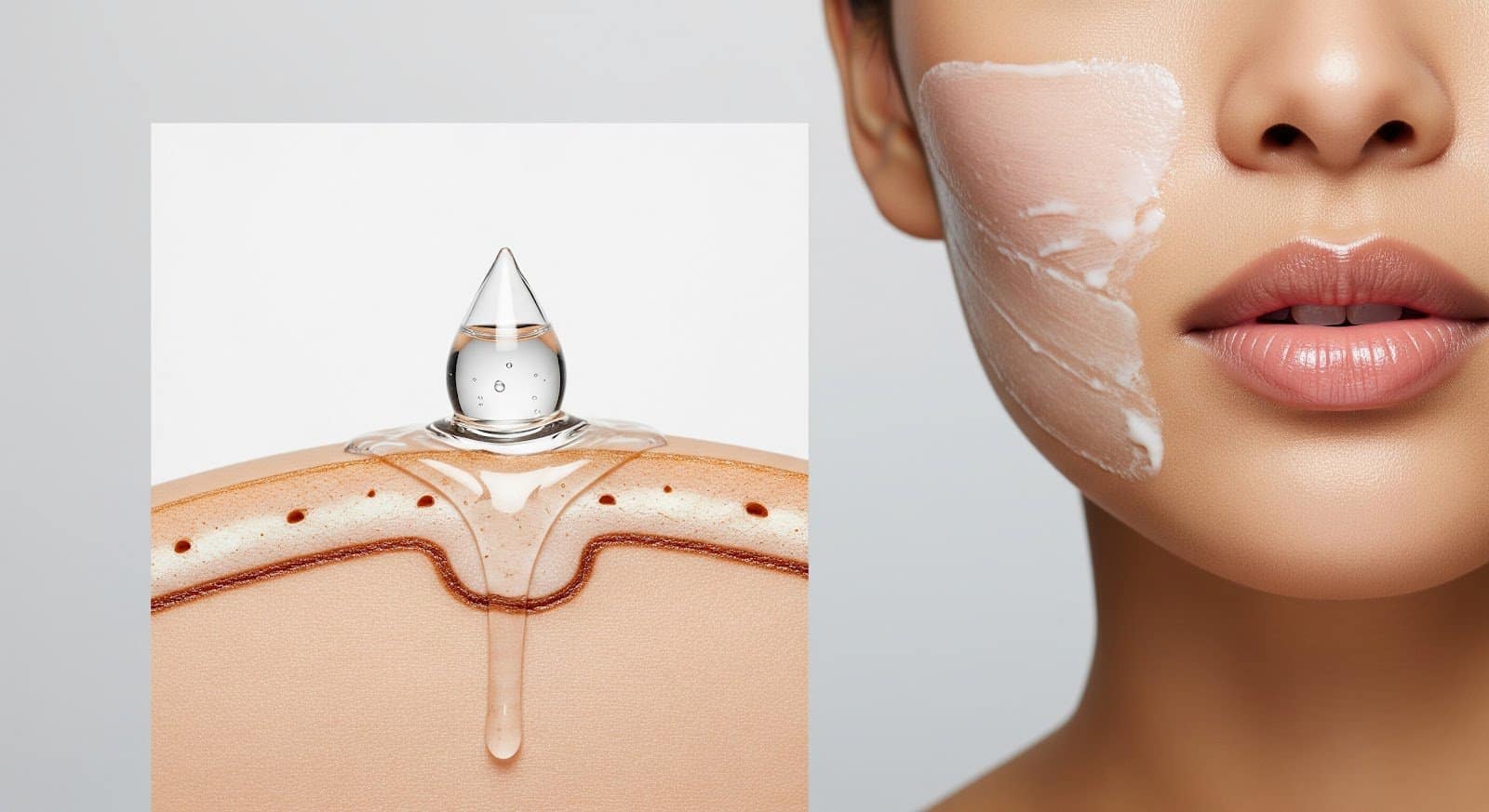
Dimethicone molecules are linear chains of silicon and oxygen atoms (Si–O–Si) capped by methyl groups (–CH₃). The result is an inert (non-reactive), hydrophobic (water-repelling) molecule structure that resists oxidation and microbial degradation.
- Since the silicon–oxygen molecule structure is flexible: this polymer drapes over skin like a liquid‑breathable layer.
- Water‑resistant yet not occlusive: it allows gaseous exchange to occur.
- Insoluble in water but disperses easily in alcohol or volatile silicones: simplifying elegant, lightweight formulas.
- Forms a micro‑thin film (≈1 µm): proven to cut TEWL by up to 30 % in controlled studies.
Read more: Dimethicone and its Benefits
- Recognised as GRAS (Generally Recognised As Safe) by regulatory agencies worldwide.
Read more: Dimenthicone Uses and Safety
How Dimethicone Functions in Skincare
When a product containing dimethicone meets skin, it performs three synergistic actions:
- Barrier reinforcement: It acts like a gentle patch that mends your skin barrier, so water cannot evaporate as quickly. This reduces transepidermal water loss (TEWL).
- Surface perfecting: By filling in fine lines and microscopic texture on the skin surface, it creates a filtering, blurring effect, smoothing out skin.
- Emollient cushioning: Skin feels soft and smoother immediately, and that sensorial reward encourages consistent use.
Silicone specialists sometimes describe dimethicone as “semi‑occlusive”, where it acts like a layer of protection for the stratum corneum [outermost layer of the skin], yet remains permeable to oxygen and skincare actives such as niacinamide.

Key Benefits of Dimethicone in Skincare
- Long‑lasting hydration: By reducing transepidermal water loss (TEWL), dimethicone sustains humectants (glycerin, hyaluronic acid) in the upper epidermis, making it especially beneficial as a post-care ingredient for patients undergoing chemical peels.
- Enhanced product slip: A silky smooth emollient ensures skincare actives spread evenly without tugging on the skin surface.
- Instant line‑blurring: Photographs taken after applications show softer pores and better skin texture.
- Environmental shielding: Studies on healthcare workers wearing N95 respirators found dimethicone creams decreased friction‑induced dermatitis.
Read more: Facial Skin Protectants Among Health Care Workers. - Post‑procedure comfort: Consensus guidelines on energy‑based devices (EBDs) such as PicoSure, SylfirmX, and Ultherapy recommend dimethicone or petrolatum in moisturisers to be used post-procedures due to severe barrier disruption.
Read more: Periprocedural Skincare for Energy-Based Aesthetic Procedures.
Potential Side Effects & Considerations
Dimethicone’s track record is remarkably clean, yet patient preferences matter.
- Some individuals dislike the “silicone feel/layer,”: describing it as too velvety. Hence, it is advisable to patch‑test on the skin to experience the texture before committing to any skincare product.
- Acne‑prone myths: While dimethicone is non‑comedogenic [non-pore blogging], skincare formulas may contain occlusive ingredients. So, do consider and research the blend of ingredients in every skincare product.
- Build‑up concern: Because silicones are water‑insoluble, double cleansing (oil followed by low‑pH foaming cleanser) is necessary to remove residue completely.
Is Dimethicone Safe For Skin?
Comprehensive reviews, including the 2023 update in Clinical, Cosmetic and Investigational Dermatology confirm negligible irritation, sensitisation, or endocrine activity at cosmetic concentrations.
The Cosmetic Ingredient Review (CIR) panel sets its safe‑use concentration up to 24 % for leave‑on products. That safety margin explains why dimethicone even appears in sensitive products like paediatric eczema creams and postoperative scar gels.
How to Use Dimethicone in Your Skincare Routine?
Dimethicone is not a single‑step active hero, but rather a versatile vehicle as it enhances skincare formulations by improving texture while reinforcing the skin’s barrier.
- Moisturiser: Look for “dimethicone 2 %” high on the INCI list [ingredient list] if your skin barrier feels dry or tight.
- Primer or cushion sunscreen: Helpful for those undergoing fractional laser to camouflage redness without clogging pores.
- Nightly slugging alternative: In Malaysia’s humidity, pure petrolatum [Vaselin] can feel heavy/suffocating; a dimethicone‑rich balm offers a more breathable occlusion.
- Layer order: Apply after watery essences but before heavy creams. The silicone mesh holds humectants in place.
- Frequency: Safe for twice‑daily use. Our doctors advise pausing only if directed during certain retinoid uptitration phases.*Retinoid uptitration refers to a gradual increase in the strength or frequency of retinoid use in a skincare routine.
Final Thoughts
Dimethicone is not a superstar ingredient like Vitamin C, retinol or niacinamide, but it is a well‑studied supportive ingredient that is crucial in modern skincare. By forming a whisper‑thin, breathable film over the skin, it locks in hydration, protects against irritants, and instantly refines texture, all without compromising long‑term skin health.
At Clique Clinic, we rely on dimethicone‑fortified products during in‑clinic recovery, after chemical peels, laser resurfacing, and even routine facial protocols for our high‑humidity climate. If you are curious whether this silicone superstar fits your skin goals or if you have lingering questions about “silicones versus natural oils” our doctors are here to personalise the answer.
Ready to experience skin that feels as good as it looks?
Reach out via wa.me/60123537960 or call +603‑7960 1211 to schedule a friendly, no‑pressure consultation.