

Mounjaro vs Saxenda: Which Weight-Loss Injection Is More Effective?
Key Takeaways
- Mounjaro (tirzepatide) and Saxenda (liraglutide) are prescription weight-loss injections that suppress appetite and regulate metabolism through different hormone pathways.
- Mounjaro activates both GIP and GLP-1 receptors for stronger appetite control, fat burning, and insulin regulation, while Saxenda targets only GLP-1 receptors.
- Dosing convenience: Mounjaro is a once-weekly injection, while Saxenda requires daily injections.
- Weight-loss results: Mounjaro users report an average 21% body weight reduction over 72 weeks, compared to 8–10% with Saxenda over 56 weeks.
- Safety profile: Saxenda has nearly a decade of proven real-world use, while Mounjaro delivers higher efficacy but may cause stronger early nausea or bloating.
Introduction
Weight loss can be hard to maintain through diet and exercise alone. Endless sessions at the gym don’t always guarantee permanent weight loss for everyone. Exercise alone cannot fully counteract the effects of hormones, genetics, and metabolism.
Consequently, many people now turn to medical help for support. Two popular options are Mounjaro and Saxenda. Both are prescription injections that help manage weight by controlling appetite.
However, they work through different mechanisms and deliver different results. Here’s a clear, side-by-side look at how they compare.

What is Mounjaro (Tirzepatide)?
Mounjaro, manufactured by Eli Lilly, was first approved to treat type 2 diabetes. However, it later gained widespread off-label use for weight loss, given its impressive effects on appetite and metabolism.
In practice, the drug works by activating two receptors, GIP and GLP-1, that regulate appetite and metabolism. This dual hormone action helps the body burn fat more effectively, enhancing appetite control and metabolic function.
What is Saxenda (Liraglutide)?
Saxenda, developed by Novo Nordisk, earned FDA approval for chronic weight management back in 2014. In practice, Saxenda mimics the natural GLP-1 hormone. This hormone naturally helps regulate appetite by reducing hunger signals and slowing gastric emptying.
Consequently, patients often feel fuller for longer periods, which aids in controlling food intake and supports sustainable weight loss efforts.
Mounjaro vs Saxenda: How They Work?
Both medications aim for the same goal—reduced appetite and calorie intake. However, they approach it differently.
Mechanism of Action
Saxenda focuses on one hormonal pathway, while Mounjaro activates two. Here is an illustrative summary:
- Saxenda: Activates a GLP-1 receptor agonist that reduces appetite, slows gastric emptying, and increases satiety.
- Mounjaro: Activates both GIP and GLP-1 receptors, providing an extra pathway for improved fat metabolism and insulin response.
Dosing Frequency for Mounjaro and Saxenda
Both medications also differ in dosage. Here’s one of the biggest differences:
- Saxenda requires a daily injection (3mg).
- Mounjaro is once-weekly, with doses that range from 2.5mg up to 15mg.
Generally, the once-weekly dosing schedule of Mounjaro offers greater convenience. It may also improve patient adherence compared to the daily injections required with Saxenda.
Mounjaro vs Saxenda for Weight Loss Results
Clinical studies indicate that Mounjaro tends to produce more significant weight loss compared to Saxenda. In a 72-week trial, patients utilising the highest dose of Mounjaro (15 mg) lost nearly 21% of their body weight.
In contrast, Saxenda results typically showed an 8-10% weight reduction after about 56 weeks. Generally, both outperform diet and exercise alone, but Mounjaro’s dual-hormone effect produces stronger results.
Mounjaro vs Saxenda: Which Works Better for Weight Loss?
From a purely results-based view, Mounjaro demonstrates superior fat reduction and appetite control compared to Saxenda. This difference is largely due to Mounjaro’s dual activation of GIP and GLP-1 receptors. This mechanism enhances metabolism and insulin response beyond what Saxenda’s GLP-1 receptor-only action achieves.
That said, Saxenda has an impressive safety record, with nearly a decade of real-world use behind it. Some doctors even prefer to start patients on Saxenda before moving to Mounjaro once tolerance and habits are well established.
Also read:
- Wegovy vs Mounjaro: Which Weight-Loss Medication Delivers Better Results?
- Zepbound vs Mounjaro: What’s the Difference and Which Works Better for Weight Loss?
Mounjaro vs Saxenda Cost in Malaysia
Pricing of both medications in Malaysia can swing depending on location, clinic services, and package options. Saxenda is roughly RM1,000–RM1,800 per month, while Mounjaro is around RM1,800–RM6,000 per month.
Some clinics include medical checkups, nutrition advice, or follow-up tracking in the price.
However, both require a prescription and consultation with healthcare providers to ensure safe and effective use.
Mounjaro vs Saxenda Side Effects
Both Mounjaro and Saxenda commonly cause gastrointestinal side effects. For instance, nausea, vomiting, constipation, diarrhoea, and mild stomach discomfort. However, these symptoms generally subside as the body adjusts to the medication.
Since Saxenda requires daily injections, there is a slightly higher chance of daily gastrointestinal upset. Additional side effects may include fatigue, mild injection site irritation, headache, and dizziness.
Mounjaro, given as a once-weekly injection, may cause stronger early nausea or bloating—especially during dose escalation. While generally well tolerated, rare but serious risks include pancreatitis and gallbladder problems.
Mounjaro vs Saxenda: Which Is Right for You?
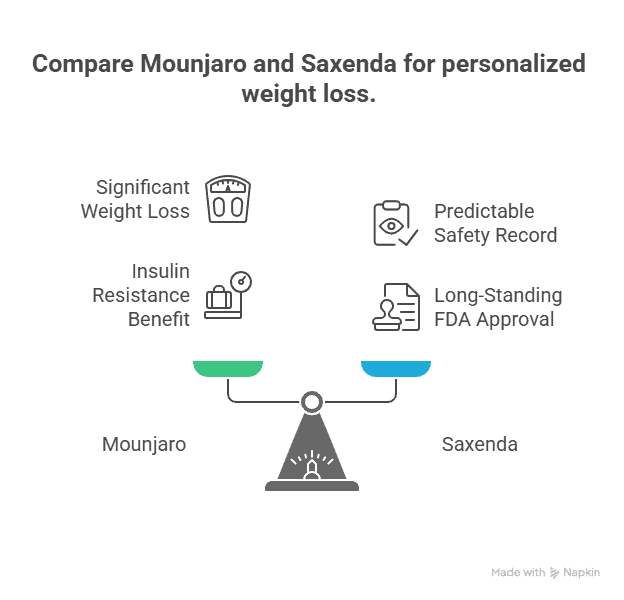
Mounjaro and Saxenda are best suited for two categories of individuals:
- Mounjaro: Best for patients who want significant weight loss results, especially with insulin resistance or type 2 diabetes.
- Saxenda: Ideal for those seeking a long-standing, FDA-approved weight-loss injection with a predictable safety record.
Overall, the choice between the two principally depends on individual health conditions, weight loss goals, and dosing preferences. So, always consult with healthcare providers to identify the safest and most effective option based on personal needs and medical history.
Mounjaro vs Saxenda FAQ
Are Mounjaro and Saxenda the same medication?
No. Mounjaro contains tirzepatide, while Saxenda uses liraglutide. Both influence appetite and metabolism, but through different mechanisms.
Can I switch from Saxenda to Mounjaro?
Yes, under a doctor’s supervision. However, transitioning too fast can cause side effects. As such, most clinicians phase it in gradually.
Are Saxenda and Mounjaro safe for non-diabetic patients?
Yes. Both are used for weight loss in non-diabetic adults, but you’ll still need medical monitoring.
Can I use Mounjaro or Saxenda long-term?
Both drugs can be used long-term under medical supervision for ongoing weight management. However, regular monitoring is important to assess efficacy, side effects, and overall health.
Is it safe to take Saxenda while pregnant?
Saxenda isn’t recommended during pregnancy due to insufficient safety data regarding risks to the fetus.
What is the active ingredient in Mounjaro?
The active ingredient in Mounjaro is tirzepatide. This is a dual GIP and GLP-1 receptor agonist that helps regulate appetite, metabolism, and blood sugar control.
Conclusion
When combined with a comprehensive plan including diet and exercise, prescription treatments offer an additional weight-loss weapon. Both Mounjaro and Saxenda can deliver real, measurable changes in how your body handles food and energy.
Mounjaro tends to lead in weight loss results, while Saxenda wins in long-term trust and experience. If you’re unsure where to start, Clique Clinic offers consultations and tailored plans to help you find what works best. Our team takes the guesswork out so you can focus on progress—not the next injection reminder.