Cornstarch for Skin: All You Need To Know
Healthy, shine‑free skin is a daily struggle in our humid, tropical Malaysian climate. At Clique Clinic, our doctors are often asked whether humble kitchen staples such as cornstarch or the use of talcum powder are safe for post-procedure care.
Below you will find an evidence‑based deep dive into what cornstarch really does for the skin, when it helps, when it may backfire, and how our doctors weave this information into personalised treatment plans for patients who want safe, minimal‑ingredient routines.
What Is Cornstarch?
Cornstarch is a fine, flavourless white powder milled from the endosperm (starchy core) of maize kernels. Currently best known as a soup‑thickener, it has been a staple ingredient for more than 100 years in medicated dusting powders, baby powders, and even surgical gloves.
Its popularity in personal‑care products soared after safety concerns arise over asbestos‑contaminated talc, since cornstarch offers similar oil‑absorbing performance without the same inhalation risk.
Read More: Talc-containing vs cornstarch-based
Chemical Composition & Physicochemical Properties
- A carbohydrate: of polysaccharide matrix, chiefly two glucose polymers, amylose (linear) and amylopectin (highly branched). More about corn starch: All about Corn Starch
- Granule size: between 5 μm and 20 μm, giving a smooth, powdery skin feel.
- High surface area: that binds water and lipids, explaining its mattifying power.
- pH‑neutral & inert: so it rarely reacts with common actives such as niacinamide or Vitamin C.
Because cornstarch is non‑ionic [non-reactive] it does not destabilise emulsions, making it a popular “sensory modifier” in clean‑beauty foundations and mineral setting powders.

Uses of Cornstarch for Skincare
We most often see cornstarch recommended for four situations:
- Absorbing excess sebum: in humid weather (good for quick touch‑ups on combination face T‑zones).
- Reducing intertriginous moisture: (sweat and dampness that accumulates in skin folds) and skin itches For example, under breasts, in groin folds, or behind knees to prevent chafing in athletes. Therefore corn starch can be helpful for skin rashes.
- Providing a talc‑free base: in loose body powders for patients worried about the dangers of using talc.
- Calming mild friction rashes: after laser hair removal or exercise like cycling events.
- Scientifically, corn starch for skin whitening: is likely to have a short‑term brightening effect, as it could be light scattering off the powder’s matte surface. So far, there is no scientific evidence supporting cornstarch to have inherent melanin‑inhibiting action. For lasting pigmentation control, our doctors favour tranexamic acid, alpha arbutin, Pico Fractional lasers, or prescription hydroquinone under supervision.
Cornstarch Benefits for Skin
- Instant shine control: Clinical work comparing talc to several botanical starches shows maize starch absorbs up to 85 % of applied oil within 30 minutes.
Read more: Influence of Talc Substitution with Starches - Feather‑light finish that blurs pores without the heavy grease petrolatum can cause.
- Soothing effect on minor skin irritation by reducing friction and isolating raw skin from sweat.
- Can be used in DIY masks and natural body powders.
- Eco‑friendly & halal‑compliant
These points resonate strongly with Malaysian consumers mindful of sustainability and syariah guidelines

Potential Side Effects & Considerations
Although generally recognised as safe (GRAS) by the US FDA, cornstarch has caveats:
- Pore clogging risk: when layered thickly on very oily or acne-prone skin, as starch granules can mix with sebum and clog pores.
- Fungal overgrowth in moist skinfolds: Early work hinted cornstarch might feed Candida albicans; later work finds no growth advantage, yet dermatologists still caution against it on active rashes. Read more: Cornstarch and rash
- Inhalation hazard: if puffed in clouds around infants, always tap powder into clean hands and pat gently.
- Product spoilage:
As a carbohydrate, starch attracts microbes when stored open or used past the expiry date. - Seek medical advice: for persistent skin issues.
Cornstarch may soothe mild discomfort but is not a substitute for proper treatment of rashes, infections, or chronic conditions.
Is Cornstarch Safe for Skin?
For the average adult with intact skin barrier function, yes.
At Clique Clinic, we give it a “Low Irritation, Low Sensitisation” rating on our internal safety scale. During patch testing, we rarely see allergy reactions. Still, patients with highly inflamed cystic acne or those with serious skin conditions should avoid it.
How to Use Cornstarch in Your Skincare Routine?
Here are a few ways to use cornstarch powder for skin:
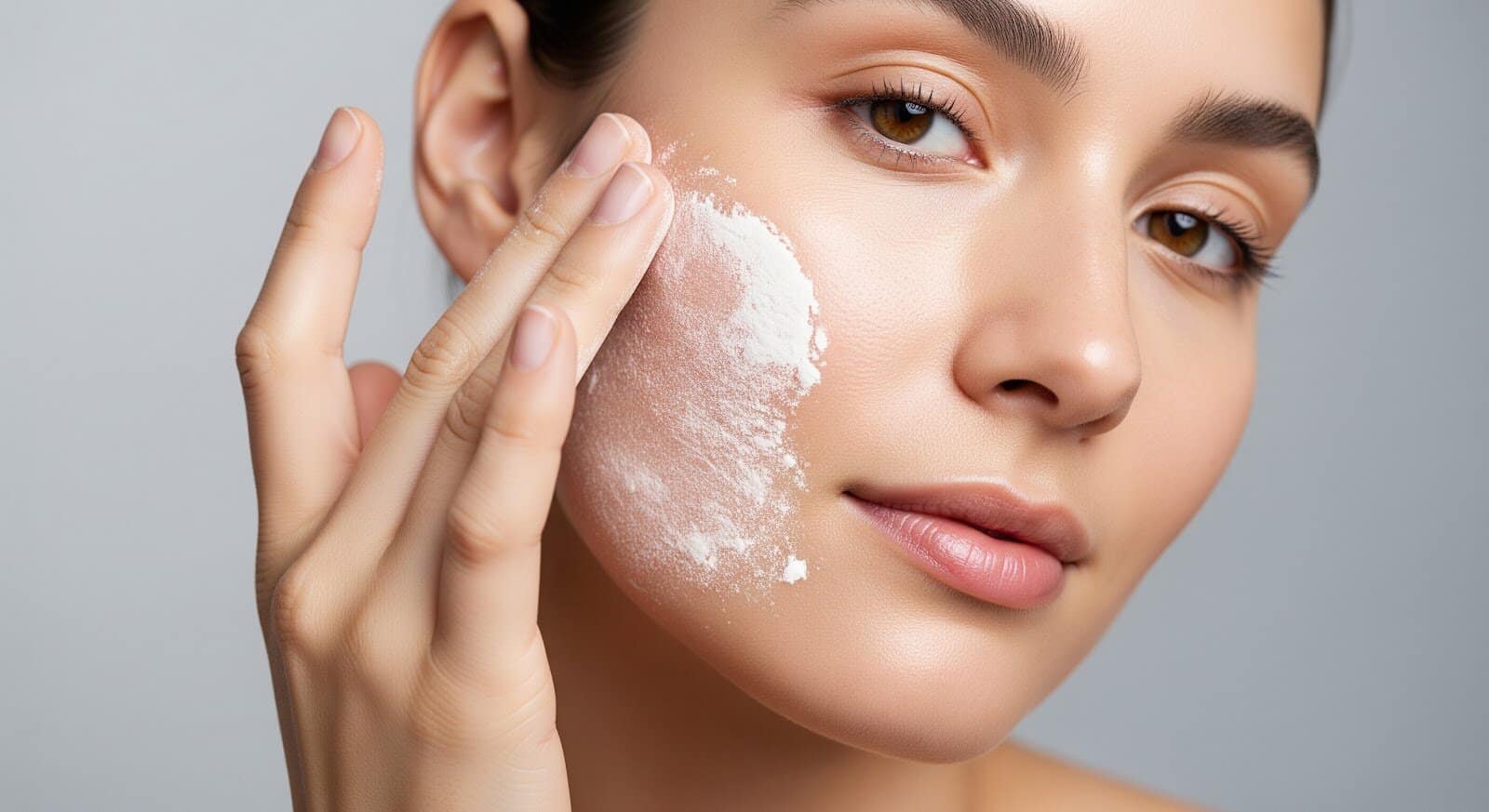
- As a dusting powder: Lightly press a fluffy brush loaded with pharmaceutical‑grade cornstarch onto the T‑zone. Do not buff; pressing leaves a finer film.
- Blotting sheets hack: Sprinkle a teaspoon into an oil‑blot paper and press lightly on the skin. The sheet picks up micro‑layers of starch for mobile mattification.
- Dry‑shampoo substitute: Lightly sprinkle cornstarch and massage into roots. Allow the cornstarch a few minutes to absorb the oil, then brush or comb your hair thoroughly to remove any visible residue.
Use cornstarch sparingly, as it is not suitable for acne-prone or highly reactive skin types.
Who Should Use Cornstarch?
| Ideal User | Less Ideal User |
|---|---|
| • Normal–combination skin needing mid-day shine control | • Severe acne with active acne |
| • Athletes seeking friction relief in high-sweat zones | • Individuals with recurrent fungal infections |
| • Consumers hunting for natural, talc-free setting powders | • Anyone on topical retinoids experiencing skin barrier fragility |
| • Post-laser patients once epidermis is fully healed (usually day 4 onward) | • Highly reactive skin types who need patch testing first |
Pro‑tip from Clique Clinic doctors: apply cornstarch only after sunblock has set for at least 15 minutes to avoid diluting SPF distribution.
Final Thoughts
Cornstarch epitomises the minimalist beauty movement, single‑ingredient, natural, and wallet‑friendly. It absorbs oil, reduces friction, and delivers a translucent soft‑focus finish that many commercial powders emulate for a far pricier cost.
Yet, like any ingredient, context is everything. Used properly, it can be a smart addition to our Malaysian tropical‑climate routine; if overused, it may worsen congestion or trigger a true yeast rash.
At Clique Clinic Malaysia, we believe skin health sits at the intersection of science, climate, lifestyle, and personal tolerance. If you are curious about integrating cornstarch into your skincare routine or if you are exploring medical‑grade alternatives for more complex issues, our aesthetic physicians are happy to guide you.
Ready for Personalised Advice?
Schedule a no‑obligation skin assessment with our doctors to explore simple, evidence‑backed solutions. wa.me/60123537960