

Is Wild Rice Healthy? Benefits, Nutrition, and When to Include It in Your Meals
Key Takeaways
- Wild rice is technically an aquatic grass and is naturally rich in fibre, protein, minerals, and antioxidants.
- Compared to white rice, wild rice provides steadier energy release and better nutritional value due to minimal processing.
- Its fibre and protein content may support satiety, appetite control, and balanced eating habits.
- Wild rice has a lower glycemic impact than white rice, making it a better option for blood sugar management.
- It can be easily added to grain bowls, salads, soups, and balanced meals for more variety and nutrition.
- Long-term health benefits still depend on overall meal quality, portion control, and sustainable eating patterns.
Introduction
Rice is one of those foods Malaysians rarely think twice about. But not all rice is equal, and wild rice sits in its own category entirely. It has a chewier bite, a nuttier depth of flavour and a nutritional profile that makes standard white rice pale in comparison.
Naturally rich in fibre, minerals and plant compounds, it has earned a firm place in wellness-focused diets around the world. Understanding how it actually fits into your daily meals, though, matters more than simply swapping white rice for wild rice.

What Exactly Is Wild Rice?
Whole grain wild rice is not from the rice family. Surprised?
So what is wild rice if it isn’t a rice or grain? Wild rice is technically an aquatic grass, native to North America, and it grows in shallow freshwater lakes, marshes and is harvested as whole grains.
Visually, it stands out immediately. The grains are long, slender and dark brown to almost black in colour, with a firmer texture and a more pronounced flavour than other coloured rice. It has not been polished or refined, which means the bran layer remains intact and the nutritional value stays where it should. Whole-food and wellness-focused diets have embraced wild rice for precisely this reason.
Can You Eat Wild Rice Every Day?
Of course you can, with the usual caveats that apply to any single food. Wild rice can absolutely be included as part of a balanced diet. Eat it paired with vegetables, proteins, and other grains, and it brings a textural variety that makes meals more interesting.
That said, nutritional needs vary considerably depending on your lifestyle, activity level, and health goals. Someone managing blood sugar should consume grains differently from someone in a muscle-building phase.
Structured, personalised meal planning takes the guesswork out of that, which is something the team at Clique Clinic works through as part of our Meal Surveillance programme for patients who want real, sustainable guidance rather than another generic diet list.
Why Wild Rice Is Considered a Healthy Grain Option?
Research published in PubMed confirms that wild rice is rich in minerals, vitamins, protein, dietary fibre, and antioxidant phytochemicals, while remaining low in fat. It has also been recognised as a whole grain by the US Food and Drug Administration [US FDA].
So is wild rice a healthy carb? Here are a few things worth knowing:
- Wild rice contains complex carbohydrates that digest more slowly than refined grains, giving you a more sustained energy release rather than the rapid spike and crash from digesting a plate of white rice
- Being less processed than refined rice, more of its natural nutrients are retained
- Minerals present include magnesium, phosphorus, zinc, and potassium, all of which play roles in everything from muscle function to skin repair
- Its antioxidant activity has been found to be significantly higher than white rice, driven largely by phenolic compounds and anthocyanins in the dark outer hull
These are not small differences. For anyone serious about their nutritional intake, wild rice clearly contributes to a balanced, heart-conscious, and wellness-focused lifestyle.
Is Wild Rice Better Than White Rice?
Preparation and portion size still matter, of course, but gram for gram, wild rice nutrition wins.
When we discuss wild rice vs white rice, wild rice is better as it retains its bran layer, which is where the fibre, minerals, and phytochemicals live, and this gives steadier energy levels post- meal. White rice has had this removed during milling, leaving behind mostly starch.
Wild Rice and Balanced Eating Habits
One of the more practical benefits of wild rice is what it does for appetite regulation. The combination of fibre and protein slows gastric emptying, making it possible to have wild rice for weight loss since food moves more gradually through the digestive system and fullness signals last longer.
Wild rice works well in a range of formats:
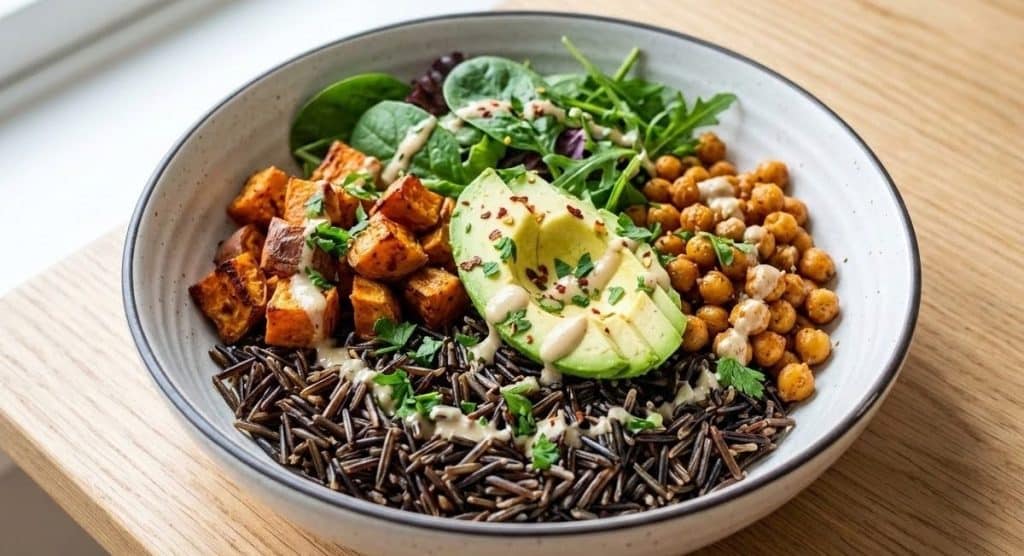
- Grain bowls with roasted vegetables and protein, like fish and meat
- Mixed into soups and broths for added texture
- Cooked with other whole grains like quinoa or brown rice for variety
- Served as a base for salads
Sustainable eating habits are built on overall meals, not individual ingredients. So consistent meals consisting of appropriate portions with a variety of food groups matter far more than any single ingredient.
Can Wild Rice Support Blood Sugar Balance?
This is a question that comes up often – is wild rice for diabetics a better choice? Wild rice glycemic index is in the low to moderate range, which means it raises blood glucose more slowly than refined grains like white rice, which typically registers at an index of 70 or above.
So yes, whole grain consumption was associated with significantly reduced fasting plasma glucose concentrations compared to refined grain equivalents. Wild rice, as a whole grain with substantial fibre content, fits this idea.
That said, overall meal composition still plays a significant role. A portion of wild rice eaten alongside high-sugar sauces or large amounts of refined carbohydrates will behave very differently from the same portion eaten as part of a well-balanced plate.
For individuals with diabetes or pre-diabetes, this is exactly the kind of nuanced dietary consideration that benefits from professional guidance rather than self-directed trial and error.
Best Ways to Include Wild Rice in Your Meals
Wild rice is versatile enough to work across most meal formats, and it keeps well in the fridge for a few days, which makes it practical for meal prepping. A few ideas worth trying:
- Cook a larger batch at the start of the week and use it across different meals
- Pair it with lean proteins such as grilled chicken, fish, or tofu and load up the plate with fibre-rich vegetables
- Use it in place of white rice in Asian-inspired dishes, keeping in mind that the texture and flavour will be different
- Combine it with brown rice or quinoa for a mixed grain option if the flavour is initially too strong on its own
Meal structure and consistency are the underlying principles here, so always aim to eat a variety of ingredients in every meal.
Final Thoughts
Wild rice earns its reputation as a nutrient-dense whole grain. Its fibre, protein, mineral content, and antioxidant activity put it well ahead of refined rice options, and its lower glycemic impact makes it a more considered choice for those mindful of blood sugar and energy levels.
That said, long-term health outcomes are shaped by dietary patterns, not single ingredients. Balanced meals, portion awareness, and sustainable eating habits are the real foundation.
If you are finding it difficult to make meals that actually work for your lifestyle and goals, Clique Clinic’s Meal Surveillance programme offers personalised meal planning and nutritional guidance tailored specifically to you, and without restrictive dieting.
Whether you are working on weight management, blood sugar balance, or simply building healthier long-term habits, our Clique doctors are here to help you figure it out without the overwhelm: wa.me/60123537960