Plinest vs Rejuran
Which Polynucleotide is Right for You?
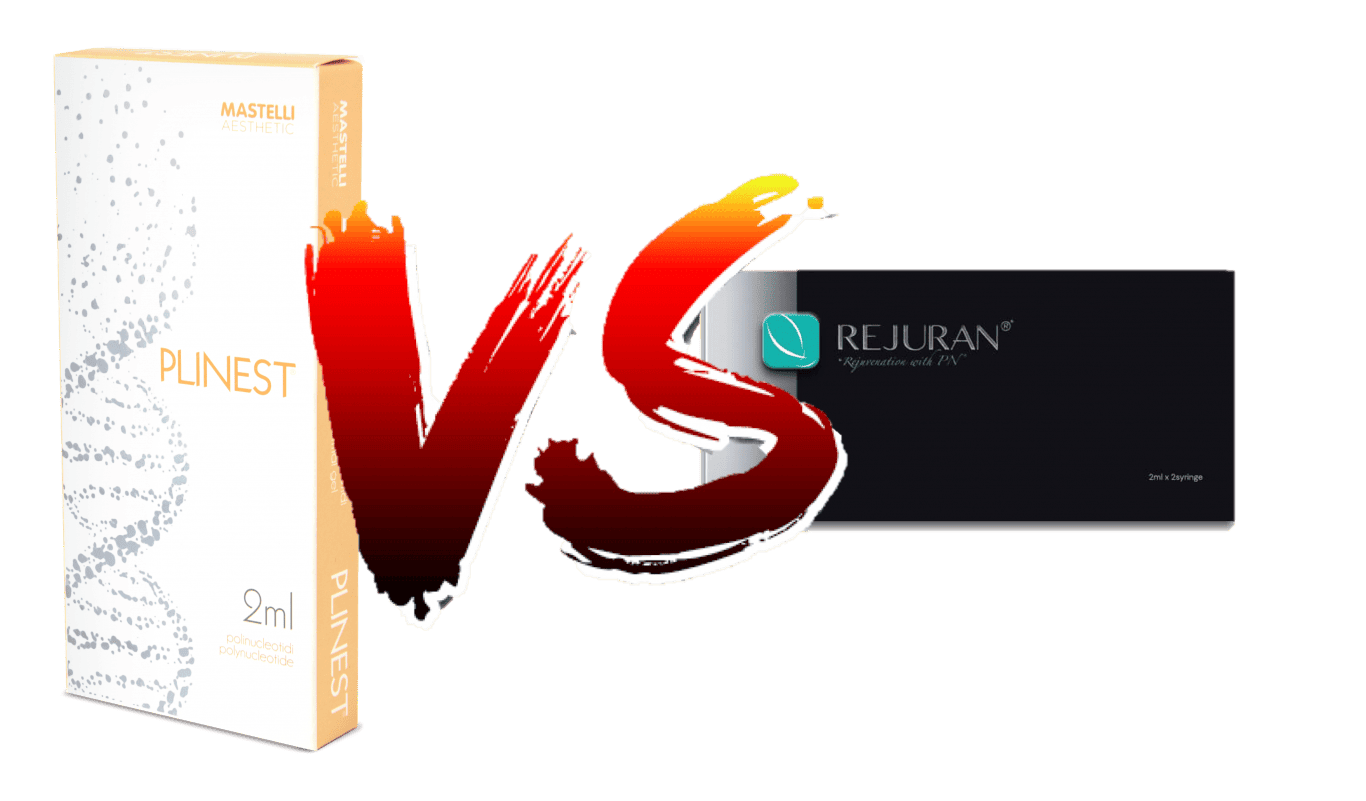
Polynucleotide (PN) — often marketed as “skin repair” or “regenerative” injectables — have become a mainstay in modern aesthetic medicine for improving skin texture, elasticity and glow. Two names you’ll commonly see are Rejuran and Plinest. This article breaks down the differences in plain language, highlights the scientific and clinical strengths of Plinest, and gives actionable guidance for patients deciding which treatment fits their goals.
Quick summary
-
Both Rejuran and Plinest are polynucleotide-based injectables that aim to regenerate skin quality by supporting dermal repair and hydration.
-
Plinest is positioned as an original, research-driven formulation with a focus on measured potency and clinical development; in our clinic we prefer Plinest when the treatment goal is robust, lasting dermal rejuvenation.
What are polynucleotide skin boosters?
Polynucleotide boosters are injectable preparations containing short DNA/RNA fragments (polynucleotides) derived from purified sources. They are used to:
-
Stimulate dermal repair pathways
-
Improve skin elasticity and texture
-
Increase hydration and skin radiance
They work differently from volumising fillers: instead of adding bulk, they support the skin’s biological repair and remodeling processes.
Rejuran — the established option
Rejuran helped popularise polynucleotide boosters in many markets. Clinically it has shown improvements in skin texture and fine lines for many patients and has become a trusted name among practitioners. Key points:
-
Widely used with a solid safety profile.
-
Market recognition and multiple published case series.
-
Often chosen for mild–moderate skin rejuvenation and maintenance.
Plinest — original formulation, focused research & potency
At Clique Clinic we favour Plinest when our goal is substantive dermal rejuvenation backed by rigorous formulation and potency control. Important differentiators we look for and communicate to patients:
-
Original formulation philosophy
Plinest was developed with the intention of optimizing polynucleotide chain length, purity and stabilisation — factors that can influence clinical activity and durability. In other words, the formulation was designed with research-first objectives rather than purely market-positioning. -
Research and development emphasis
The manufacturer positions Plinest as the result of targeted R&D: preclinical assays and controlled laboratory tests focused on reparative potency and cell-supportive effects. For clinicians this translates into a product backed by a program of bench and clinical evaluation. -
Measured potency and consistency
Potency in PN products depends on extraction, purification and quality control. Plinest’s development emphasizes tight manufacturing controls and batch-to-batch consistency — an important consideration for predictable clinical outcomes. -
Clinical intent and outcomes
In clinic, Plinest is used when we want a stronger stimulus for dermal remodeling — for patients who seek more visible improvement in fine lines, elasticity and skin quality than maintenance-only boosters.
Note: Claims about “better” outcomes should always be interpreted alongside published clinical data. We recommend patients ask to see manufacturer study summaries and discuss expected results during consultation.
Practical comparison: Rejuran vs Plinest (Clinician Lens)
-
Indication
-
Rejuran: excellent for maintenance, prevention, mild skin rejuvenation.
-
Plinest: suitable for patients wanting more pronounced dermal remodeling or those who did not achieve desired results with maintenance boosters.
-
-
Formulation & potency control
-
Rejuran: established formulation with many clinical users.
-
Plinest: the originator of PN. Formulated with a focus on purity and potency metrics for consistency.
-
-
Research & development
-
Rejuran: some clinical adoption and observational reports
-
Plinest: positioned as research-first with targeted R&D. Multiple publications and reports done in many different age groups and ethnicities.
-
-
Origin
-
Plinest is the pioneer of the polynucleotide (PN) gel, which was later used in Rejuran as well as in other PN or PDRN gels that currently flooded the market. For Plinest, the polynucleotide (PN) gel is recovered from Italian Trout Fish utilizing Mastelli’s HPT (highly purified technology), which was invented and patented in Italy. Rejuran’s PN is derived from wild salmon gonad in South Korea.
-
-
Cost & value
-
Cost varies by clinic and region; value assessment should consider number of sessions needed and the clinical endpoint (maintenance vs deeper remodeling).
-
Who is the ideal candidate for Plinest?
-
Patients seeking noticeable improvement in skin texture, elasticity and glow rather than only maintenance.
- Men and women in their 30’s to 60’s with damaged skin due to aging, frequent sun-exposure and dehydration will benefit from bio-regenerative injectables as much as those in their 30’s to 40’s with history of severe acne resulting in damaged scarred skin.
-
People who have trialed other boosters and want a more research-driven option.
-
Those comfortable discussing product R&D and potency with their treating clinician and reviewing study summaries.
What are the treatment areas?
- Below are the key areas for Polynucleotides:
-
- Face
- Neck
- Hands
- Lower body, especially for stretch marks
- Scalp (for dry, problematic scalp)
- Hair loss areas (alopecia)
- Various scars
- Vulvo-vaginal areas for tightening
Treatment course & what to expect
-
Typical regimen: a series of injections over 2–3 sessions spaced several weeks apart, then maintenance sessions as advised.
-
Recovery: minimal downtime — transient redness or pinprick bruising may occur.
-
Results: gradual improvement over weeks; cumulative with repeat sessions.
Plinest vs Rejuran: Which is better?
Case studies confirmed that the polynucleotide (PN) contained in Plinest seems to be somewhat more effective than Rejuran in improving skin quality. Regardless of Rejuran or Plinest, stay assured that both are versatile because of its ability to be combined with different skin modalities as an option to boost results and for supporting skin repair process. As such, the ‘better’ treatment depends on the patient’s particular needs, and preferences. If you’re unsure which one is better for you, speak to our of our clinicians at Clique Clinic today.
FAQ
How long does Polynucleotide last?
Results duration varies depending on factors like metabolism and lifestyle, typically lasting between 6 to 18 months. Touch-up treatments are advised to maintain the desired outcome.
What to avoid after treatment?
After treatment, avoid excessive sun exposure, strenuous exercise, saunas, and alcohol for at least 24 hours. Refrain from using makeup and harsh skincare products for a day to allow proper healing.
Is Plinest a filler?
Plinest is not a filler. While it can improve volume loss by stimulating collagen production, it primarily focuses on skin healing and rejuvenation.
How often should I inject Plinest?
Treatments are usually recommended every 3 to 4 weeks initially, followed by maintenance sessions every 3 to 6 months, depending on individual skin needs and goals.
How much is Plinest in Malaysia?
The cost of Plinest in Malaysia varies based on the treatment plan, specific areas being treated, and the treatment goals.
For more on Plinest, read ‘Which Plinest Suits Me Best’ and ‘Plinest: 5 Benefits You Need to Know About’

Discover Your Best Self at Our Aesthetic Clinic Malaysia.
Explore Our Popular Aesthetic Treatments in Malaysia:
Plinest Injection Treatment | Body Sculpting Treatment | CoolSculpting Treatment | Ultherapy Treatment | Face Lifting Treatment Malaysia |Acne Treatment Malaysia | Pico Laser Malaysia | Double Chin Removal Treatment | Ultherapy Malaysia | Hair Loss Treatment Malaysia | Face Slimming Treatment | Rejuran Treatment